
***Quietly Extends Capital Spending Deadline
Tempers flared in the Senate on Tuesday as an attempt to investigate the Federal Government’s failure to implement the ₦9.995 trillion capital component of the 2024 budget was abruptly blocked—just moments before lawmakers hurriedly passed a six-month extension of its validity.
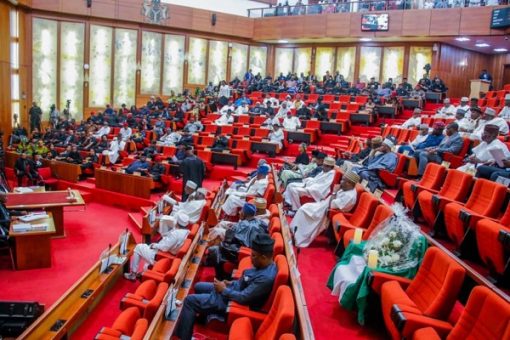
The session, the first following the Sallah recess, descended into chaos as senators clashed over what many described as a “budget betrayal.”
While the Senate fast-tracked an amendment to the 2024 Appropriation Act—extending the capital budget’s life from June 30 to December 31, 2025—calls for accountability over stalled projects and unpaid contractors were stonewalled.

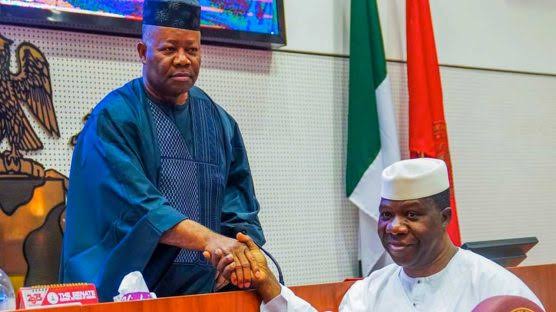
The amendment, sponsored by Senator Solomon Olamilekan Adeola, was presented as a lifeline to save thousands of abandoned projects across the country. “There is need for further extension for the funds to be fully and judiciously expended,” Adeola argued.
But senators were unconvinced.
“This is no longer a delay—it is sabotage,” thundered Senator Abba Moro (Benue South), warning that the legislature risked turning into “an embarrassment to itself” if it continued rubber-stamping executive failures.
Senator Seriake Dickson (Bayelsa West) was more scathing:
“The capital component that actually touches the lives of Nigerians has been abandoned. Recurrent spending? Fully executed. Contractors? Unpaid. Where is the money?”
Senator Abdul Ningi (Bauchi Central) demanded a full-blown probe, calling on the Senate to summon President Bola Tinubu if necessary.
“We’re being taken for a ride,” he declared. “Enough is enough.”
But just as the Senate appeared poised to launch an investigation, Deputy Senate President Jibrin Barau, who presided, stunned the chamber by blocking the vote on the motion. Instead, he referred the matter to existing committees—an act many saw as a deliberate move to bury the issue.
“Even though we are not happy where we are, things are planned well in the interest of the country,” Barau claimed—drawing sharp murmurs across the floor.
Lawmakers accused the Minister of Finance, Wale Edun, and the Accountant General of cherry-picking project disbursements, funnelling funds toward politically connected contractors while ignoring national priorities.
Despite the uproar, the amendment was passed, giving the Executive yet another six-month window to implement a budget already halfway through its cycle.
With the 2025 budget in effect and the 2026 proposal due in less than four months, fears of a cascading governance crisis continue to mount.
“The real crisis,” one senator said privately, “is not just that projects are failing—but that the Senate is letting it happen.”