By Friday Idachaba, Lokojaq
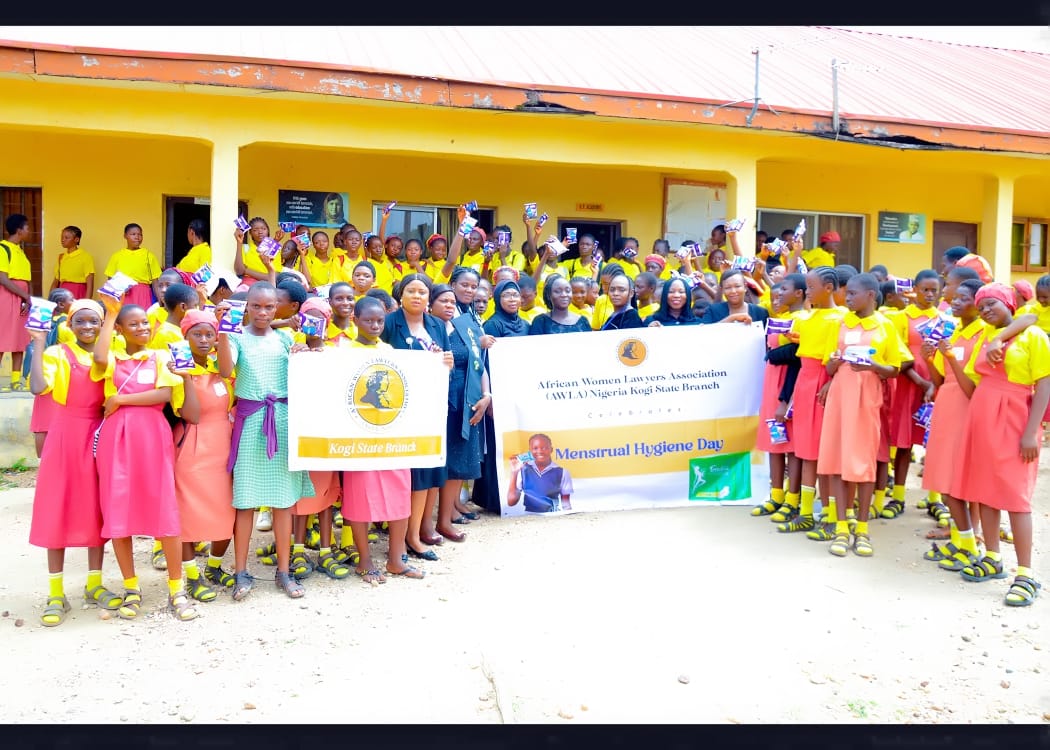
AFRICAN Women Lawyers Association (AWLA), Nigeria Kogi State chapter has has launched the Menstrual Hygiene Awareness campaign across schools in the state to address challenges culminating from monthly menstrual circles of the girl child.
AWLA launched the campaign on Monday in Lokoja as part of activities marking the 2025 World Menstrual Hygiene Day celebration, as it called for collective effort on the natter.
Justice Ojoma Rachael Haruna of Kogi State High Court, the Lead Speaker at the occasion opined that menstrual challenges should not be allowed to hinder girls’ access to education, healthcare, or opportunities.

Justice Ojoma Haruna, at the Glorious Faith Academy, Otokiti, venue of the occasion, emphasized the challenges many Nigerian girls face due to poverty and lack of awareness.
“Many girls don’t have access to sanitary pads during their menstrual periods. This is a basic necessity, and all hands must be on deck to make these resources available to the girl child,” she stated.
She urged young girls to build self-confidence and not allow societal stigma to hold them back as she encouraged women’s groups to advocate for improved menstrual hygiene and support initiatives that would dismantle the barriers girls face.
Highlighting the 2025 theme, “Together for a #PeriodFriendlyWorld”, she called for unified action in creating an inclusive environment where menstruation is not a source of shame or exclusion.
“Seeing your monthly menstrual cycle is not a crime. It is what makes you a woman and unique. During this period, maintain proper hygiene to avoid infections and diseases,” she advised.
AWLA also extended its awareness campaign to Government Science Secondary School, Lokoja, where AWLA Nigeria, Kogi State Interim Secretary, Barr. Joy Oluwaseun Akinola, underscored the importance of menstrual health as a human right and a vital public health issue.
“Menstrual Hygiene Day, observed every May 28th, aims to break taboos and raise awareness about the need for proper menstrual hygiene management,” Barr. Akinola noted.
She noted that girls with access to menstrual products and education are more likely to stay in school and achieve their full potential.
Also speaking at the event, Dr Yetunde Owa, President of the Medical Women Association of Nigeria, Kogi State chapter, emphasized the transformative impact of investments in menstrual health.
She recalled that Menstrual Hygiene Day was first observed in 2014 to draw attention to the need for proper menstrual care adding that data from the WHO and UNICEF Joint Monitoring Programme, has identified obvious anomalies.
“Only 2 in 5 schools globally provide menstrual health education, and just 1 in 3 have waste bins for sanitary materials. In Sub-Saharan Africa, menstrual-related absenteeism can reach up to 31 per cent”, Dr Owa noted.
AWLA also renewed its call for improved Water, Sanitation and Hygiene (WASH) infrastructure, access to menstrual products, and continuous education to support the dignity and development of the girl child. (Ends)