

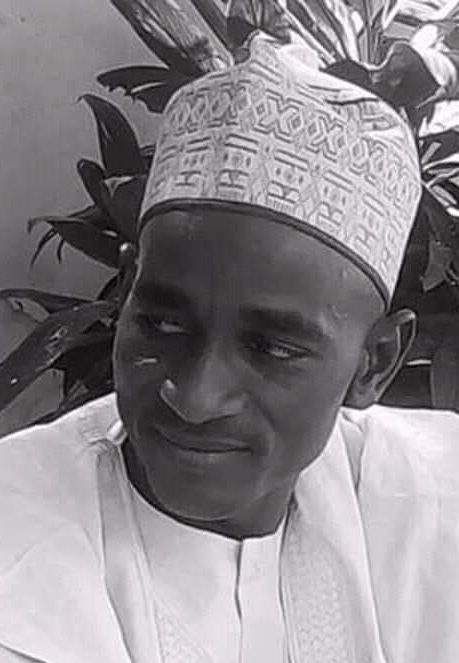

By Adamu Muhd Usman
“I do not ask for mercy,
I do not ask for pardon,
I demand justice.”
Ali Bhutto of Palestine
No Nigerian—regardless of tribe, religion, region, status, or political affiliation—is a second-class citizen. We are all equal under the Nigerian constitution.


Recent events in Uromi, Edo State, where innocent Nigerians were attacked, killed, and burned, are deeply troubling. These barbaric acts are inhumane, unjust, and must not go unpunished. Justice must be served.
No one should attempt to justify or excuse this violence. The lives lost cannot be replaced, and the pain endured by the victims’ families cannot be erased by empty rhetoric.
The truth must be stated clearly: those who were killed in Uromi were not bandits. They were poor, innocent citizens from the North—many of them hunters—who themselves live in fear of the very bandits and kidnappers plaguing Nigeria.
There is a clear distinction between hunters and bandits. The former are engaged in a long-standing, cultural livelihood; the latter are criminals who terrorize our highways, farms, forests, and towns. This difference is well documented in media and historical accounts.
Not all Northerners are Hausa, Fulani, or Muslim. Similarly, not all Fulani are herders, and not all Hausa are involved in criminal activities. Traditionally, Fulani live in the bush due to their livestock, while Hausa culture emphasizes hunting. Many Hausa hunters travel to distant places in search of game and have no ties to banditry.
Hausa hunters often keep dogs and use locally made guns passed down through generations. Fulani people are usually not hunters, nor are they farmers. But historically, Hausa and Fulani communities have coexisted peacefully, sharing cultural values and traditions.
It is worth noting that the insecurity in the South is severe, but in the North, it is perhaps 200 times worse. For years, Northerners have suffered the brunt of Boko Haram attacks, kidnappings, and killings—often without help or justice from the government.
These atrocities are not carried out by the peaceful Fulani communities that have lived among us for centuries. While some individuals from Hausa or Fulani backgrounds may have joined criminal groups, it is wrong to blame entire ethnic groups for the actions of a few.
Kidnapping and banditry have evolved into criminal enterprises involving people of all backgrounds. It is unfair to generalize or stereotype entire regions or ethnicities. Unfortunately, some Southerners now assume that all Northerners are criminals—just as, in the 1980s, Northerners unfairly saw Bendel men (from present-day Edo and Delta states) as robbers because of Lawrence Anini’s infamous crimes.
Bandits spare no one—whether friends, relatives, neighbors, or business partners. We are all victims of a failing system marked by insecurity, poverty, and injustice. Nigeria belongs to all of us. No tribe or region is superior to another.
Justice must be done for the killings in Uromi. We must treat others the way we want to be treated—whether they’re from the North, South, East, or West.
Some have compared the Uromi killings to the case of Deborah in Sokoto. But the two incidents are not the same. Deborah knowingly provoked a sensitive religious issue. While her death was tragic, it is not comparable to the brutal killing of 16 innocent Nigerians who had committed no crime. Let people respect religious boundaries—Islam should not be insulted. Even in the West, religious tolerance is expected.
To my fellow Nigerians at home and abroad: stop supporting jungle justice. Speak out against these barbaric acts. Innocent people were murdered in Uromi simply because they were Northerners. We must all condemn this.
Most well-meaning Nigerians have already denounced the killings and are calling for justice. False labeling of the victims as kidnappers is both tragic and dangerous. This incident underscores the need for greater public education, tolerance, and a commitment to justice. Only the police and courts have the legal authority to investigate and prosecute crimes.
Authorities must conduct a transparent investigation into the Uromi incident, bring the perpetrators to justice, and prevent future occurrences. Compensation is not enough—true justice must be served.
Governor Kabir Yusuf of Kano State was right to demand a public parade of the suspects. Transparency is key. In the past, innocent inmates have been paraded as culprits. The government must prove that the real perpetrators have been arrested.
One must ask: why is every issue linked to Kano now being politicized? The Governor of Edo State had planned to visit Kano to offer condolences, which was a commendable step. Instead, he was diverted to Abuja for political posturing before proceeding to Kano. This is unfortunate and reflects misplaced priorities.
To those calling for Nigeria’s breakup: think again. Division is not the solution. We must unite, love, and support one another. Let us end the mockery and hatred. Let us instead build a nation on the values of patience, tolerance, truth, and justice.
Pray for Nigeria—its unity, peace, political stability, and transformation.
Remember: Ojukwu tried and failed. Gideon Orkar failed. Gani Adams and Sunday Igboho fled. Nnamdi Kanu was returned and imprisoned. Nigeria will not fall apart.
If anyone were to divide Nigeria, it could be the North—but we won’t. We believe in unity. The North is educated, populous, politically aware, and self-sufficient. But we choose peace and coexistence.
Our Southern brothers must stop provoking us.
I leave you with the words of Alexander the Great:
“I am not afraid of an army of lions led by a sheep; I am afraid of an army of sheep led by a lion.”
Adamu Muhd Usman writes from Kafin-Hausa, Jigawa State.
1 Comment
Your point of view caught my eye and was very interesting. Thanks. I have a question for you.