


By Tunde Olusunle
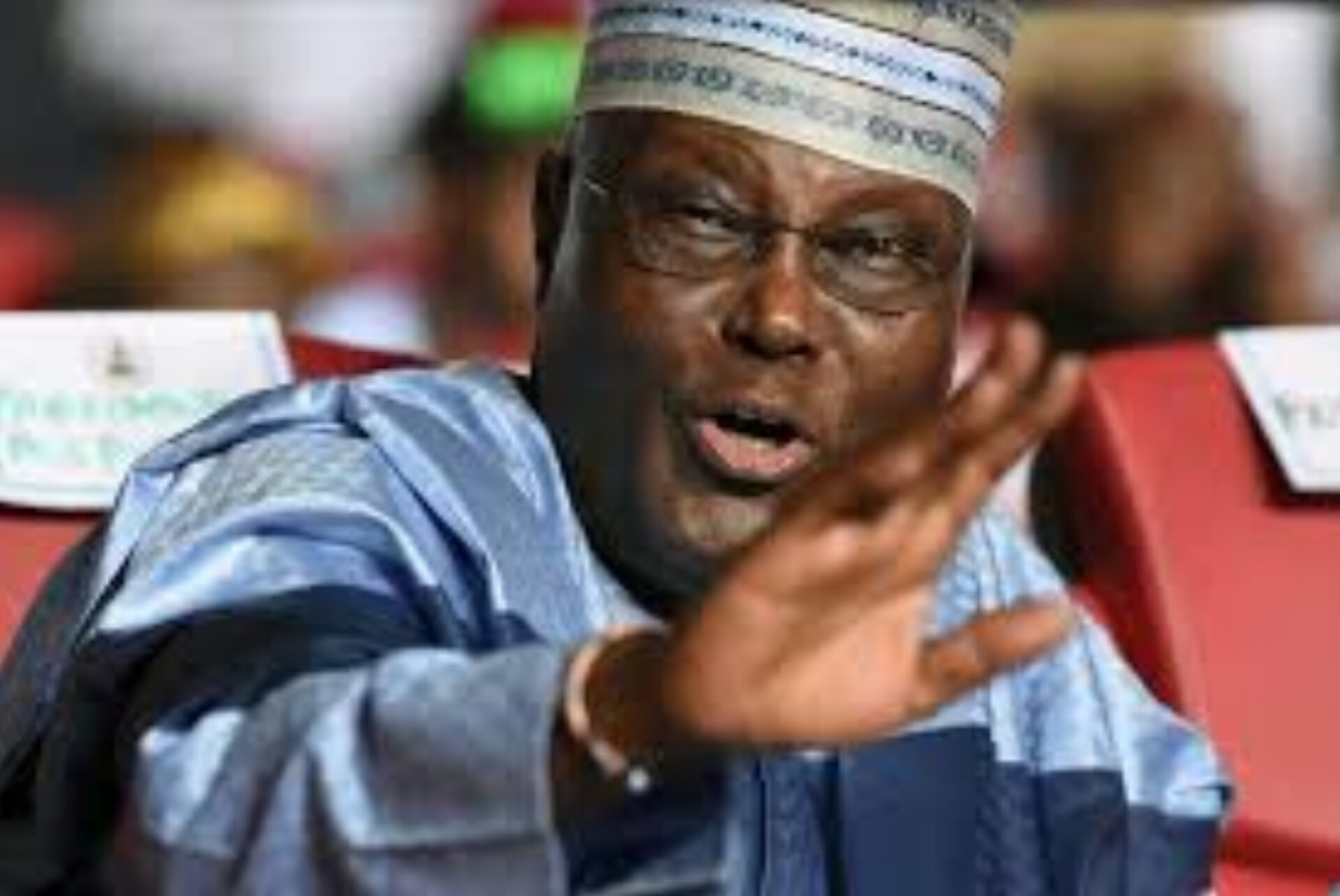
I’ve paid quite some attention in recent years to espousing the person, ideals and vision of Atiku Abubakar. A colourful and outspoken politician and statesman, he was the first Vice President of the present Fourth Republic who was in office from May 1999 to May 2007 and deputy to former President Olusegun Obasanjo. He has been celebrated in places for his sacrifices in ensuring in his time that democracy in the country was not subverted on the abattoir of greed and covetousness. He compelled legal inquisitions into and interpretations of sections of the constitution which were hitherto jettisoned by power-drunk leaders who desired to privatise leadership and governance. His sacrifices back in the days mitigated the propensity of people elected into executive positions to undermine their deputies with whom they were voted in on the same ticket. His perspiration also straightened up political parties, dissuading them from arbitrariness especially with regards to the imposition of candidates for electoral offices.
The manner of my immersion into “Atiku studies” reminds me of my proximity to my respected teacher and mentor, the distinguished Professor Olu Obafemi whose works I’ve also deeply engaged. Years ago, I subjected him to bouts and bouts of exhaustive interviews between his base in Ilorin and the nation’s capital Abuja. His oeuvre constituted part of the data for my doctoral thesis and I subjected him to rigorous inquisition on his literary works. On the sidelines, some of us his mentees were planning a 70th birthday festschrift for him and I had to grill him for an interview to be published in the compendium. Back in time in 1990, my schoolmate and fellow scholar, Wumi Raji, a professor at the Obafemi Awolowo University, (OAU) and I had interviewed Obafemi for the “Times Review of Literature and the Arts.” The literary digest was a creation of the Yemi Ogunbiyi era in the good old *Daily Times* which contributed tremendously to Nigeria’s cultural development.

Obafemi had remarked during my last interview engagement with him in January 2017 that he didn’t want to see me “anytime soon” on related issues! I had, he said, sufficiently “harangued, terrorised and squeezed” him that he would henceforth direct scholars desirous of engaging with his works to see me. I’ve had similar conversations with the multiple award-winning poet and scholar, Professor Niyi Osundare whose works I’ve been deeply engaging with since my undergraduate days. I remember the very hard bargaining we both had when I sent him a questionnaire of 20 questions as I assembled material for my research in 2013. We haggled and battled until we settled at 12 questions. Non-initiates often don’t know a fraction of what goes on in academics and the academia.
I beat even my own imagination when I took stock of my essays on the variegated strands of Atiku and his purpose sometime last year. I discovered I could actually come up with a handy compendium of my writeups. Yes the world is going “paperless” but the crinkling pages of a book would always stand the test of time. So I came up with a book of 120 pages titled: *Atiku: Perspectives On A Phenomenon* last November. For the discerning and instinctual, it takes conscientious lapping up of the atmosphere around Atiku to derive the inspiration to string words and expressions together. There’s typically some dynamism, some activity within his space which tells you a thing or two. Because Atiku is an area of interest for me, I also regularly dig up and study documents and dimensions about him.
This is the same way I stumbled on an essay titled “Atiku Abubakar: A journey of conviction” written by Anjorin Oludolapo and published in the November 8, 2023 edition of *Nigerian Tribune.* The presidential election had come and gone, the widely believed chicanery of the nation’s electoral umpire had been perpetrated, the contentious judicial adjudication by the highest court in the land on the poll had been pronounced. Even at that, Oludolapo felt compelled to revisit the person and ideals of Atiku Abubakar. For him, Atiku is “a symbol of unwavering courage and deep-rooted conviction.” The man he observes has “faced adversity and remained unyielding in his commitment to democratic principles and the betterment of Nigeria.” Submissions such as this are critical to focused perspectivisation of the classic Atiku Abubakar.
Oludolapo, a seeming Atiku aficionado notes that the trajectory of the *Wazirin Adamawa,* the traditional “prime minister” of the global Adamawa emirate epitomises “the spirit where the path chosen is fraught with challenges and where the outcome is uncertain.” Atiku, Oludolapo observes, has made humongous sacrifices and encountered a myriad of challenges often at great personal risk. Historicising Atiku’s endeavours on the democratic trail, Oludolapo notes that together with Shehu Musa Yar’Adua, Atiku embarked on a “perilous journey to build a pan-Nigeria anchored on democratic ideals.” Lives and resources were lost to this project according to Oludolapo, while aggregating a generation of young Nigerians who shared the vision of a more inclusive and democratic future.
In an unusually clear-headed contention, Oludolapo remarks that Atiku’s vision for Nigeria has always extended beyond personal ambitions as has been more commonly bandied. His judicial victories in the face of adversity he observes have entrenched democratic norms which many political actors gloss over and take for granted contempraneously. Atiku, Oludolapo notes “is a testament to the enduring spirit of a man who has remained resolute in his commitment to democratic principles regardless of the challenges that he has faced.” He recalls Atiku’s successful judicial challenge of the emasculation of the Office of the Vice President by Obasanjo between 2006 and 2007, all the way to the Supreme Court. This he says has tempered the condescension with which the Offices of Vice President and Deputy Governor are viewed by their principals. Atiku’s action was not one of defiance but a commitment to upholding the rule of law.
Oludolapo alludes to Atiku’s sense of ethno-religious sensitivity and the imperative for balancing. In 1998, he chose a Christian, Bonnie Haruna to pair with him on his gubernatorial ticket in Adamawa State. Even when fate thrust him upwards to the position of Vice President in 1999, he rallied support for Haruna to be duly recognised as governor. He reaffirmed his support for Haruna to serve the constitutionally allowable two terms of four years each when he backed him for reelection in 2003. He refused to be swayed by jingoists intent on beating the drums of the numerical superiority of one section of the state over another. Atiku’s deft navigation of the Sharia brouhaha when he was Vice President also receives attention by Oludolapo. The subject was a potential time bomb capable of pitting the North against the South and festering a toxic atmosphere of fissions in the polity. Atiku ate the bullets when he castigated the “political implementation of Sharia law.” He took this position at the risk of being profiled as pro-South when he was expected to stand with his fellow northerners.
Beyond the puerile reduction of Atiku’s politics as being solely focused on ascending the highest office in the land, the documentation of Nigerian democracy will be incomplete without a fair and honest acknowledgement of his enormous contributions to the processes. His political career has been patently committed to the imperative to grow democracy, accord equitable platforms for political participation with strict adherence to rule of law, justice, equity and fairness. His mantra is to tap the best brains for national development and foster unity, fully cognisant of the availability of world class technocrats and professionals from across the country. Atiku is credited with identifying some of the key operatives in the Obasanjo/Atiku government all of whom have continued to hold their own on the global stage.
Moving forward, democracy in Nigeria must take firm root beyond orchestrated false starts, deliberate disregard for rule of law and the sickeningly eternal rat race for primitive acquisition. Tertiary institutions should by then find it imperative to endow chairs and establish institutes to advance the principles which the authentic frontrunners of democracy embodied. Initiatives such as an “Atiku Abubakar Institute for Leadership and Governance” should be purposely endowed in a rainbow of institutions across the land. My departed senior colleague and elder brother Ayo Olukotun was the pioneer occupant of the “Oba Sikiru Kayode Adetona Professorial Chair for Governance” at the Babcock University, Ilishan, Ogun State before he left us early last year for example.
Atiku’s *alma mater* the Ahmadu Bello University, (ABU) Zaria must lead the way in the cannonisation of his ideals and perspiration over time and space in the service of democracy. Such an invention will fast track the advancement of the frontiers of popular rule and rule of law beyond subsisting genuflections, the recurring “brake and quench” democracy. That’s the way a roadside mechanic would describe a malfunctioning automobile perennially coming on and ever going off each time it is ignited. As many as have been impacted by Atiku’s sweat, investments, dedication and selflessness in the deepening of true democracy in Nigeria owe him one, certainly and deservedly. This is the irreducible minimum bouquet of flowers for a man who continues, daringly, to take risks in the entrenchment and evolution of genuine democracy in our clime, into the fourth successive decade now.
Tunde Olusunle, PhD, is a Fellow of the Association of Nigerian Authors, (ANA)
