Douglas Baye-Osagie
Though belated, congratulations on your appointment as acting Secretary General of CAF. This is a historic milestone for Nigeria and African football. I hope this letter finds you well.
_Subject: Urgent Appeal to Review the U-17 AFCON Zoning Qualification Structure and Prioritize Nigeria’s Youth Football and Refereeing Development_

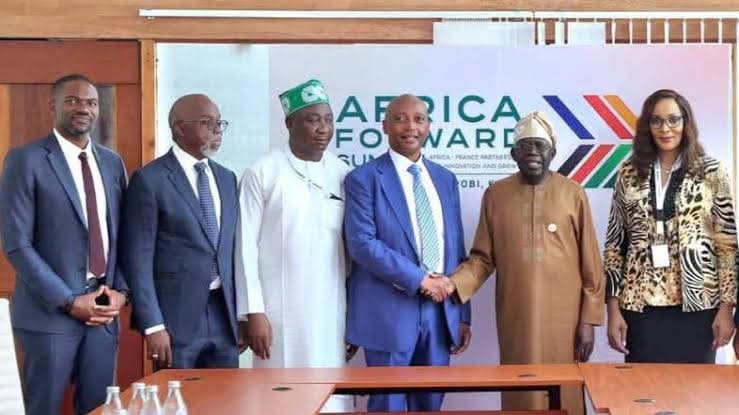
The first time you came before the public to address issues concerning Nigeria was this Tuesday in Nairobi at the African Forward Summit, when you met with senior officials of the Nigerian Football Federation during a courtesy visit to President Tinubu to discuss hosting the CAF General Assembly and CAF Awards. This engagement is welcome, but the question remains: will it translate into tangible development for the game in Nigeria?
Having previously served as CAF’s Director of Tournaments and Events, your extensive experience in managing logistics and overseeing major continental competitions makes this the best time to make a strong case for Nigeria and the rest of West Africa, so that our best youth teams are not left out of continental and global football events.
Under CAF’s qualification format, Nigeria’s U-17 and U-20 teams are boxed into a qualification quagmire because of the unfair advantage built into the current zoning system for the rest of the African continent. Since the change in the qualification format in 2017, Nigeria has found it relatively difficult to reach the finals of the U-17 World Cup because of the hurdle of qualification. It makes little sense to showcase African football’s future while systematically blocking the nation that built that future from participating.
The U-17 AFCON kicks off this week in Morocco, but Africa’s most successful team in the competition’s history will be absent through no fault of their own. That absence alone highlights how the current qualification structure can exclude merit and weaken the continent’s representation on the world stage.
The competition, which runs from 13 May to 02 June, is expected to once again showcase the next generation of African football stars, following in the footsteps of players such as Victor Osimhen, Mohamed Salah, Seydou Keita, Samuel Eto’o, and Nwankwo Kanu, who all rose through youth football structures before achieving global success.
With eight quarter-finalists automatically qualifying for Qatar 2026 and two additional places available through play-off matches between the third-placed teams in each group, the margin for error has become smaller than ever. Yet Nigeria remains locked out by a system that punishes merit.
The new qualification structure means that more teams enter the competition with realistic ambitions of reaching the World Cup, increasing competitiveness across all four groups. Yet this increased ambition is undermined when the qualification system itself prevents the strongest teams from participating.
Let us begin with history. The reason FIFA expanded Africa’s U-17 World Cup slots to 10 was not accidental. It was earned by West Africa, and specifically by WAFU Zone B nations — Nigeria and Ghana — who have dominated this category for decades and brought global prestige to the continent.
Nigeria remains the most successful nation in FIFA U-17 World Cup history with five titles. Ghana has won it twice and reached four finals. Between them, they account for seven of Africa’s appearances in the final. Their consistency forced the world to respect African youth football and was the single biggest justification for FIFA increasing our slots.
Yet under the current CAF zoning model, WAFU Zone B — the most decorated zone in U-17 history — is restricted to just 2 slots for the U-17 AFCON. Meanwhile, CECAFA receives 3 slots and COSAFA receives 3 slots.
This is where the puzzle becomes painful. With all due respect to our brothers in CECAFA and COSAFA, no East African or Southern African nation has ever reached the knockout stages of the FIFA U-17 World Cup. The competitive record is clear and documented.
WAFU Zone B comprises Côte d’Ivoire, Niger, Burkina Faso, Ghana, Nigeria, Benin, and Mali. These nations consistently produce some of the most exciting young talents in African football at cadet level. Players from this zone dominate youth academies, European scouting reports, and the headlines at every U-17 tournament.
It would be deeply shameful for the African continent to reduce their representation simply to favor other regions, especially when their competitive record speaks for itself. Excellence should not be sacrificed for geography.
So we must ask: on what sporting or developmental basis does CAF allocate 3 slots to zones with zero knockout-stage pedigree, while restricting the zone that built Africa’s reputation to only 2 slots? This is not equitable distribution. This is competitive self-sabotage.
The intent of zoning — to encourage regional development — is commendable. But development cannot come at the expense of merit. When the best teams cannot qualify because of artificial caps, Africa sends a weaker delegation to the World Cup. That harms all of us, not just WAFU B.
The U-17 World Cup is not a participation festival. It is a competitive tournament where Africa’s global ranking is defined. Every early group-stage exit by an unprepared team reinforces negative stereotypes about African football that Nigeria and Ghana spent 40 years dismantling.
Beyond youth qualification, there is another pressing issue of concern: refereeing. CAF recently announced that 33 centre referees, 36 assistant referees, and 11 video assistant referees have been shortlisted for preparatory training in Cairo from November 8 to 13. However, none of the officials on the list is from Nigeria.
The last time a Nigerian referee officiated at the continental tournament was in 2006, when Emmanuel Imiere represented the country. Since then, Nigeria has consistently failed to make CAF’s referee rosters. This is a reflection of deeper structural issues that require urgent attention.
You need to do more in terms of training, exposure, and nomination of Nigerian referees for CAF competitions. Having no Nigerian official on the continent’s highest stage for nearly two decades is unacceptable for a football powerhouse.
Therefore, I respectfully appeal to your office to initiate an urgent review of the U-17 AFCON qualification structure before the next cycle, and to establish a clear program for the development and elevation of Nigerian referees. Consider a hybrid qualification model with a final playoff round, and partner with the NFF to accelerate referee development.
Africa deserves to be represented by its best on the pitch and in the middle. You have the opportunity to correct this imbalance and ensure CAF’s policies align with both development and excellence. The world is watching, and our children are counting on you.