

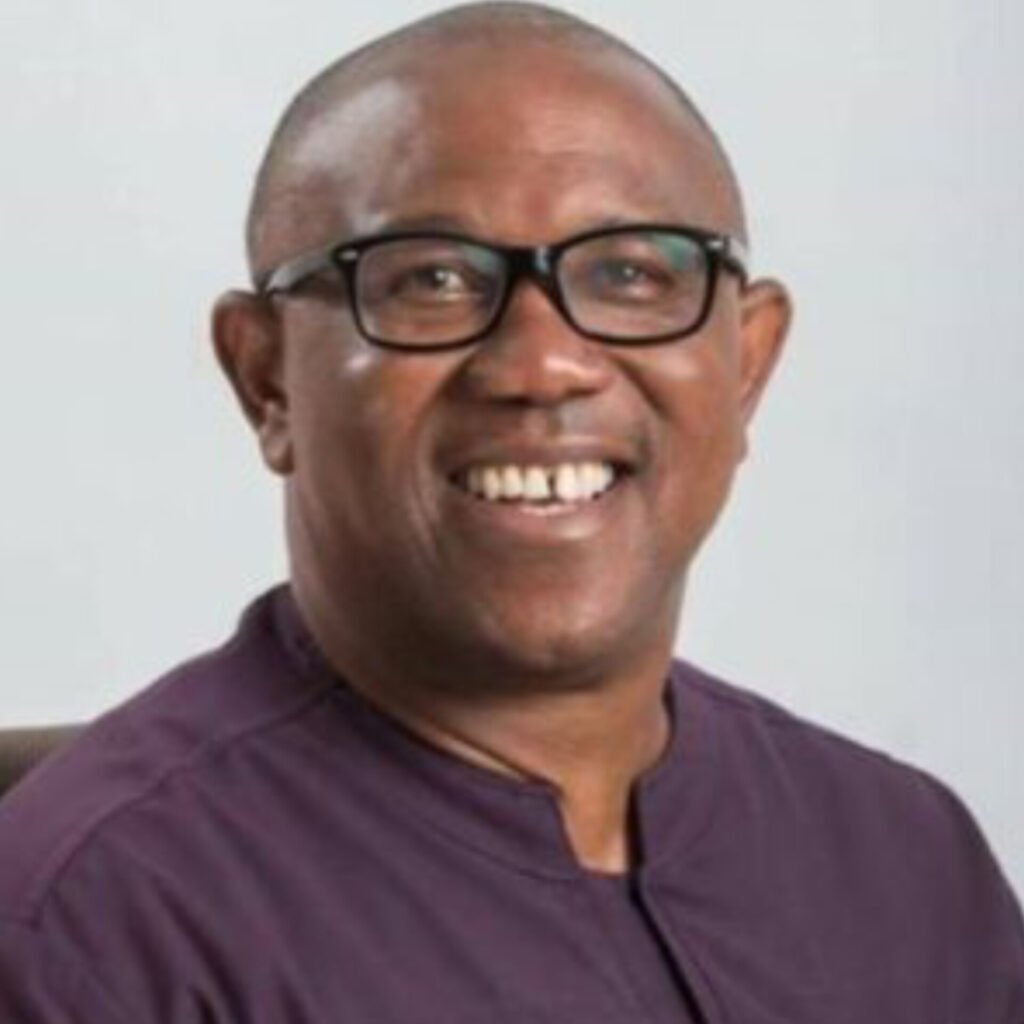

Presidential candidate of the Nigeria Democratic Congress (NDC), Peter Obi, has outlined his healthcare record in Anambra State and promised to replicate what he called a comprehensive health sector model across Nigeria if elected president in 2027.
Obi, a former governor of the state, said his administration invested in primary, secondary and tertiary care, medical training, maternal and child health, emergency services and specialised facilities between 2006 and 2014.
He made the disclosures in the fourth instalment of his “Nigerians, Go and Verify” series, titled “Building a Healthy Nation: Our Health Sector Record in Anambra.”
He said he inherited a system marked by dilapidated facilities, inadequate equipment, limited access to primary healthcare and medical training institutions struggling to win accreditation.


To turn that around, his government adopted the Anambra Integrated Development Strategy (ANIDS), which coordinated investments across the sector.
At the top of that effort was the Chukwuemeka Odumegwu Ojukwu University Teaching Hospital in Awka.
Obi said his administration built more than 25 buildings, equipped the facility and secured its accreditation, with services spanning laboratories, pathology, accident and emergency, paediatrics, wards and consultant clinics.
The hospital, he explained, was partly a response to a state university admitting medical students with no teaching hospital for their clinical training.
Below it, his government rehabilitated 15 general hospitals across the three senatorial zones, with ₦400 million provided in 2013 for the ongoing renovation of 11 of them.
At the grassroots, Obi said his administration built more than 120 primary healthcare centres across Anambra’s 177 autonomous communities and rehabilitated existing ones.
The centres were equipped for basic medical services, maternal care, immunisation, treatment of common illnesses and health education, while solar-powered boreholes, sanitation facilities, essential drugs and equipment were supplied, especially in rural areas.
Maternal and child health, he said, was another priority. Anambra won a $1 million Bill and Melinda Gates Foundation award as the best-performing South-East state in immunisation, and the government added its own funds to build 10 maternal and child care centres with religious institutions. In September 2013, a further ₦330 million went into 11 more rural maternity and child health centres. Partnerships with UNICEF, the World Bank and the UK’s Department for International Development (DFID) supported work on immunisation, malaria prevention and maternal health.
On emergency and specialised care, Obi said close to 100 ambulances were bought and distributed to selected hospitals and medical institutions, and equipment worth ₦135 million, sourced through the Millennium Development Goals programme, reached more than 105 government and mission facilities.
He also cited the Joseph Nwilo Heart Centre at St Joseph’s Hospital, Adazi-Nnukwu, set up with the Church to widen access to affordable heart treatment and spare patients travel outside the state.
Other investments included CT scan, mammography, digital X-ray and ultrasound machines, plus four ventilators for the teaching hospital’s Intensive Care Unit.
He further recalled upgrades at the Neuropsychiatric Hospital, Nawfia, whose improved facilities were commissioned by the then First Lady, Dame Patience Jonathan, in September 2010, and support for the School of Psychiatric Nursing to strengthen mental healthcare training.
Central to all this, Obi said, was partnering with religious institutions, a policy he defended on the grounds that government should back providers for the services they render rather than who owns them. Among the beneficiaries he listed were Our Lady of Lourdes Hospital, Ihiala; Iyi-Enu Hospital, Ogidi; Holy Rosary Hospital, Waterside, Onitsha; St Joseph’s Hospital, Adazi-Nnukwu; St Charles Borromeo Hospital, Onitsha; Immaculate Heart Hospital, Nkpor; and Diocesan Hospital, Amichi.
In 2013, he said, his administration released another ₦3 billion to selected mission and government-owned institutions.
Our Lady of Lourdes, Iyi-Enu and St Joseph’s received ₦200 million each, Holy Rosary ₦150 million and Diocesan Hospital, Amichi, ₦100 million, to improve infrastructure, upgrade wards and theatres, buy equipment and meet accreditation requirements.
The interventions, according to Obi, also helped develop recognised schools of nursing, midwifery and health technology, and Iyi-Enu and Borromeo hospitals later grew into university teaching hospitals.
He added that he restored the annual Grant-in-Aid to government-owned and mission hospitals and sustained it until he left office in 2014.
Turning to 2027, Obi said his Anambra experience would shape how he rebuilds Nigeria’s healthcare system.
He promised to strengthen primary healthcare centres, equip general hospitals and improve teaching hospitals so they can offer specialist treatment and train medical professionals.
He also called for greater accountability among health agencies, insisting that public funds for the sector be transparently managed and tied to measurable results.
Nigeria, he said, must cut medical tourism by building the capacity to deliver treatments that now send citizens abroad, and must widen access through partnerships with mission hospitals, private providers and other credible institutions.
“My commitment to healthcare did not end when I left office as Governor. I have continued to support hospitals, medical institutions, and various other healthcare initiatives across the country as a private citizen,” he said.
Obi maintained that the principles he applied in Anambra, namely planning, prudent management, accountability and measurable results, could be adapted to a country of more than 200 million people.
He acknowledged, however, that his administration did not achieve everything the state’s health sector required, but argued that its investments laid a foundation for further development.
The next instalment, “Nigerians, Go and Verify (5),” will examine his administration’s interventions in the road sector.