

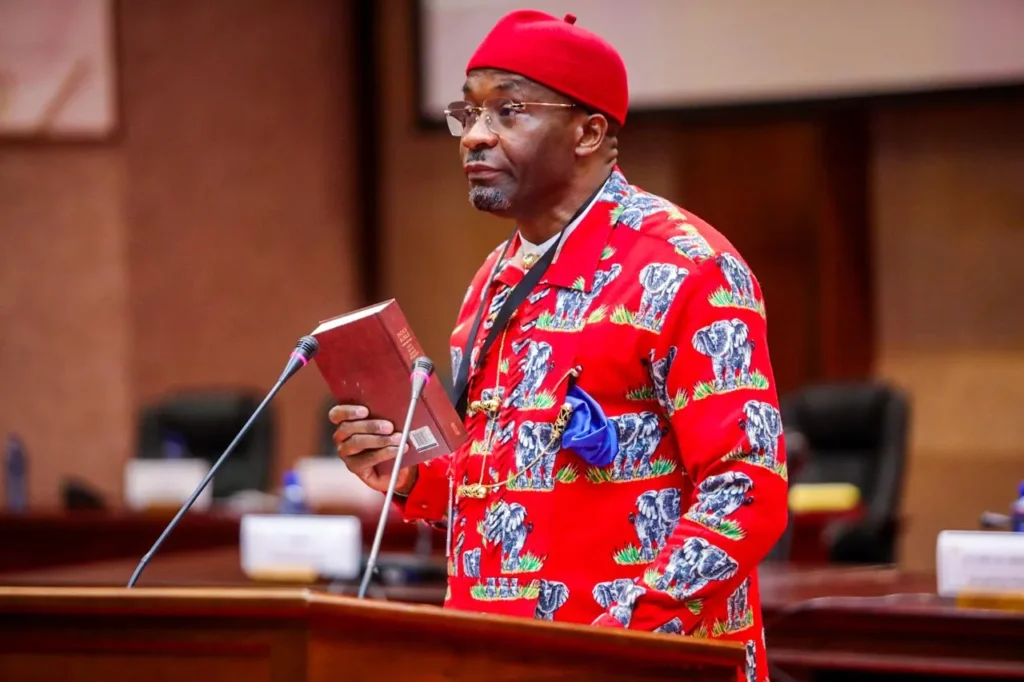

The Human Rights Writers Association of Nigeria (HURIWA) has demanded the immediate release of Emenike Okorie, a constituent of Deputy Speaker of the House of Representatives, Benjamin Kalu, who is reportedly being held at the Kuje Correctional Centre over allegations of cybercrime.
The rights group is also demanding ₦100 million compensation from the Nigerian government if Okorie’s arrest and continued detention are established to have violated his fundamental rights.
In a statement dated November 9 and signed by its National Coordinator, Comrade Emmanuel Nnadozie Onwubiko, HURIWA alleged that Okorie’s ordeal followed questions he raised about billions of naira reportedly received by Kalu from the Federal Government.


The association questioned why a constituent seeking explanations from his elected representative should allegedly end up behind prison walls.
HURIWA urged Kalu to intervene and secure Okorie’s immediate and unconditional release, warning that public office must not become an instrument for intimidating citizens who demand accountability.
The organisation also expressed concern about Okorie’s physical condition, noting that the young man reportedly uses a walking stick.
It further aligned itself with Abuja-based human rights lawyer, Deji Adeyanju, in calling for Okorie’s release and an independent investigation into the circumstances surrounding his arrest and detention.
However, the case has taken a legal dimension, with the Inspector-General of Police reportedly filing a six-count criminal charge against Okorie over allegations that he published false claims about the Deputy Speaker.
According to a report by *ThisDay*, the charge, dated October 26, accuses Okorie, from Bende Local Government Area of Abia State, of publishing messages in the Umuhu Ezechi Development Union WhatsApp group in violation of the Cybercrimes Act.
The prosecution alleges that the messages were knowingly false and intended to bully, threaten or harass Kalu and damage his reputation.
The allegations have not been proved in court, and Okorie remains entitled to the presumption of innocence.
The *ThisDay* report also indicated that the court documents it reviewed did not contain an arraignment date, plea or bail decision, leaving questions about the proceedings leading to his reported detention.
HURIWA maintains that the authorities must investigate the circumstances of the case and ensure that citizens are not subjected to unlawful detention for exercising their right to demand accountability.
The controversy has also raised questions about the delicate balance between tackling cybercrime and protecting freedom of expression, particularly when criticism involves public office holders.
While the law protects individuals against knowingly false and harmful publications, it equally guarantees citizens the right to fair hearing and presumes every accused person innocent until proven guilty.