***protection of citizens abroad as lawmakers clash over response strategy
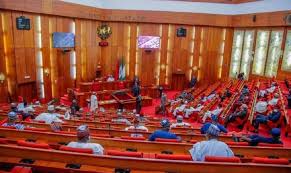
The Nigerian Senate on Tuesday descended into a heated and emotionally charged session over renewed xenophobic attacks on Nigerians in South Africa, with lawmakers sharply divided between calls for tough retaliatory sanctions and appeals for diplomatic restraint.
The debate, triggered by a motion of urgent national importance, exposed deep anger in the upper chamber as senators recounted fresh reports of killings, displacement, and harassment of Nigerians in South Africa and Ghana.
Opening the discussion, senators described the attacks as “barbaric, dehumanising and unacceptable,” warning that continued violence against Nigerians abroad could no longer be ignored.
Contributing to the motion, Senator Osita Izunaso said Nigerians were being increasingly targeted abroad in a manner that violated both regional and international laws.
“We have watched in total disbelief as Nigerians and other Africans are being hunted, ejected and humiliated under what is now known as ‘Operation Dudula’,” he said. “This is unacceptable. Nigeria cannot continue to fold its arms while its citizens are treated as less human.”
Senator Aniekan Bassey, sponsor of the motion, described the situation as a “systematic pattern of persecution.”
“Nigerians are increasingly profiled as though being a Nigerian is itself a crime. This is not just violence; it is humiliation, displacement and psychological torture,” he stated.
He added that the Senate must push for “urgent, coordinated diplomatic and humanitarian action” to protect Nigerians abroad.
Tensions peaked when Senator Adams Oshiomhole launched a fiery intervention, calling for economic retaliation against South African interests in Nigeria.
“By the time we withdraw MTN licence, revoke DStv licence, those workers from South Africa will have good jobs to do here,” Oshiomhole declared.
“Let South Africa continue with their own jobs. When we balance this madness, there will be sanity. We must bite in a manner that they will come begging.”
His comments drew loud reactions across the chamber, with some senators backing the hardline stance and others warning against diplomatic escalation.
Senator Adamu Aliero pushed back against retaliatory proposals, urging lawmakers to allow diplomatic channels to take effect.
“In international relations, there is what we call reciprocity,” Aliero said. “But we must be careful not to act in emotion. The Federal Government is already engaging South African authorities through the Minister of Foreign Affairs.”
He cautioned that premature sanctions could undermine ongoing diplomatic negotiations.
“Let diplomacy take its full course. We should not preempt executive action on such a sensitive matter,” he added.
Lawmakers repeatedly referenced Nigeria’s historical role in the fight against apartheid, insisting that the country’s sacrifices must not be forgotten.
Senator Victor Umeh
“From the 1960s to the 1990s, Nigeria stood firmly in the anti-apartheid struggle. Workers, students, civil servants, and ordinary Nigerians contributed to the liberation of South Africans. That history must not be repaid with violence against our citizens.”
Akpabio steps in as tensions rise
As debates grew increasingly heated, Senate President Godswill Akpabio intervened to calm tempers and steer the chamber away from immediate retaliatory measures.
“We must not allow emotion to override diplomacy,” Akpabio said. “Nigeria will act firmly, but responsibly. We cannot solve this crisis by escalating it into economic warfare.”
He urged lawmakers to allow structured diplomatic engagement while ensuring protection for Nigerians abroad.
After extensive deliberations, the Senate adopted a series of far-reaching resolutions, strongly condemning the xenophobic attacks and urging the Federal Government to immediately engage South Africa and Ghana through high-level diplomatic channels. Lawmakers also demanded independent investigations into the incidents, with a firm call for the identification, prosecution, and punishment of all perpetrators. The chamber further resolved to strengthen protection mechanisms for Nigerians in the diaspora, including the provision of emergency humanitarian assistance and evacuation support where necessary, while mandating the Senate Committee on Diaspora Affairs to undertake a comprehensive fact-finding investigation into the recurring attacks.
The Senate also called for stronger regional accountability under ECOWAS and the African Union framework to prevent future attacks.
In a key outcome of the session, lawmakers agreed that a high-powered delegation, to be led by Senate President Godswill Akpabio, would engage South African authorities to formally register Nigeria’s concerns.
The delegation is expected to push for urgent protection guarantees, justice for victims, and stronger bilateral safeguards for Nigerians living in South Africa.
Concluding the session, lawmakers unanimously stressed that Nigeria’s position remained firm on the protection of its citizens abroad.
“No Nigerian deserves to live in fear anywhere in the world,” the Senate resolution stated. “The dignity, safety and rights of Nigerians are non-negotiable.”
The chamber adjourned with a call for swift diplomatic engagement, even as pressure continues to mount for stronger action in response to the recurring attacks.