


By Emmanuel Nnadozie Onwubiko
For decades, Nigeria has had a peculiar economic problem: it has had enormous opportunities but has struggled to mobilise the capital required to convert those opportunities into sustain entrepreneurial class, a growing technology ecosystem and businesses with ambitions beyond its borders. Yet the financing of these opportunities has remained heavily dependent on government revenue, bank lending and external borrowing.
That is why the transformation of Nigeria’s capital market deserves to be viewed as an economic development story rather than simply a financial-sector story.


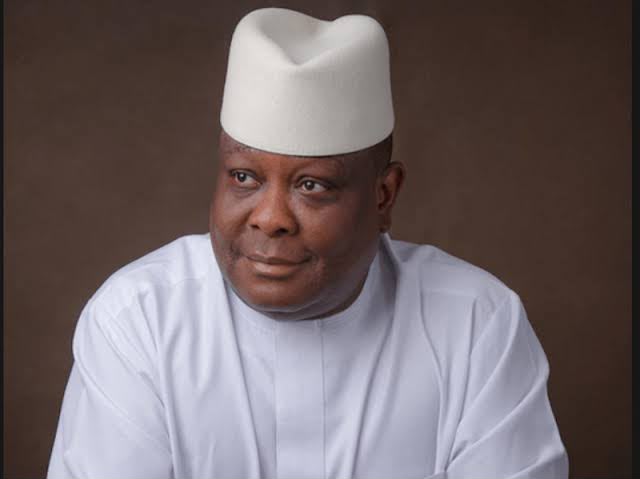
At the centre of this transformation has been the Senate Committee on Capital Market and Institutions, led by Senator Osita Izunaso. Through legislative intervention, stakeholder engagement and advocacy for wider participation, the committee helped drive a fundamental update of the legal architecture governing Nigeria’s capital market.
The most important outcome was the passage of the Investments and Securities Bill and its enactment as the Investments and Securities Act 2025, which repealed the 2007 law and established a contemporary framework for regulating the Nigerian capital market. President Bola Ahmed Tinubu assented to the legislation on March 25, 2025.
The significance of this development is profound.
A capital market is ultimately a mechanism for moving money from those who have capital to businesses and projects that need it. When that mechanism works efficiently, savings become investment, investment becomes production, production creates employment and businesses become capable of generating greater economic value.
That is the larger economic significance of the reform championed by the Izunaso-led committee.
Nigeria cannot build a modern economy by depending principally on annual government budgets.
The infrastructure deficit alone requires capital on a scale that public finances cannot provide. Manufacturing requires long-term funding. Technology companies require patient investment. Agriculture needs financing for processing and storage. Housing requires mortgage and long-term investment structures. Infrastructure projects frequently require financing that extends over decades.
Commercial banks remain important, but bank lending cannot meet every one of these needs.
This is where the capital market becomes indispensable.
Through equities, bonds, collective investment schemes and other instruments, the market can connect companies and projects requiring long-term capital with institutional and individual investors looking for opportunities.
The new Investments and Securities Act therefore goes beyond regulating the buying and selling of shares. It provides a broader legal framework for capital formation, investor protection, market integrity and the development of new financial products and infrastructure. The Securities and Exchange Commission describes the law as establishing the SEC as the apex regulatory authority and providing for capital formation, investor protection, fair and transparent markets and reduction of systemic risk.
That is an economic infrastructure in its own right.
The Nigerian economy of 2025 was not the Nigerian economy of 2007.
In those 18 years, financial technology transformed the way people invest and transfer money. Digital assets emerged. Investment platforms became more accessible. Businesses became increasingly interconnected across borders. New financial products emerged, while risks that were barely contemplated in 2007 became increasingly relevant.
Nigeria therefore needed legislation capable of responding to a fundamentally different financial environment.
The new law provides a framework for a wider range of market activities and products, including collective investment schemes, commodities-related activities, market infrastructure and emerging forms of financial innovation.
That modernisation is important because investors do not assess an economy solely by its natural resources.
They assess its institutions.
They want to know whether the rules are clear, whether contracts and investments are protected, whether regulators can act against abuse and whether the market provides reliable mechanisms for entering and exiting investments.
The legislative work of the Senate Committee on Capital Market and Institutions therefore addresses one of the most important questions in economic development: Can Nigeria create an investment environment in which capital feels safe enough to stay and grow?
Building confidence into the system
Capital follows confidence.%
Without confidence, investors keep their money outside the market. Companies hesitate to list. Foreign investors demand higher risk premiums. Household savings remain outside productive investments.
With confidence, the equation changes.
The committee’s work placed investor protection and market integrity among the central concerns of the legislative reform. The new framework strengthens the regulatory architecture of the market and provides broader powers and responsibilities for the SEC.
This matters particularly because Nigeria has experienced repeated problems with fraudulent investment schemes.
The Senate itself subsequently became involved in investigating the proliferation of fraudulent financial platforms. In July 2025, the Senate mandated committees, including the Capital Market Committee chaired by Izunaso, to investigate the proliferation of fraudulent platforms and the losses suffered by Nigerians.
The message is important: the expansion of investment opportunities must go hand in hand with protection.
A bigger capital market without stronger safeguards could simply create a bigger arena for financial abuse.
A bigger capital market with stronger regulation, transparency and investor education can instead become a channel for mobilising national savings into productive activity.
The reform meets a market already gathering momentum
The legislative reform has coincided with a remarkable period of expansion in Nigeria’s capital market.
The NGX All-Share Index rose by 51.19 per cent in 2025, while total equity market capitalisation increased by more than N36.6 trillion to N99.38 trillion by the end of the year. NGX also reported that government and corporate issuers raised N6.49 trillion through equity and fixed-income instruments during 2025.
Those figures should not be presented as the product of the Senate committee alone.
Market performance is shaped by numerous factors, including monetary conditions, corporate earnings, banking-sector recapitalisation, foreign-exchange developments, investor sentiment and broader economic reforms.
But the numbers provide an important measure of the growing economic significance of the market at the time Nigeria introduced its new legal framework.
They show that the capital market is capable of becoming a much larger source of financing for the real economy.
The significance of the N6.49 trillion raised through the market in 2025 is particularly important. Capital raised is not merely a financial statistic. It represents money that can be deployed by governments and businesses for expansion, infrastructure, working capital and investment.
That is where capital-market growth begins to translate into economic activity.
From market growth to continental relevance
Perhaps the clearest indication of Nigeria’s changing position is the country’s rising status within Africa’s financial markets.
In 2025, Nigeria was reported as Africa’s third-largest stock market by market capitalisation. By May 15, 2026, the NGX had overtaken Morocco to become the continent’s second-largest stock market, with a reported market capitalisation of about $117 billion, behind South Africa’s Johannesburg Stock Exchange.
That movement is significant for Nigeria’s economic ambitions.
African countries are competing for the same pools of global investment. They compete for portfolio investors, multinational companies, financial institutions, listings, fund managers and development capital.
A country with a large economy but a weak capital market cannot fully exploit its economic size.
A country with a deep, liquid and credible capital market has another instrument with which to compete.
Nigeria’s population and corporate sector already provide the scale. A stronger capital market gives that scale a financial mechanism.
This is where the work of the Izunaso-led committee acquires a continental dimension.
By helping to modernise the legal foundation of Nigeria’s capital market, the committee contributed to strengthening one of the institutions through which Nigeria can compete for African and international investment.
Putting capital within reach of more Nigerians
There is, however, another part of the story that is just as important: participation.
Nigeria cannot build a truly broad-based capital market if investment remains the preserve of a small circle of professionals and wealthy individuals.
Senator Izunaso recognised this when the committee proposed a N10 billion intervention for capital-market literacy in the 2025 budget.
The proposal was intended to improve public understanding of the market, restore investor confidence and help Nigerians avoid fraudulent investment schemes.
That initiative reflects an important understanding of economic development.
Financial inclusion should not stop at opening a bank account.
It should also mean giving citizens the knowledge required to understand legitimate investment opportunities, assess risks and participate in wealth creation.
When more Nigerians understand the capital market, more domestic savings can potentially be channelled into formal investment.
That creates a larger pool of capital available to Nigerian businesses.
Giving businesses an alternative to bank loans
The deeper economic benefit is what happens when Nigerian businesses have choices.
A growing company should not have to depend exclusively on bank loans to finance expansion.
A manufacturing company seeking money for a new factory can potentially access the capital market.
An established company can raise equity without taking on additional debt.
Government can use bonds to finance infrastructure.
Investment funds can pool resources from thousands of individuals and institutions.
Pension funds can invest in long-term assets.
The result is a financial ecosystem in which different forms of capital can be matched with different economic needs.
This diversification reduces pressure on any single part of the financial system.
It also creates opportunities for businesses that might otherwise struggle to obtain affordable long-term financing.
Supporting the wider economy
The real measure of capital-market reform is not simply how high a stock index rises.
The more important question is what happens beyond the exchange.
Does a company raise money and expand production?
Does an infrastructure project secure financing?
Does a business create employment?
Does a pension fund generate sustainable returns?
Does an entrepreneur move from a small enterprise to a publicly investable company?
Does domestic savings become productive capital?
These are the channels through which financial reform can influence the real economy.
The new legal framework creates the institutional conditions for these possibilities.
NGX reported that its 2025 market expansion was accompanied by stronger capital raising, including N6.49 trillion mobilised by government and corporate issuers.
That connection between capital formation and economic activity is precisely why the capital market matters to the broader Nigerian economy.
A new platform for Africa’s investment race
The African Continental Free Trade Area is creating the possibility of a larger integrated African marketplace.
As trade barriers decline and African businesses expand across borders, financial markets will become increasingly important.
Companies will need capital to expand into new countries.
Investors will need reliable markets through which to access opportunities.
Financial institutions will need instruments to manage risk.
Countries with deeper financial markets will have greater capacity to participate in this emerging continental economy.
Nigeria’s opportunity is considerable.
Its economic size, population, entrepreneurial base and established financial institutions provide a foundation upon which a major regional financial centre can be built.
But that potential requires laws and institutions that match the scale of the ambition.
The Investments and Securities Act 2025 is therefore more than an update to an old statute.
It is part of the infrastructure required for Nigeria to compete for capital in an increasingly integrated African economy.
The Izunaso committee and the architecture of economic opportunity
The achievement of the Senate Committee on Capital Market and Institutions under Senator Osita Izunaso should consequently be viewed through the broader question of how Nigeria finances its future.
The committee did not create the NGX’s market performance, nor can any single legislative intervention account for Nigeria’s rising position in African capital markets.
What the committee did was contribute to the legislative architecture within which these developments can take place.
It helped move Nigeria from a regulatory framework designed for an earlier financial era toward one designed to accommodate modern capital-market realities.
It also pushed investor education higher on the national agenda, advocated stronger participation by Nigerian companies in the market and engaged directly with market institutions on the reforms required to deepen the sector.
These are important building blocks.
The significance becomes clearer when viewed against Nigeria’s wider economic challenge.
The country needs enormous capital to diversify away from dependence on crude oil, expand manufacturing, develop infrastructure, strengthen agriculture, scale technology and create opportunities for its rapidly growing population.
Government alone cannot provide that money.
Banks alone cannot provide it.
The answer must include a capital market capable of mobilising the savings of Nigerians and attracting investment from the rest of Africa and the world.
From financial reform to economic influence
Nigeria’s emergence as Africa’s second-largest stock market by reported market capitalisation in 2026 provides a powerful context for assessing the direction of the reform.
The next challenge is to turn market size into deeper economic impact.
That requires continued implementation of the new law, effective regulation, stronger investor protection, more listings, greater retail participation, improved financial literacy and the development of products capable of financing long-term economic activity.
The country must also ensure that capital-market growth translates into real investment rather than remaining largely a story of asset-price appreciation.
If that bridge is successfully built, the benefits can extend far beyond the trading floor.
More capital can mean more businesses.
More businesses can mean more production.
More production can mean more jobs.
More jobs and productive investment can mean a broader tax base and stronger economic growth.
And a stronger financial market can give Nigeria greater influence in the continental competition for investment.
That is the larger significance of the legislative work undertaken by the Senate Committee on Capital Market and Institutions.
The story is not simply about a new securities law.
It is about changing the financial architecture of Nigeria so that the country’s enormous economic potential can be funded, expanded and connected to the rest of Africa.
In that sense, the reform represents an important piece of the foundation for a Nigeria that wants to compete not merely as Africa’s largest economies, but as one of the continent’s major centres for capital, enterprise and investment.
EMMANUEL NNADOZIE ONWUBIKO is the founder of HUMAN RIGHTS WRITERS ASSOCIATION OF NIGERIA (HURIWA) and was National Commissioner of the National Human Rights Commission of Nigeria.