The Kwankwasiyya Movement and Obidient Movement on Tuesday moved a step closer to strategic alignment ahead of the 2027 general elections, declaring that internal crises within the African Democratic Congress (ADC) would not derail their collaboration.
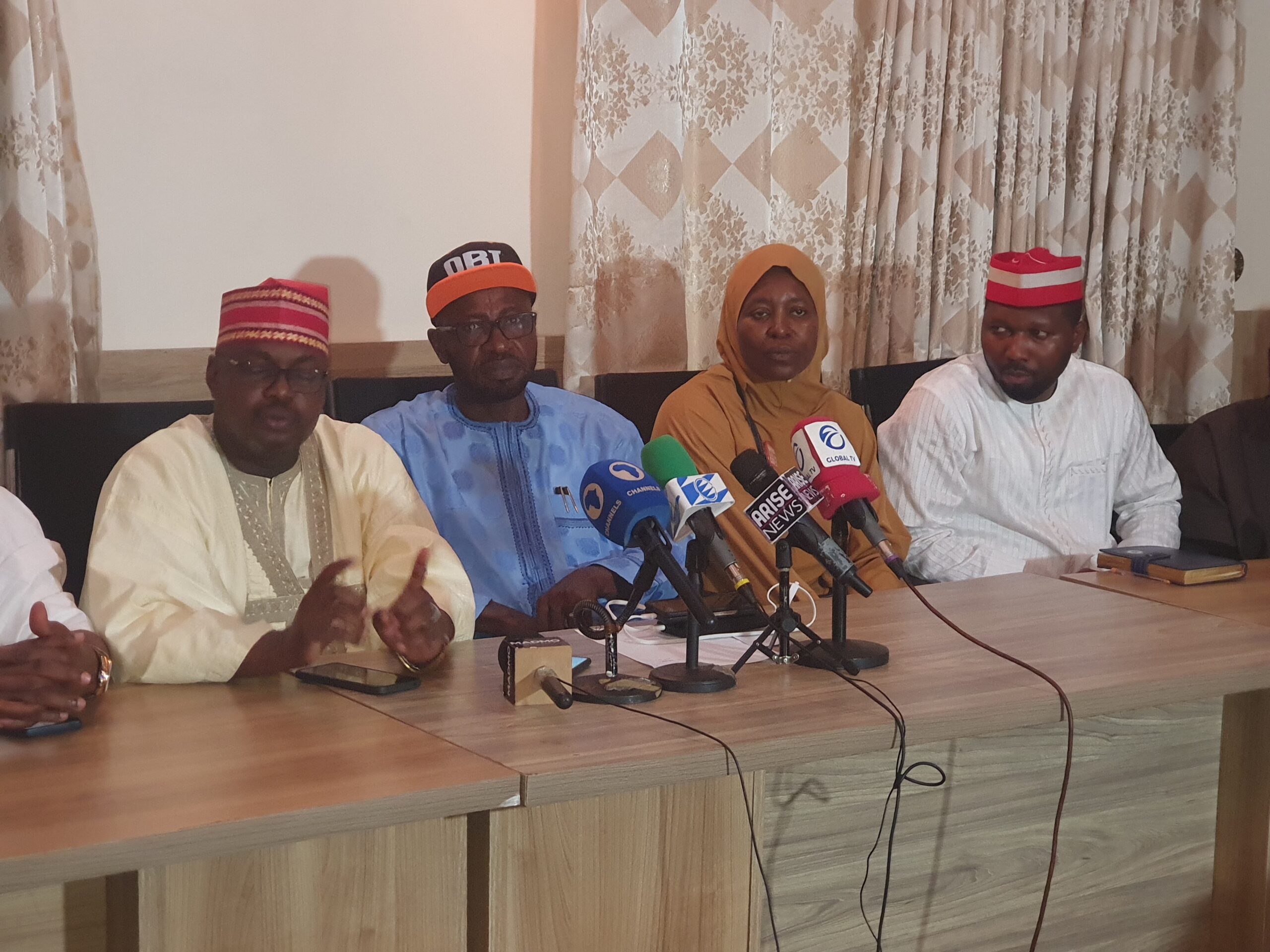
The development followed a high-level visit by the National Coordinator of the Kwankwasiyya Movement, Alhaji Habibu Saleh Muhammed, who led members of his group to the Abuja headquarters of the Obidient Movement, where they were received by its National Coordinator, Yunusa Tanko.
Addressing journalists after the meeting, Muhammed described the engagement as part of a broader effort to build a united political front capable of reshaping Nigeria’s future, stressing that the alliance should not be misconstrued as a merger.
“Let it be clear, this is not a merger but a partnership,” he said. “Individuals and groups are coming together to work as a team, and once we have a team, we are stronger and better positioned to achieve our objective.”
He noted that the collaboration was the product of sustained engagements spanning several years, driven by a shared vision of national renewal.
“For over four years, we have been working to ensure that this kind of understanding becomes a reality. Today marks another step in that direction—a coming together of people who genuinely want to see Nigeria progress,” he added.
Muhammed urged supporters of both movements to maintain discipline and civility, warning that divisive rhetoric could undermine the collective goal.
“Let us speak to issues, not personalities. No insults. Let us organise, not disorganise; mobilise, not demobilise. Nigeria needs everyone, and this is the beginning of a new chapter,” he said.
Responding, Tanko echoed the sentiment of partnership, insisting that the alliance remains flexible and strategic, rather than rigidly structured.
“These movements are independent, but we are partners. What is important is that we are working towards a common goal,” he said.
He pointed to the influence of key political figures associated with the two blocs, notably Peter Obi and Rabiu Musa Kwankwaso, noting that both leaders are actively engaged behind the scenes in shaping the next phase of the collaboration.
“We have capable leaders who are working quietly in the background. When the time comes, Nigerians will see the outcome of those engagements,” Tanko stated.
On concerns that the lingering leadership crisis within the ADC could complicate opposition realignments, both leaders dismissed the issue as non-threatening to their partnership.
“The ADC situation does not affect what we are building here,” Muhammed said. “Our focus is on the bigger picture—creating a platform that can deliver real change.”
Tanko reinforced this position, describing current political tensions across parties as part of a broader transition process.
“There are always issues in political systems, but what matters is that there are responsible leaders handling them. We are confident that everything will align in due course,” he said.
The meeting also touched on the possibility of a unified opposition front ahead of 2027, with both sides acknowledging ongoing consultations while declining to disclose specifics.
“Our principals are committed to doing everything necessary to ensure a better outcome for Nigeria,” Tanko said. “Discussions are ongoing, and at the appropriate time, decisions will be made.”
On the contentious issue of zoning, one of the speakers emphasised the need for fairness and inclusivity, suggesting that any eventual arrangement must reflect national balance.
“The key issue is justice and equity. Nigerians must be carried along in whatever decision is taken. A balanced ticket that can truly challenge the status quo is essential,” he noted.
Despite mounting speculation over possible mergers and candidate alignments, the two movements maintained that their current focus remains on strengthening cooperation and building a credible alternative.
“This is about Nigeria, not individual ambition,” Muhammed stressed. “We will continue to work with all groups that are genuinely committed to a new Nigeria.”
The engagement signals intensifying behind-the-scenes consultations among opposition figures, as political actors explore pathways to consolidation ahead of what is expected to be a fiercely contested 2027 election cycle.
Kwankwasiyya, Obidient Movements Forge Alliance, Dismiss ADC Crisis