

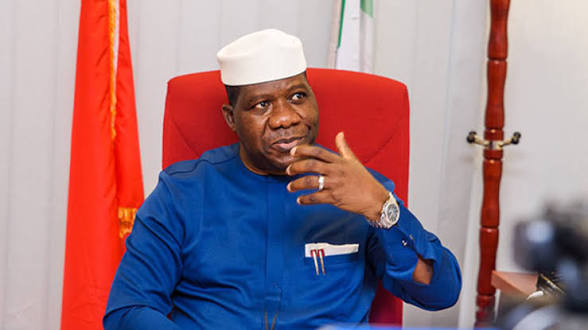

Senate Leader Opeyemi Bamidele has called for a coordinated development framework among Lagos and five other Southwest states, warning that fragmented planning could undermine the region’s infrastructure expansion, investment drive and economic potential.
Under the proposed alliance, Lagos, Ogun, Oyo, Osun, Ondo and Ekiti would develop a joint investment and development compact to tackle challenges that extend beyond individual state boundaries, including transportation, urban growth, industrial development and environmental sustainability.
Bamidele made the proposal on Thursday at the Lagos Physical Planning Summit at Eko Hotel and Suites, Victoria Island, arguing that the region needed to approach development as an interconnected economic bloc rather than six separate jurisdictions.


He said Lagos’ economic activities were closely tied to neighbouring states through housing, labour, agriculture, manufacturing, logistics and trade, making isolated planning increasingly inadequate.
According to him, decisions on roads, housing, industrial locations and other infrastructure in one state could have far-reaching consequences for businesses, commuters and communities in others.
The proposed compact would bring the six state governments together with relevant federal agencies, infrastructure institutions, private investors, professional bodies and development partners to identify shared priorities and mobilise funding for regional projects.
Bamidele said the alliance should prioritise integrated transport networks, cross-border urban development, industrial corridors, power infrastructure, tourism and coordinated investment promotion.
He argued that aligning development plans across the states would reduce duplication, improve infrastructure delivery and create a more predictable environment for investors seeking opportunities across the Southwest.
The Senate Leader also called for digital infrastructure to become a central pillar of Lagos’ long-term development strategy, with investments in broadband connectivity, smart-city systems, digital public services and innovation hubs.
He stressed that technological expansion must be accompanied by digital skills development to prepare workers for emerging opportunities and ensure that businesses and residents benefit from a changing economy.
“Lagos’ long-term prosperity cannot be secured through isolated state planning alone,” Bamidele said.
He maintained that physical planning must be linked to economic development, while public infrastructure spending should be measured by its tangible benefits to citizens and businesses.
Bamidele identified effective institutions, transparent financing, predictable regulations and sustained cooperation among governments, businesses and communities as essential to the success of the proposed framework.
The proposal, however, would require the participating states to agree on common priorities, funding arrangements and implementation mechanisms before the compact could translate into concrete projects.
Bamidele said the broader objective was to move beyond development blueprints to coordinated investments capable of strengthening economic growth, improving social welfare and building environmental resilience across the Southwest.