

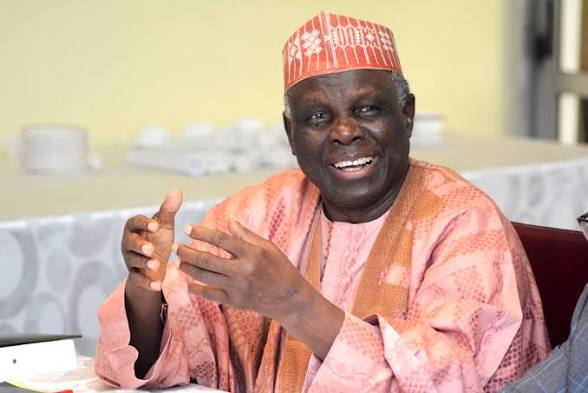

Former Federal Minister, Professor Jerry Gana, has blamed Nigeria’s nation-building challenges on what he described as leaders’ deliberate refusal to respect citizens’ aspirations, warning that personal interests and poor governance continue to undermine sustainable development.
Gana argued that Nigeria could make significant progress if political leaders prioritised integrity, justice, accountability and the welfare of citizens over personal interests.
He spoke while delivering a lecture titled “Rethinking Nation Building for Sustainable Development: Bridging the Leadership/Citizenship Disconnect” at the fifth national conference of the Forum of Former Deputy Governors of Nigeria (FFDGN) in Abuja on Tuesday.


The former minister said Nigerians were generally patriotic and willing to contribute to national development but often became disillusioned when those in authority failed to uphold the principles of good governance.
“I believe the Nigerian situation is more of a deliberate refusal of leaders to align with the popular will for very selfish reasons,” he said.
Gana maintained that addressing the country’s development challenges required more than public enlightenment, insisting that leaders must fundamentally change their approach to governance.
“For me, the answer is a total return to the path of good governance with humane compassion and integrity,” he added.
He identified insecurity, injustice, poverty and weak governance as major obstacles to national development, stressing that protecting lives and property must remain a primary responsibility of government.
Gana also called for stronger border security, warning that porous borders posed serious challenges to national security and orderly development.
According to him, citizens are more likely to develop patriotism and a sense of belonging when government demonstrates genuine concern for their safety and welfare.
“When you care for the people, the people will care for the nation,” he said.
On the administration of justice, the former minister warned that perceived injustice could fuel violence, deepen social divisions and destabilise the country.
He expressed concern that the judiciary’s reputation for fairness and equity was being undermined by the conduct of some judicial officers.
He urged public officials to uphold the rule of law and ensure that justice was administered fairly, regardless of an individual’s wealth, status or political connections.
Gana also challenged political leaders to move beyond ambitious promises and demonstrate measurable results in the lives of ordinary Nigerians.
Recalling the objectives of the Third National Development Plan, he said Nigeria had long pursued the goals of building a productive economy, a self-reliant nation, a democratic society and a just society offering equal opportunities to citizens.
However, he lamented that successive administrations had failed to fully realise these ambitions despite the country’s numerous development plans.
“WELL DONE is far better than WELL SAID,” he declared, emphasising the need to translate policy promises and national visions into tangible outcomes.
The former minister advocated a development strategy driven by education, science, technology, industrialisation and increased domestic production.
Using Malaysia’s palm oil industry as an example, Gana argued that Nigeria could generate substantial wealth by investing in agriculture and harnessing its extensive land resources.
He also proposed an ambitious plan to attract $6 trillion in foreign direct investment over four years, with $1 trillion allocated as a target for each of the country’s six geopolitical zones.
Gana said Nigeria’s population, natural resources and large domestic market offered considerable investment opportunities but stressed that attracting investors would require effective planning, competent leadership and patriotic public officials.
He maintained that sustainable development would remain difficult to achieve unless those in positions of authority placed citizens’ welfare at the centre of government policies.
The former minister urged Nigerians to rethink the country’s approach to nation-building and work towards a society anchored on security, justice, productivity and accountable leadership.