


What if Almajiri schools could pay their bills through farming, manufacturing and recycling instead of depending largely on donations and government support?
An Indonesian Islamic scholar and philanthropist, Dr Umi Waheedah Bint Abdul Rahman, believes the answer lies in Waqf, an Islamic system of charitable endowment that can turn community assets into sustainable sources of income for education and social development.
She wants Nigeria, particularly the North, to explore the model as a way of tackling educational disadvantage, poverty and youth unemployment while preserving the religious foundation of Almajiri education.
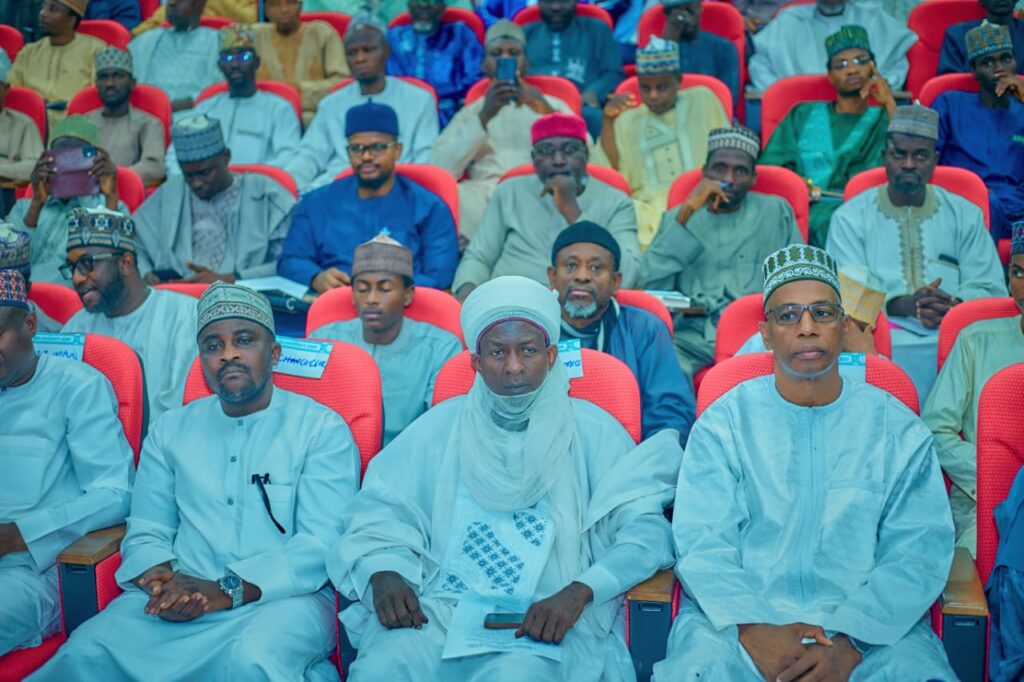
Speaking at Bayero University, Kano, on Friday, Dr Waheedah shared how she and her late husband established free Islamic boarding schools in Indonesia in 1998, combining religious and formal education with healthcare, accommodation, vocational training and income-generating businesses.
Her public lecture, titled “Sustainable Community Empowerment through Waqf: Experiences, Lessons, and Prospects,” was delivered at the CBN Centre of Excellence.
The initiative’s central idea is that schools should not only consume resources but also develop productive ventures capable of financing their operations and teaching students how to earn a living.
From classrooms to commercial ventures
Dr Waheedah said the schools expanded to accommodate about 23,000 students by 2010, ranging from early childhood to university level. Following her husband’s death that year, the programme was streamlined to serve approximately 15,000 students.
Taking responsibility for the institution came with substantial financial difficulties, including debts and unpaid staff salaries.
She said she sold her personal jewellery and vehicles to meet some of the obligations while preserving the Waqf assets that sustained the institution.
That experience, she explained, reinforced the need to protect endowed properties and manage them productively rather than exhaust them to meet immediate needs.
The organisation subsequently developed a network of agricultural and commercial enterprises, including rice fields, rice-processing factories, coffee farms, timber plantations and a bread factory.
According to her, its business operations grew from 25 units to 73, creating multiple sources of revenue for its educational programmes.
Its activities also include noodle production, soya milk manufacturing, fisheries, livestock farming, poultry production and animal-feed manufacturing. The poultry enterprise has 10,000 laying chickens.
The businesses serve a dual purpose: generating income to support the schools and providing students with practical experience in production, marketing and enterprise management.
Turning waste into wealth
One of the model’s distinctive features is its approach to waste management.
Food waste is converted into larvae for feeding poultry and fish, while discarded plastics, eggshells, sweet wrappers and other materials are transformed into yarn, crafts, ornaments and paving blocks.
The organisation summarises the philosophy in its motto: “There’s no trash, but cash.”
Students also produce caps, soap, socks and other goods for internal use and commercial sale. Some products, including traditional caps known as kofia, have reached markets outside Indonesia, including Senegal.
Through vocational programmes in agriculture, fisheries, sewing and beauty-product manufacturing, students acquire skills that could help them establish businesses and become economically independent.
Dr Waheedah said the ultimate goal was to prepare young people to become job creators rather than rely solely on paid employment, charitable donations or government assistance.
A possible pathway for Almajiri education
For Nigeria, the model raises the possibility of integrating productive businesses into Almajiri schools without abandoning their Islamic identity.
Dr Waheedah urged communities to identify their available assets and skills, then organise them around clearly defined educational and economic objectives.
She argued that communities need not wait exclusively for government intervention before beginning to address local challenges.
She also disclosed that the organisation receives support from the Central Bank of Indonesia to establish businesses within Islamic boarding schools, particularly in drinking-water production, waste recycling and biogas generation from cow waste.
The scholar expressed interest in encouraging similar partnerships in Nigeria, proposing a framework in which financial institutions provide funding, universities contribute research and technical expertise, and Islamic organisations coordinate implementation.
Such an arrangement, she suggested, could help Nigerian communities develop locally adapted models for financing education and expanding economic opportunities.
Bayero University offers partnership
The Vice-Chancellor of Bayero University, Professor Haruna Musa, represented by the Deputy Vice-Chancellor (Academics), Professor Ahmad Muhammad Tsauni, said the approach could offer opportunities to address poverty, unemployment and educational disadvantage.
He noted that Nigeria continued to grapple with out-of-school children, youth unemployment, orphanhood and the displacement of vulnerable populations.
Musa said Waqf could support sustainable responses if managed with transparency, accountability and a clear development strategy.
He disclosed that the university would collaborate with Dr Waheedah by providing postgraduate fellowships for research into her model and exploring partnerships for knowledge exchange and practical application.
The university had also concluded plans to offer her a pro bono appointment that would enable her to engage with students virtually.
Bank offers jobs and mentorship
The chairman of the occasion and Managing Director of Summit Bank Limited, Dr Sirajo Salisu, announced plans to offer employment over the next five years to the best graduating male and female students in Islamic Banking and Finance or Economics, subject to the university’s decision on the selection arrangement.
He also offered to mentor undergraduate and postgraduate students voluntarily every two weeks, sharing professional experience and preparing them for future careers.
A former Director of the International Institute of Islamic Banking and Finance, Professor Binta Tijjani Jibril, called for an integrated Almajiri education system that combines Qur’anic instruction with vocational training, entrepreneurship and professional education.
She said school-based businesses could reduce operating costs, generate revenue and equip learners with practical skills, while stronger governance and community participation would improve sustainability.
Jibril also identified digital and financial technologies as tools for mobilising resources and strengthening accountability.
Similarly, the Director-General of Economic and Social Reforms Coordination in Gombe State, Dr Abdullahi Abubakar Lamido, urged individuals, families and communities to organise charitable contributions around specific development priorities.
He said the principles of Waqf could be applied to education, healthcare, employment generation and other public needs.
The discussions pointed to a broader question for Nigeria’s Almajiri education system: whether schools can move beyond dependence on external assistance by developing productive assets that finance learning, support their operations and equip children with skills for dignified livelihoods.
For Dr Waheedah, the Indonesian experience offers a model to study and adapt—not simply by establishing more schools, but by connecting education, enterprise and community responsibility in a sustainable system.