

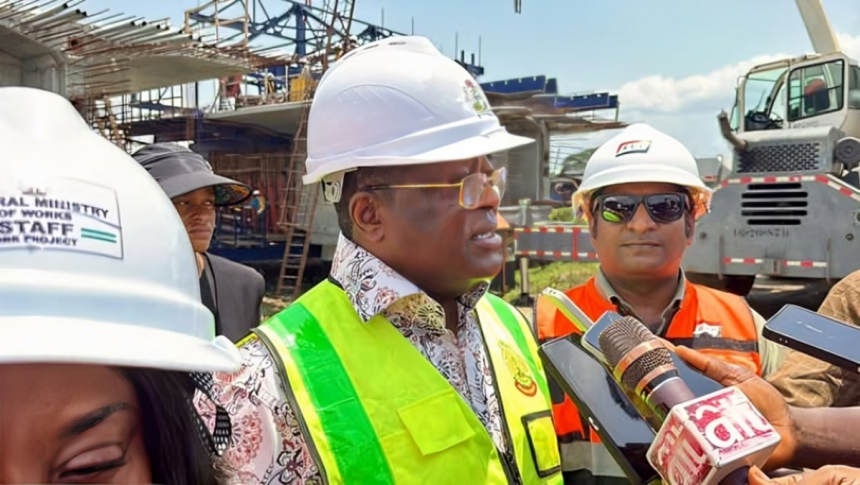

The Human Rights Writers Association of Nigeria (HURIWA) has called on the National Assembly to investigate the realignment of part of the Lagos-Calabar Coastal Highway, raising concerns over the project’s original planning, environmental assessments and potential cost implications.
The rights group also said Works Minister David Umahi should face disciplinary action, including possible removal from office, if an investigation establishes negligence, professional misconduct or avoidable waste of public funds.
HURIWA described the decision to use part of the existing East-West Road instead of constructing a new coastal alignment as a disturbing development that demands transparency and accountability.
The controversy followed Umahi’s explanation that President Bola Tinubu had approved the use of the East-West Road for the stretch between the Ondo State boundary and Edo State, citing flooding and climate change concerns.
Umahi reportedly put the affected corridor at about 104 kilometres, including a proposed 45-kilometre bypass, and said some sections of the existing road would need to be raised by approximately two metres.
Reacting in a statement signed by its National Coordinator, Comrade Emmanuel Nnadozie Onwubiko, HURIWA questioned whether adequate feasibility studies, engineering assessments and environmental impact evaluations had been conducted before the multibillion-naira project commenced.
The association asked how the government could embark on such a major infrastructure project without adequately resolving fundamental questions about flooding, environmental risks and the most suitable route.
It also demanded to know who approved the original alignment and who would be held responsible if an investigation established that the problems could have been anticipated.
HURIWA cautioned against using climate change as a convenient explanation for the realignment without providing verifiable technical evidence.
While acknowledging that new engineering findings could justify changes to major infrastructure projects, the group insisted that the government must explain why the change became necessary and whether the risks could have been identified earlier.
It called for the publication of relevant feasibility studies, environmental impact assessments, engineering reports and documents explaining the revised route, subject to applicable legal and commercial restrictions.
The association also demanded disclosure of whether the realignment would increase or reduce project costs, affect existing contracts or delay completion.
It urged the National Assembly to summon Umahi and relevant project officials to explain the circumstances surrounding the decision.
HURIWA further called for an independent technical and financial review of the original route and the possibility of avoidable additional expenditure.
The group warned that the government should not present the realignment merely as a presidential achievement while leaving taxpayers without clear information about its engineering and financial implications.
It said public infrastructure projects must prioritise sound engineering, environmental responsibility and value for money over political publicity.
“If the original planning was deficient, Nigerians deserve the truth, not political applause for correcting a problem that should never have arisen,” the association said.
HURIWA stressed that neither the President nor the Works Minister should be exempt from public scrutiny over a project involving substantial public funds.