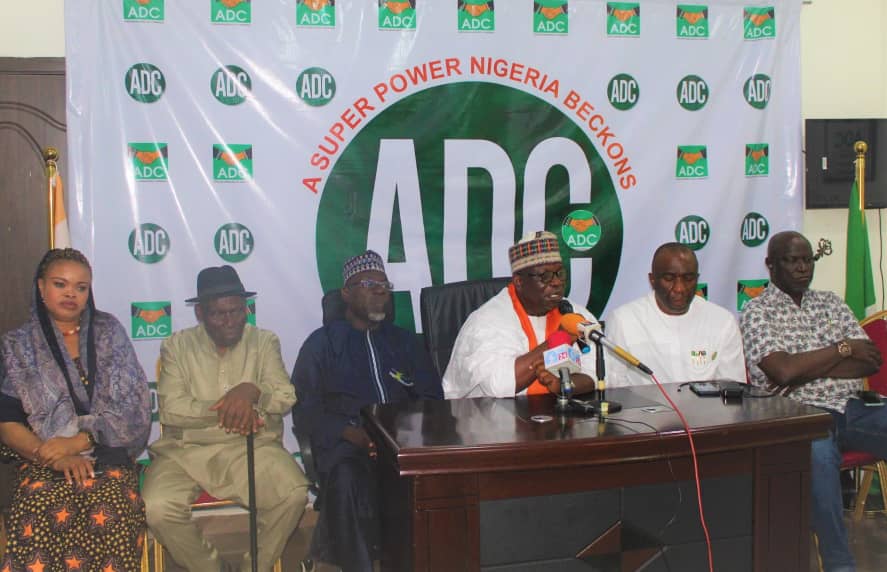
The African Democratic Congress has moved to assert internal discipline ahead of the 2027 political cycle, announcing the expulsion of several members following resolutions reached at its National Convention held on April 14, 2026, in Abuja.
In a statement issued by its National Publicity Secretary, Bolaji Abdullahi, the party said the decision followed the adoption of a disciplinary motion against individuals found to have acted in violation of its constitution and core values.
Those affected by the decision include Hon. Leke Abejide, Nafiu Bala Gombe, Kingsley Temitope Ogga, Don Norman Obinna, Kennedy Odion, Clement Ehigiator, Stella Chukwuma, Patrick Ambut, Johny Tovie Derek, Duke Dick, and Elias Adikwu.
According to the party, the expulsions take immediate effect, effectively stripping the individuals of all rights and privileges associated with membership. It added that the affected persons are free to join any political platform of their choice, noting that other parties are at liberty to receive them.
The decision was ratified by delegates at the convention under the leadership of the party’s National Chairman, David Mark, signaling what observers describe as a decisive effort to stabilise the party after internal disputes.
Beyond the immediate disciplinary action, the move reflects a broader attempt by the ADC to reposition itself as a structured and credible opposition force. With internal crises threatening party cohesion in recent months, the leadership appears keen on sending a strong message that dissent perceived as undermining party unity will not be tolerated.
Party officials emphasised that the action aligns with its commitment to internal democracy and the rule of law, arguing that enforcing discipline is essential to building public trust and strengthening institutional credibility.
The timing of the expulsions is also significant. Coming just as opposition parties begin early alignments ahead of the 2027 general elections, the ADC is seeking to present itself as organised, decisive, and capable of managing internal conflicts—qualities often scrutinised by voters and political stakeholders.
While the party framed the move as a necessary step to uphold standards, it could also reshape internal power dynamics, potentially consolidating control around the current leadership while pushing dissenting voices to the margins—or into rival political camps.
As the ADC continues its repositioning efforts, the fallout from the expulsions may test its ability to balance discipline with inclusiveness, a challenge that could ultimately define its strength as a viable alternative in Nigeria’s evolving political landscape.
ADC Cracks Down on Internal Dissent, Expels Key Members After Abuja Convention