By Fatima Ndagi
The National Assembly and the Federal Government have pledged closer collaboration to bridge persistent gaps between Nigeria’s budgeting processes, national development plans, and implementation outcomes, in a move aimed at accelerating economic growth and improving governance efficiency.
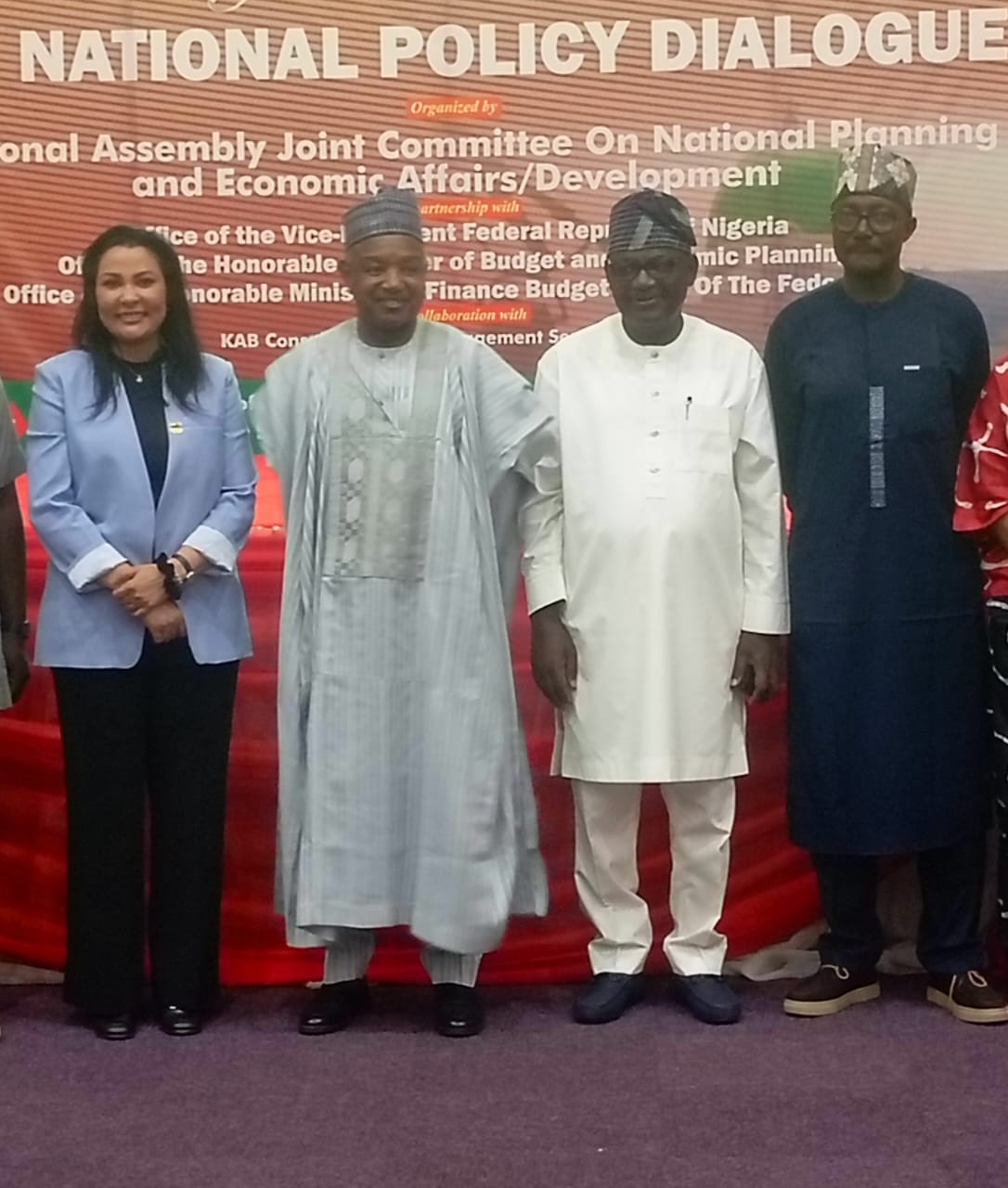
The consensus emerged on Wednesday during the second day of the two-day National Policy Dialogue held in Abuja, themed “The Imperatives of National Development Plan and Effective Budgeting System for Sustainable Growth of the Nigerian Economy.”
The event, organized by the National Assembly Joint Committee on National Planning and Economic Affairs/Development in partnership with the Office of the Vice President, the Ministry of Budget and Economic Planning, the Ministry of Finance, and the Budget Office of the Federation, brought together policymakers, legislators, and planning experts to discuss strategies for better aligning national planning and fiscal execution.
Minister of Budget and Economic Planning, Senator Atiku Bagudu, commended the National Assembly for its role in enabling the administration’s economic reforms. He described these reforms as critical yet challenging policy decisions that have shaped the current government’s agenda.
“Let me appreciate the support that the committees and also the National Assembly as a body have given to the reforms that have taken place in the last three years,” Bagudu said. “They are bold, they are courageous, they are difficult choices.”
He emphasized that national planning is a constitutional responsibility spanning all levels of government and must serve as the foundation for sustainable growth and effective budgeting.
Hon. Gboyega Isiaka, Chairman of the House of Representatives Committee on National Planning and Economic Development, highlighted the 10th National Assembly’s commitment to stronger cooperation with the Executive. He stressed that effective planning requires collaboration beyond traditional oversight, particularly in shaping the upcoming 2026–2030 development plan and achieving the federal government’s $1 trillion economy ambition.
Senator Musa Mustapha, Chairman of the Senate Committee on National Planning and Economic Affairs, echoed this sentiment, noting that historical disconnects between development plans and annual budgets have limited growth and public spending efficiency.
“Our National Development Plan requires meticulous, aligned, and disciplined budgetary support to achieve its objectives,” Mustapha said. “The budget must be treated not merely as a document for expenses, but as the primary engine for implementing our national development agenda.”
Both leaders highlighted ongoing policy reforms under President Bola Ahmed Tinubu’s administration—including subsidy removal, foreign exchange unification, and non-oil revenue expansion—as laying the foundation for fiscal stability. These measures, they said, are enabling increased investment in infrastructure, security, agriculture, and education, including student loan programs.
The dialogue concluded with a shared commitment to strengthen coordination mechanisms, improve fiscal discipline, and ensure that national development plans translate into tangible results for Nigerians.