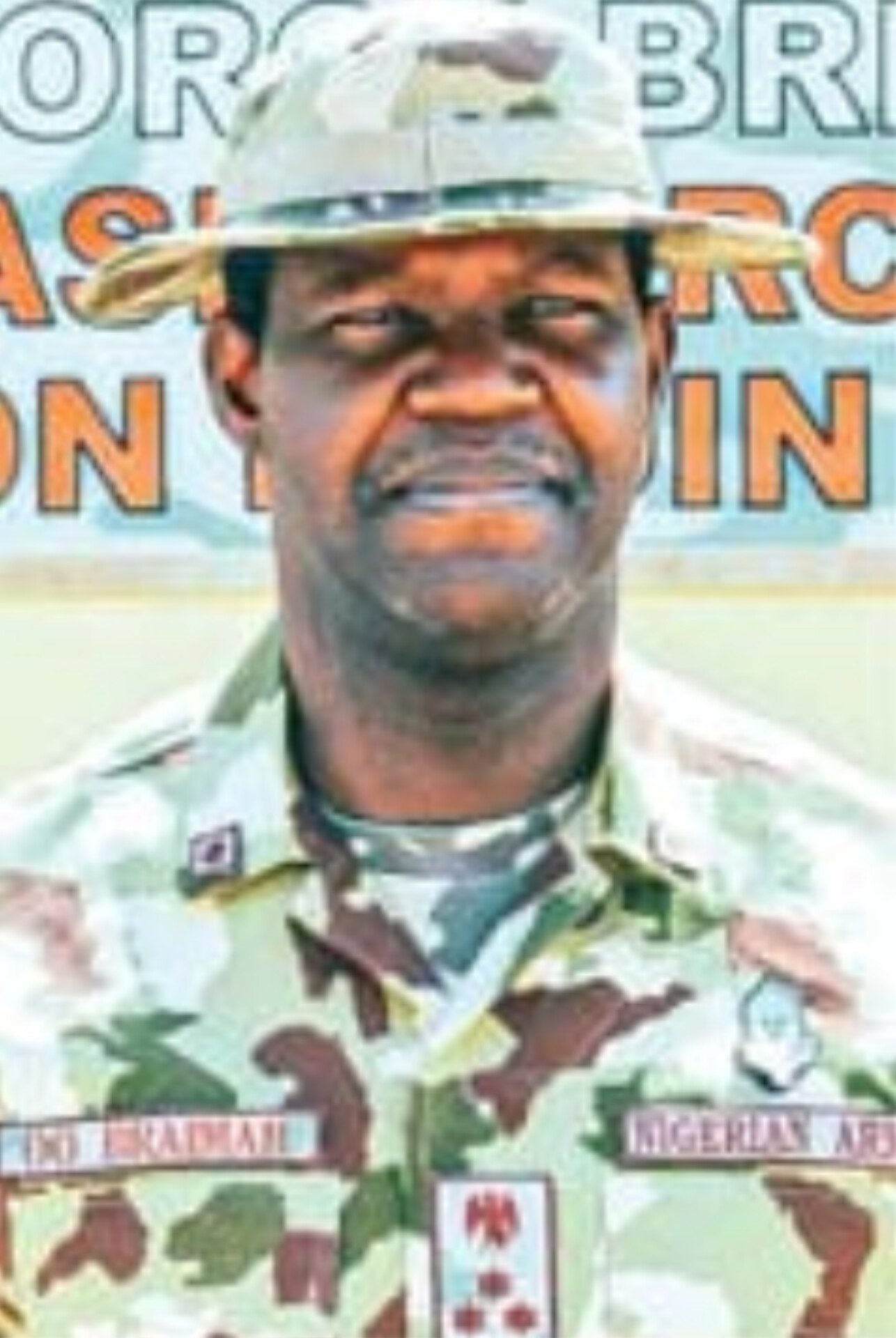
Fresh accounts from surviving soldiers and residents have provided a clearer picture of the deadly midnight assault on a military formation in Benisheikh, Borno State, where Brigadier-General Oseni Braimah was killed.
While the military high command insists the attack was repelled with minimal casualties, testimonies from the ground suggest a far more intense and coordinated offensive by suspected Boko Haram and ISWAP fighters.
The attack, which occurred around 12:30 a.m., targeted multiple positions within the strategic town in Kaga Local Government Area along the Maiduguri–Damaturu highway. Witnesses said the insurgents advanced in large numbers, striking from different directions in what appeared to be a well-planned operation.
A soldier who survived the encounter described the assault as unusually sophisticated.
“We’ve seen coordinated attacks before, but this was different. They came simultaneously from several directions. It felt like they had studied our positions for a long time,” he said.
Another soldier admitted that the attackers overwhelmed troops with sheer numbers.
“We tried to hold our ground, but they were too many. It was like an ambush. They attacked from all sides,” he said.
Sources said the situation worsened as reports filtered in that other nearby positions had been breached, triggering panic among troops.
“When word spread that some of our men had been killed and that the Brigade Commander was down, it affected morale. That was when confusion set in,” one of the soldiers added.
The battle reportedly lasted over an hour, with heavy gunfire and explosions forcing both soldiers and civilians to flee. Some troops were said to have withdrawn into nearby civilian areas, creating a temporary gap that allowed insurgents to loot military equipment and destroy facilities.
Controversy Over General’s Death
Conflicting accounts have also emerged over the circumstances of Brigadier-General Braimah’s death.
Initial claims suggested he died due to a malfunctioning Mine-Resistant Ambush Protected (MRAP) vehicle. However, military sources dismissed the narrative, insisting the vehicle was set ablaze during the intense fighting.
“The claim that the vehicle failed is misleading. It was hit and burned during the attack. The situation was chaotic and far more complex,” a senior source said.
A former driver to the late general defended his record, describing him as meticulous about equipment maintenance and welfare of personnel.
However, another insider pointed to possible systemic lapses, suggesting there had been prior concerns about maintenance culture within the unit.
Residents of Benisheikh recounted scenes of panic as explosions and gunfire echoed through the town.
“We heard loud blasts and continuous shooting. People ran in all directions. Even soldiers came into the town,” a resident said.
Several civilian properties, including shops and vehicles, were reportedly destroyed, while travellers stranded due to road restrictions abandoned their belongings and fled.
Witnesses said insurgents exploited the temporary withdrawal of troops to burn facilities and cart away military supplies.
Reacting to widespread reports, the Nigerian military, through Operation Hadin Kai, dismissed claims of heavy losses.
A spokesperson for the operation, Lt.-Col. Sani Uba, maintained that only a few personnel were killed and described contrary reports as misleading and exaggerated.
He also rejected claims of equipment failure, stating that the late commander remained actively engaged in directing operations until the end.
According to him, troops eventually regained control and forced the attackers to retreat.
The killing of Brigadier-General Braimah adds to a troubling pattern of high-ranking military casualties in Nigeria’s counterinsurgency war.
Security experts say repeated attacks on military formations raise concerns about intelligence gathering, force protection, and evolving insurgent tactics.
Inside Benisheikh Attack: How Insurgents Breached Army Base, Killed Brig-Gen Braimah