By Emmanuel Nnadozie Onwubiko
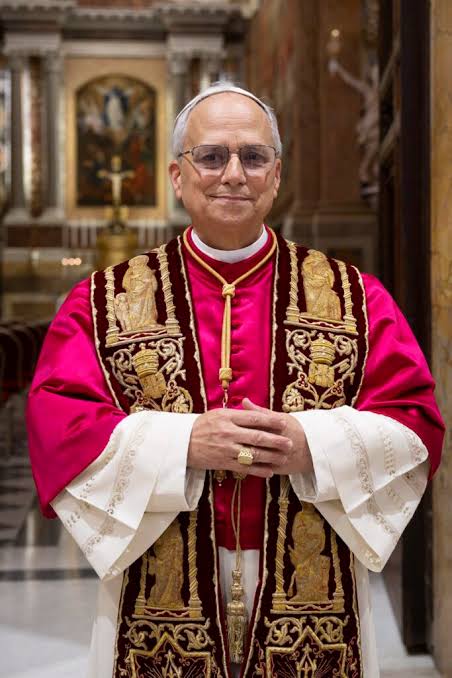
The current Supreme Pontiff Pope Leo XIV has only spent a year of his papacy and the native of the United States of America has already etched his name in the sands of time particularly for strong advocacy for peace and for speaking truth to power.
At this time that President Donald John Trump unilaterally took his nation to war alongside the state of Israel against the Iranians and the war has lasted up to a month with a two weeks truce announced, the voices of peace echoed hy Pope Leo XIV, are phenomenal.
But the Pope has played consistent and particularly unique role in achieving this momentary truce which the USA, Israeli and their arch enemy the Islamic Republic of Iran, Pope Leo XIV made several appeals denouncing the resort to war and demanded an end to the bombardments.
His persistent calls for peace may have paid off with the ongoing two weeks truce. American president has reportedly summoned the Vatican ambassador to the USA to protest over Pope Leo XIV opposition to the war in the Gulf started off by USA and Israel.
On 9th of April, media reported the crisis between the Vatican and Trump’s administration over the calls for peace By Pope Leo XIV.
Senior Pentagon officials reportedly summoned Pope Leo XIV’s ambassador to a closed-door meeting in January 2026, as tensions grew with the first American-born pope.

According to reports by The Free Press and The Letters from Leo, US Under Secretary of Defense for Policy Elbridge Colby and other officials confronted Cardinal Christophe Pierre following the pope’s “State of the World” address. In that speech, Pope Leo criticized “diplomacy based on force,” “imperialist occupation,” and the pursuit of global dominance.
During the meeting, Colby and his colleagues allegedly told the cardinal, “America has the military power to do whatever it wants in the world. The Catholic Church had better take its side.”
The alleged incident is said to have contributed to the collapse of plans for a papal visit to the United States during the country’s 250th anniversary celebrations, according to the reports.
Neither the Vatican nor the Trump administration has publicly responded to the reports, and HT.com has not independently verified the claims.
But what exactly is wrong with the Holy Father calling for peace and for an end to the war in the Gulf region?
The truth as reflected in many media reports is that the Pope Leo XIV has emerged as an increasingly vocal critic of the Iran conflict. After initially calling for restraint and dialogue, he significantly sharpened his tone earlier this week.
Speaking hours after US President Donald Trump warned that “a whole civilization will die tonight,” the pope condemned threats against civilians in Iran.
“Today, as we all know, there was this threat against the entire people of Iran, and this is truly unacceptable,” said the pope.
While not naming Trump directly, the pope urged people to contact their political leaders and congressional representatives “to ask them, tell them to work for peace and to reject war.”
“We have a worldwide economic crisis, an energy crisis, (a) situation in the Middle East of great instability, which is only provoking more hatred throughout the world,” he said, according to AP.
He added that the message to leaders should be: “Come back to the table, let’s talk, let’s look for solutions in a peaceful way and let’s remember especially the innocent children, the elderly, sick, so many people who have already become or will become victims of this continued warfare.”
Aside his support for World peace, the Pope has achieved spiritual milestones that have marked his name in history book as one of the finest teachers of faith. He also has entered the history book for the positive fact that he canonised the youngest saint in this century who is a European teen.
The delightful news is that an Italian teenager who liked playing video games and making funny films of his pets became the Catholic Church’s first “millennial” saint on Sunday.
Carlo Acutis, who was just 15 when he died from leukaemia in 2006, used his computing skills to spread awareness of the Catholic faith, setting up a website documenting reports of miracles.
Nicknamed “God’s influencer,” he is seen as a pioneer of the church’s evangelizing efforts in the digital world.
Frequently depicted wearing jeans, a T-shirt and sneakers, Acutis looks very different from the saints of old and he has gained a global following among young people as a relatable saint.
His canonization took place alongside that of another young man, Pier Giorgio Frassatti, who died in 1925 at age 24. The saint-making ceremony was the first presided over by Pope Leo XIV, the first American pontiff, with thousands of young people in St. Peter’s Square.
Pope Leo carries cross for all 14 stations during Good Friday procession, first pontiff to do so in decades:
Pope Leo XIV continues to achieve many firsts since was inaugurated only about a year ago. He has vecome the first Pope in many years to carry the cross all through the procession of the Good Friday stations of the cross heralding the memorial of the crucifixion of Jesus Christ nearly 2,300 years back.
Pope Leo XIV carried a wooden cross for all of the 14 stations of the Way of the Cross at the Colosseum on his first Good Friday as pontiff, marking the first time in decades that a pope carried the cross to every station.
“I think it will be an important sign because of what the pope represents, a spiritual leader in the world today, and for this voice, that everyone wants to hear, that says Christ still suffers,” Leo told reporters this week outside of the papal retreat at Castel Gandolfo. “I carry all of this suffering in my prayer.”
Inside the Colosseum, Leo lifted the cross and began the rite flanked by two torchbearers, who accompanied him throughout the hourlong procession from inside the Colosseum, through the crowd outside and up steep stairs to the Palantine Hill where he gave the final blessing.
At the first station, marking the moment Jesus was condemned to death, the meditation prepared especially for Leo’s first Good Friday underlined that those with authority will have to answer to God for how they exercise their power.
“The power to judge; the power to start or end a war; the power to instill violence or peace; the power to fuel the desire for revenge, or for reconciliation,” read the meditation written by Rev. Francesco Patton, who was custodian of the Holy Land 2016-25, charged, among other things, with looking after sacred sites.
Some 30,000 faithful gathered outside the pagan monument, following the stations as they were recited over loudspeakers.
They included Sister Pelenatita Kieoma Finau from Samoa and a member of the Missionary Sisters of the Society of Mary.
“We have been part of our parish stations of the cross, but this is so exciting. It is very meaningful to have the experience of being with the people of Rome on this special occasion,” she said.
John Paul II carried the cross for the entire procession from his first Good Friday as pontiff in 1979 until his hip surgery in 1995, when he carried it just part of the way, according to AP reports at the time.
For the first two years of his papacy, Benedict XVI carried the cross for the first station inside the Colosseum, then followed other bearers in the procession that ends on a platform on the Palatine Hill.
Pope Francis never carried the cross, but participated in the procession until his health worsened. He died after a long illness last year on Easter Monday, which fell on April 21.
Pope John Paul II was just 58 when he became pope, and was known as a hiker and an outdoorsman. His two successors were in their late 70s when they began their papacies, and Francis was missing part of a lung due to a pulmonary infection as a young man.
The Way of the Cross commemorates the final hours of Jesus’ life, from his death sentence to taking up the cross to his crucifixion, death and burial. The procession ends outside the Colosseum atop the Palatine Hill.
The Way of the Cross is not intended for those who lead a pristinely pious or abstractly recollected life,” Patton wrote in his introduction. “Instead, it is the exercise of one who knows that faith, hope and charity must be incarnated in the real world.”
At 70, Leo is physically fit and an avid tennis player and swimmer. Before becoming pope, Leo would work out regularly at a gym near the Vatican, with a plan befitting a man in his early 50s, according to his former trainer.
On Holy Saturday, the pontiff presided over a late-night Easter vigil, during which he will baptize new Catholics, and lead Roman Catholics into Christianity’s most joyous celebration marking Christ’s resurrection.
On Easter Sunday, the pope celebrated an open-air Mass in St. Peter’s Square before delivering his Easter message and offer the traditional “Urbi et Orbi” blessing to the city of Rome and the world. He is a teacher of no mean repute. This is demonstrated in his epochsl decision to teach Catholic Church adherents about the outcomes of the Vatican two council in the 60s.
In what most of us Catholics consider as iconic, Pope Leo XIV launched a fresh series of weekly talks on the Second Vatican Council, urging Catholics worldwide to reread its documents and continue to be inspired by its prophetic teachings.
Around January 7, 2026 media report says that the teachings of the Second Vatican Council are still “the guiding star” the Catholic Church is meant to follow, Pope Leo XIV said.
Rereading all of its teachings “is a valuable opportunity to rediscover the beauty and the importance of this ecclesial event,” he said Jan. 7, and because its work remains “a guiding principle for us today.”
“We have yet to achieve ecclesial reform more fully in a ministerial sense and, in the face of today’s challenges, we are called to continue to be vigilant interpreters of the signs of the times, joyful proclaimers of the Gospel, courageous witnesses of justice and peace,” he said.
Vatican Council II rediscovered the face of God as the Father who, in Christ, calls us to be his children,” he said in his talk.
The council looked at the Catholic Church “as a mystery of communion and sacrament of unity between God and his people; it initiated important liturgical reform, placing at its center the mystery of salvation and the active and conscious participation of the entire people of God,” he said.
“At the same time, it helped us to open up to the world and to embrace the changes and challenges of the modern age in dialogue and co-responsibility, as a Church that wishes to open her arms to humanity, to echo the hopes and anxieties of peoples, and to collaborate in building a more just and fraternal society,” he said.
For the past six decades, the popes have repeatedly underlined the importance of Vatican II, its teachings and its fuller implementation.
However, since the council was held so long ago, that means that “the generation of bishops, theologians and believers of Vatican II is no longer with us,” said the pope, who would have been 10 years old when the council ended in December of 1965.
“It will be important to get to know it again closely, and to do so not through ‘hearsay’ or interpretations that have been given, but by rereading its documents and reflecting on their content” directly, he said.
“Indeed, it is the Magisterium that still constitutes the guiding star of the Church’s journey today,” he said.
Catholic News Service produced a significant documentary in 2015 called, “Voices of Vatican II,” in which twelve men who took part in the Second Vatican Council (1962-65) look back at that historic event. It features abundant archival footage of the council, much of it rarely seen, and exclusive interviews with those who recount the history they witnessed and helped to make.
All the voices heard in this film are of bishops and priests –including the late-Pope Benedict XVI– who participated in Vatican II and who, in most cases, have played important roles in the life of the Catholic Church over the subsequent decades. The weekly exegesis by the Supreme Pontiff on Vatican two conclusions and decisions has definitely distinguished this current Papacy as that which is primarily concerned with explaining aspects of our Catholic faith so everyone irrespective of your level of erudition would become accustomed to the basic and fundamental teachijgsvof VATICAN two. The Pope for me is a teacher if faith and the Holy Scripture has special mentions of who a teacher is. The Bible described teachers as follows: Luke 6:40 “A disciple is not above his teacher, but everyone when he is fully trained will be like his teacher.”
Second Peter 2:1-2 “But false prophets also arose among the people, just as there will be false teachers among you, who will secretly bring in destructive heresies, even denying the Master who bought them, bringing upon themselves swift destruction. And many will follow their sensuality, and because of them the way of truth will be blasphemed.”
James 3:1-2 “Not many of you should become teachers, my brothers, for you know that we who teach will be judged with greater strictness.”
Titus 2:7-8 “Show yourself in all respects to be a model of good works, and in your teaching show integrity, dignity, and sound speech that cannot be condemned, so that an opponent may be put to shame, having nothing evil to say about us.”
Second Timothy 3:16-17 “All Scripture is breathed out by God and profitable for teaching, for reproof, for correction, and for training in righteousness, that the man of God may be complete, equipped for every good work.”
Second Timothy 2:2 “And what you have heard from me in the presence of many witnesses entrust to faithful men who will be able to teach others also.”
Deuteronomy 11:18-21: “You shall therefore lay up these words of mine in your heart and in your soul, and you shall bind them as a sign on your hand, and they shall be as frontlets between your eyes. You shall teach them to your children, talking of them when you are sitting in your house, and when you are walking by the way, and when you lie down, and when you rise. You shall write them on the doorposts of your house and on your gates, that your days and the days of your children may be multiplied in the land that the Lord swore to your fathers to give them, as long as the heavens are above the earth.”
The contemporary Catholic Church is indeed headed by a greater lover of World peace and a teacher of faith and Catholicism. Aren’t we so exceptionally lucky? I think we are pretty lucky to belong to the Mother Church. No wonder that all over the world there is a growing embrace of the Catholic faith by largely young Europeans and Americans. All over the world, the Catholic Church is growing phenomenally, thanks to the good examples of Pope Leo XIV. God save the Pope.
* EMMANUEL NNADOZIE ONWUBIKO, was FEDERAL COMMISSIONER of the NATIONAL HUMAN RIGHTS COMMISSION OF NIGERIA and is the founder of HUMAN RIGHTS WRITERS ASSOCIATION OF NIGERIA (HURIWA).