


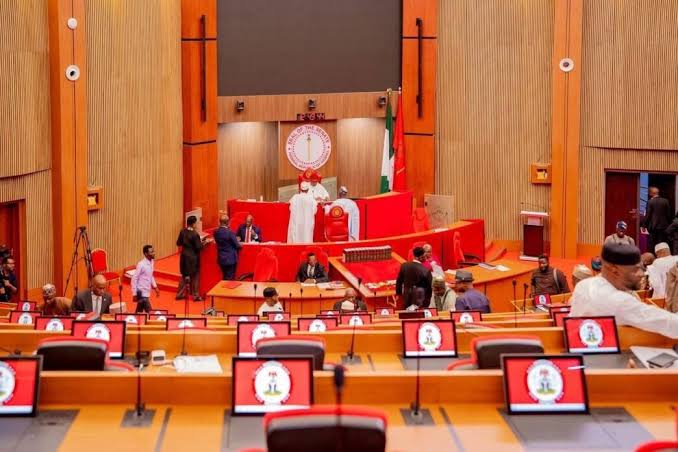
The Senate on Tuesday resumed plenary after a two-month recess, received a fresh batch of executive requests from President Bola Tinubu—and adjourned again until October 13.
The development means lawmakers spent only one plenary sitting after returning from the extended break before proceeding on another two-week adjournment.
The Senate’s latest business included the 2026 statutory budget proposal of the Niger Delta Development Commission, nominations for key federal appointments and two executive bills.

Senate President Godswill Akpabio read Tinubu’s communication transmitting the NDDC budget proposal to the chamber.
The proposal was referred to the Senate Committee on Regional Development for consideration and report.
The budget is expected to finance interventions in areas including youth empowerment, power, education, healthcare, security and agricultural productivity across the Niger Delta.
The President also sought Senate confirmation for Dr Abdullahi Maikano Saidu as Chairman of the Fiscal Responsibility Commission.
Mohammed Asmau, Mohammed Aliyu Makama and Dr Suleiman Gidado were nominated as members of the commission’s board.
The nominations were referred to the Senate Committee on Finance, which was given two weeks to submit its report.
Tinubu also nominated Engineer Sani Ndanusa as non-career Ambassador and High Commissioner-designate to The Gambia.
His nomination was referred to the Senate Committee on Foreign Affairs for screening.
Another request before the chamber was the confirmation of Engineer Wakili Bukar as a member of the Federal Civil Service Commission representing Bauchi, Borno and Yobe states for a second and final five-year term.
The nomination was referred to the Senate Committee on Establishment.
The Senate also received two executive bills from the Presidency.
One is the National Postgraduate Medical College Amendment Bill, 2026, which seeks to rename the institution and expand its powers to award PhD degrees in clinical medicine, dentistry and related fields.
The bill was referred to the Committee on Rules and Business.
The second is the National Research and Development Fund Establishment Bill, 2026.
The proposed legislation seeks to consolidate fragmented research funding across Ministries, Departments and Agencies into a single competitive funding mechanism under the Federal Ministry of Innovation, Science and Technology.
The proposed fund would also receive direct funding from the Nigerian Content Development Fund and promote collaboration among research institutions, universities and the private sector.
According to the Presidency, the initiative is intended to strengthen research and facilitate the commercialisation of locally developed technologies.
The Senate was also informed that President Tinubu had assented to the Agricultural Research Council of Nigeria Amendment Bill, 2026, effectively making it law.
After disposing of the executive communications and other legislative business, the chamber adjourned.
Akpabio announced that plenary would resume on October 13.
The Senate is also scheduled to hold a security summit on October 12 and 13.
The latest adjournment follows an earlier decision by the National Assembly to postpone its resumption from September 15 to September 29 to allow rehabilitation work in the legislative chambers to be completed.
With Tuesday’s decision, the Senate’s much-delayed return to regular plenary has effectively lasted just one sitting before lawmakers embarked on another break.
