

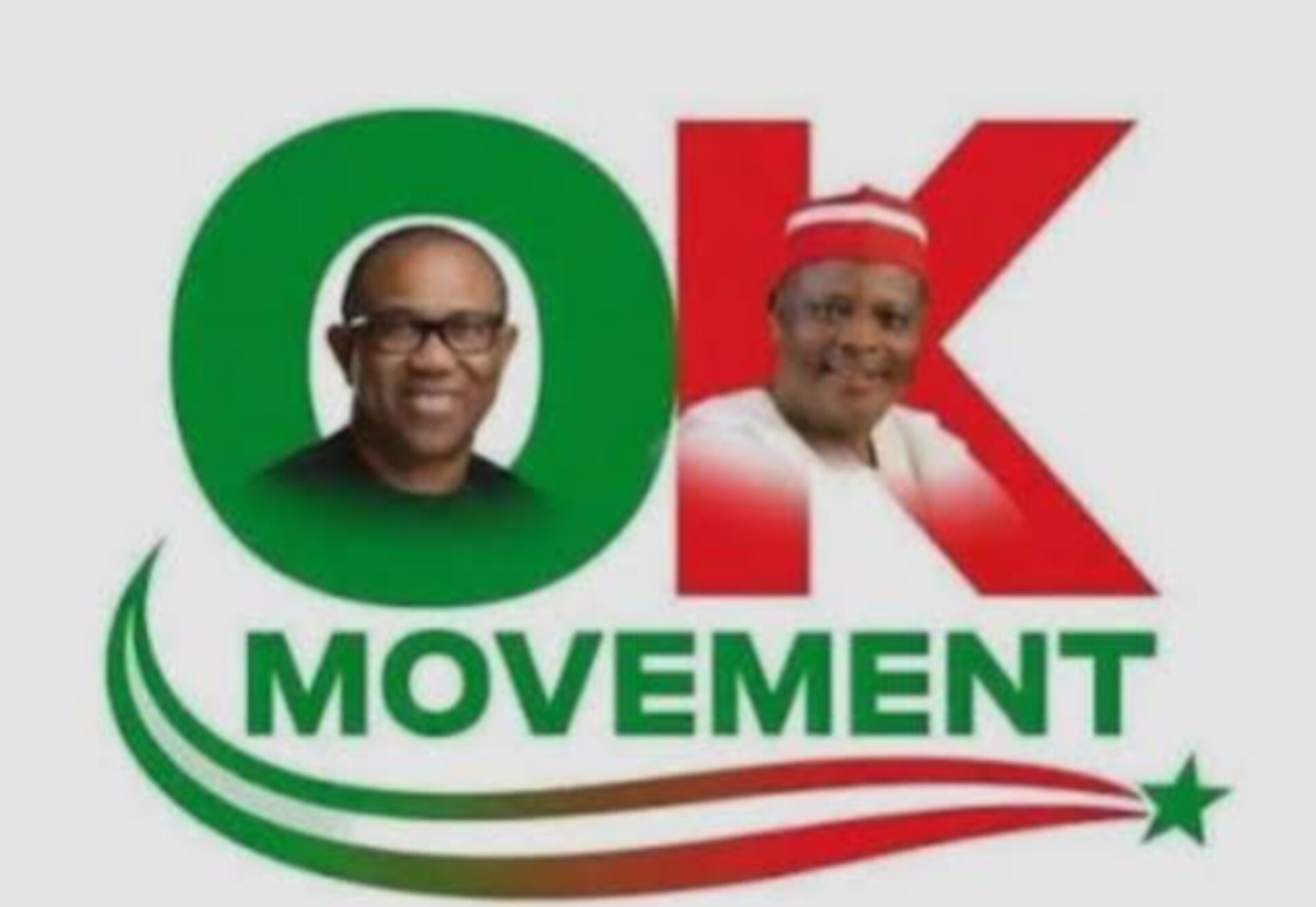
The battle over the control of campaign structures within the Nigeria Democratic Congress, NDC, has taken a new turn as the Obidient/Kwankwasiya (OK) Movement rejected attempts to bring its organisation under the control of the party.
The movement insisted that its 59-member Presidential Campaign Council remains intact, setting the stage for a fresh confrontation with NDC National Leader, Senator Seriake Dickson.
The latest development followed Dickson’s warning that political support groups cannot compete with the party or establish structures performing the functions of the NDC’s official campaign machinery.

The disagreement began after the OK Movement unveiled its Presidential Campaign Council on September 17 to mobilise support for NDC presidential candidate, Peter Obi, and his running mate, Rabiu Musa Kwankwaso.
Two days later, the NDC disowned the structure, saying it did not emanate from the party and should be disregarded.
But rather than withdraw the council, the OK Movement has doubled down on its claim of organisational independence.
In a statement signed by its National Director General, Hon. John Ozyl Ughulu, the movement said its structure did not require the approval of Dickson or any other NDC leader.
The movement maintained that it was an independent political organisation with its own leadership, principles and organisational framework.
It said its independence existed before the announcement of its Presidential Campaign Council.
The group argued that the NDC had the right to establish and manage its official campaign structure, but said that did not automatically give the party control over the internal organisation of the OK Movement.
The development has therefore shifted the dispute from the validity of the 59-member council to a broader question of organisational authority between the party and the movement.
The OK Movement also rejected any suggestion that it was seeking supremacy over the NDC.
It said the party and the movement were separate organisations with different structures, even though they were aligned behind the Obi-Kwankwaso ticket.
The movement further maintained that its grassroots structure was not created through financial support from Obi or the NDC.
According to the group, candidates contesting under the NDC platform could benefit from its grassroots mobilisation.
It therefore argued that no candidate should consider himself or herself superior because of political office or proximity to the party leadership.
The OK Movement warned against any attempt to “undermine, appropriate, dissolve or otherwise interfere” with its leadership and organisational structure.
It said any such attempt would be resisted.
The movement, however, said it was not seeking confrontation with the NDC.
It described the dispute instead as a matter of “institutional respect” and organisational independence.
The OK Movement said it remained willing to work with the NDC, provided its principles, leadership and organisational identity were respected.
It added that political cooperation with the NDC did not amount to surrendering its independent structure.
The movement consequently reaffirmed that its Presidential Campaign Council remains as announced.
The latest exchange comes as the NDC moves towards establishing its own official Presidential Campaign Council for the 2027 election.
With both sides insisting on their respective positions, the dispute has now become a test of how the NDC and its allied grassroots organisations will coordinate their campaign structures ahead of the 2027 elections.
