


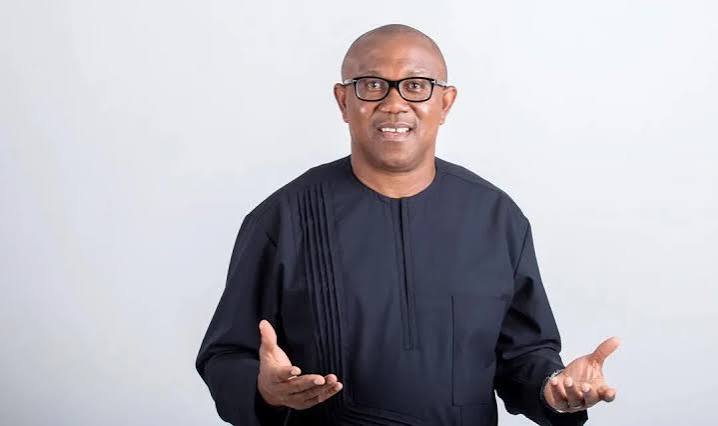
The former Anambra State Governor and presidential candidate of the Nigeria Democratic Congress, Peter Obi, has questioned how $123.77m in external development facilities is now being presented as debt inherited from his administration when, according to Debt Management Office figures he cited, the state’s external debt stood at about $30m when he handed over power in March 2014.
The discrepancy is at the centre of Obi’s latest response to the renewed controversy over Anambra’s debt profile, providing a fresh dimension to the long-running financial dispute between his administration and the government of his successor, Governor Chukwuma Soludo.
Obi’s position is that the **contracted value of development facilities should not automatically be treated as the amount borrowed or outstanding debt**.

The Anambra State Government has said eight external facilities linked to projects undertaken during Obi’s tenure had a combined contracted value of approximately $123.77m, with about $92.35m still outstanding as of June 2026.
But Obi, in his response issued through the spokesperson of Peter Obi Media Reach, Idris Zekeri Jnr., said the figures required a facility-by-facility examination.
He argued that the relevant figures should distinguish between the amounts approved, amounts that became effective, funds actually drawn and the balances outstanding at different stages of the programmes.
According to the former governor, the facilities were largely World Bank and International Fund for Agricultural Development programmes negotiated by the Federal Government and accessed by participating states through subsidiary arrangements.
He therefore questioned the basis for aggregating the contracted value of the facilities and presenting the entire figure as debt inherited from his administration.
Obi also cited what he described as DMO records showing that Anambra’s external debt was about $18m in March 2006, rose to approximately $30m by March 2014, when he left office, and stood at about $45.15m by December 2014.
The figures, according to Obi, raise questions over the suggestion that his administration left behind $123.77m in debt.
“If the external debt of Anambra State was about $30m when I handed over, how can the contracted value of several development facilities now be described wholesale as debt left by my administration?” Obi asked in substance.
He also maintained that he did not personally approach any financial institution to obtain a loan or issue a bond for Anambra State during his tenure.
The former governor recalled that the then Director-General of the DMO, Abraham Nwankwo, had described him at his farewell ceremony as the only governor during Nwankwo’s 10-year tenure who did not approach the agency for a loan facility.
Obi also introduced another financial dimension to the controversy, claiming that he left more than $150m as the dollar component of investments belonging to Anambra State.
He said the investments were expected to generate about $10m annually and argued that such returns could have been used to substantially offset outstanding obligations.
He further claimed that the investments could have risen to approximately $335m when compound interest and additional income were taken into account.
The investment figures and projected returns are, however, Obi’s own account of the financial position he said he left behind and would require independent verification against the state’s financial records.
Amid the renewed dispute, Obi also put to rest speculation about any possible return to the Anambra governorship.
“I am not seeking the office of governor in any state, and I will not seek that position again, even if the Constitution is amended,” he said.
He also denied having any disagreement with Soludo or other governors, urging political leaders to allow candidates to campaign freely across the country ahead of the 2027 elections.
“Ultimately, voters should be allowed to determine whom they wish to serve them,” Obi said.
The former governor said he would not engage in an extended public exchange over his Anambra record, insisting that his attention was now focused on the hardship confronting Nigerians.
The latest intervention has consequently shifted the focus of the Anambra debt debate from the headline figure of $123.77m to a more fundamental question: how much of the contracted facilities was actually drawn, how much was outstanding when Obi left office, and how much should properly be attributed to his administration.
