In a society where culture is often blamed for sustaining Gender-Based Violence (GBV), a quiet but powerful counter-narrative is emerging from Kogi State—one that does not seek to dismantle tradition, but to redefine it.
At the centre of this shift is the Protect The Child Foundation (PTCF), which is challenging a long-held assumption: that culture is inherently oppressive to women and vulnerable groups. Instead, the organisation argues, culture itself may be the most potent solution.
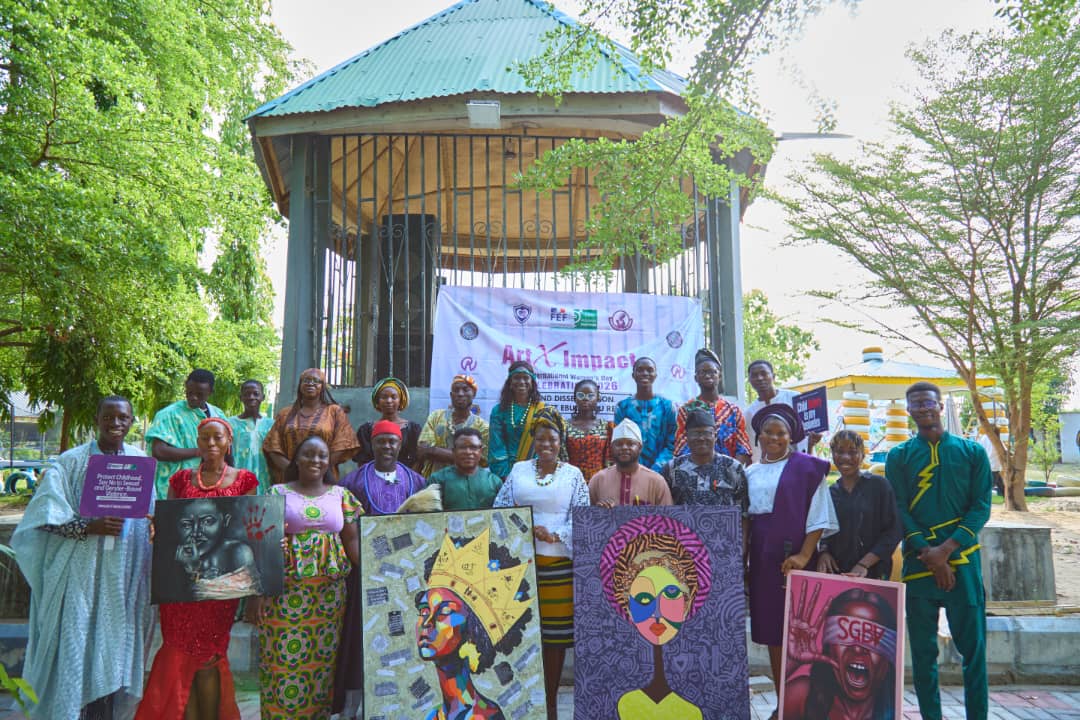
At an event marking International Women’s Day, PTCF unveiled Project Ebulejonu—not just as a programme, but as a cultural reset.
Through art, storytelling, and community engagement, the initiative is reframing tradition as a living system capable of evolution, not a rigid justification for harm.
Supported by the French Embassy Fund, the project taps into history, identity, and collective memory—elements often overlooked in mainstream GBV interventions.
For Elizabeth Achimugu, the conversation is not about abandoning culture, but interrogating it.
“The same culture that is used to silence women once celebrated them. What we are doing is asking communities to remember,” she said.
That act of “remembering” is central to the Ebulejonu narrative—named after a historical figure believed to be the first Attah of Igala, and notably, a woman.
By elevating such stories, PTCF is subtly confronting a deeper issue: the selective memory that shapes modern cultural practices.
Rather than framing GBV purely as a legal or social issue, the initiative positions it as a cultural contradiction—one where values of dignity and protection have been overshadowed by harmful reinterpretations over time.
Stakeholders at the event echoed this reframing.
Reuben Joshua of the Kogi NGOs Network pointed to a critical gap in past interventions—the exclusion of traditional authority structures.
“You cannot change behaviour without engaging the custodians of belief. Culture is enforced at the community level, and that is where the correction must begin,” he noted.
This shift in strategy places traditional rulers not as obstacles, but as allies. The Onu Igala of Kabba, Onuche Isaac, acknowledged that the credibility of culture itself is at stake.
“If culture is seen as a tool for oppression, then we have failed as its custodians. It must reflect dignity, or it loses its meaning.”
Beyond rhetoric, Project Ebulejonu introduces a layered approach—combining advocacy with economic empowerment. The logic is simple but often ignored: vulnerability fuels silence, and silence sustains abuse.
Human rights advocate Joy Akinola captured this intersection succinctly:
“You cannot ask a woman to speak up if she has nothing to fall back on. Empowerment is not optional—it is protection.”
What sets this initiative apart is its refusal to adopt a one-size-fits-all model. Instead of importing external frameworks, it builds from within—using familiar symbols, language, and histories to spark change.
In doing so, PTCF is not just fighting GBV; it is challenging the narrative architecture that allows it to persist.
And in a country where debates around tradition and modernity often collide, this approach raises a compelling question:
What if the key to ending violence against women is not outside culture—but buried deep within it?
From Silence to Strength: Kogi Initiative Reclaims Culture to Protect Women