


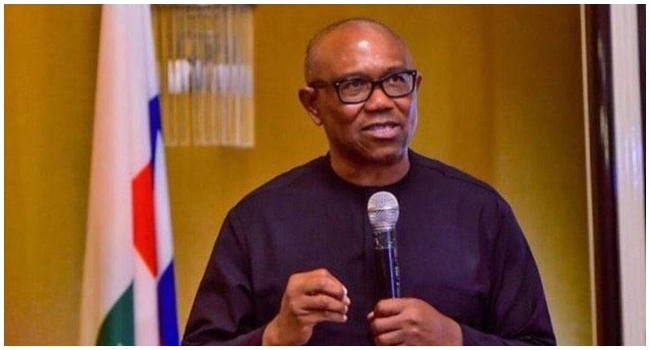
Presidential candidate of the Nigeria Democratic Congress, Peter Obi, has challenged fellow 2027 presidential contenders to open their academic records to legitimate public scrutiny, declaring that candidates seeking Nigerians’ trust must have nothing to hide.
Obi made the challenge while responding to reports of legal proceedings seeking Certified True Copies of his academic records from the University of Nigeria, Nsukka, where he obtained a Bachelor of Arts degree in Philosophy in 1984.
The former Anambra State governor said he had no objection to the release of his certificates, admission records and other academic documents by UNN or any other institution he attended, provided the requests complied with the law.

In a statement, Obi said, “I have absolutely no objection to the legitimate release of these records,” urging the university to make his records available upon any lawful request.
He also extended the request to other educational institutions he attended in Nigeria and abroad, saying he was prepared to submit his credentials to the level of scrutiny reasonably expected of anyone seeking the presidency.
Obi’s position effectively turned the certificate controversy into a broader challenge over transparency among those seeking to govern Nigeria in 2027.
He said public scrutiny should not be regarded as an attack or inconvenience but as an opportunity to strengthen public confidence and rebuild Nigerians’ trust in political leaders.
“As a presidential candidate seeking the trust of Nigerians, I welcome legitimate scrutiny of my educational background, qualifications and public record,” he said.
The NDC candidate, however, cautioned that scrutiny must be lawful, fair and consistently applied to all presidential candidates.
“The same standard of transparency should apply to every presidential candidate, without exception,” he said.
Obi further argued that candidates seeking the highest political office must demonstrate through their actions that they had nothing to conceal from the electorate.
He said, “If we desire a Nigeria founded on transparency, integrity, accountability and respect for institutions, those values must begin with those who seek to lead.”
The former governor urged other presidential candidates to make their educational qualifications and relevant records available for legitimate public examination.
He maintained that leadership should begin with the values political leaders expect from the society they seek to build.
Obi concluded by reaffirming his commitment to openness and accountability, saying those asking Nigerians to trust them must also be willing to earn that trust.
“A New Nigeria is POssible,” he stated.
