By Lamara Garba Azare
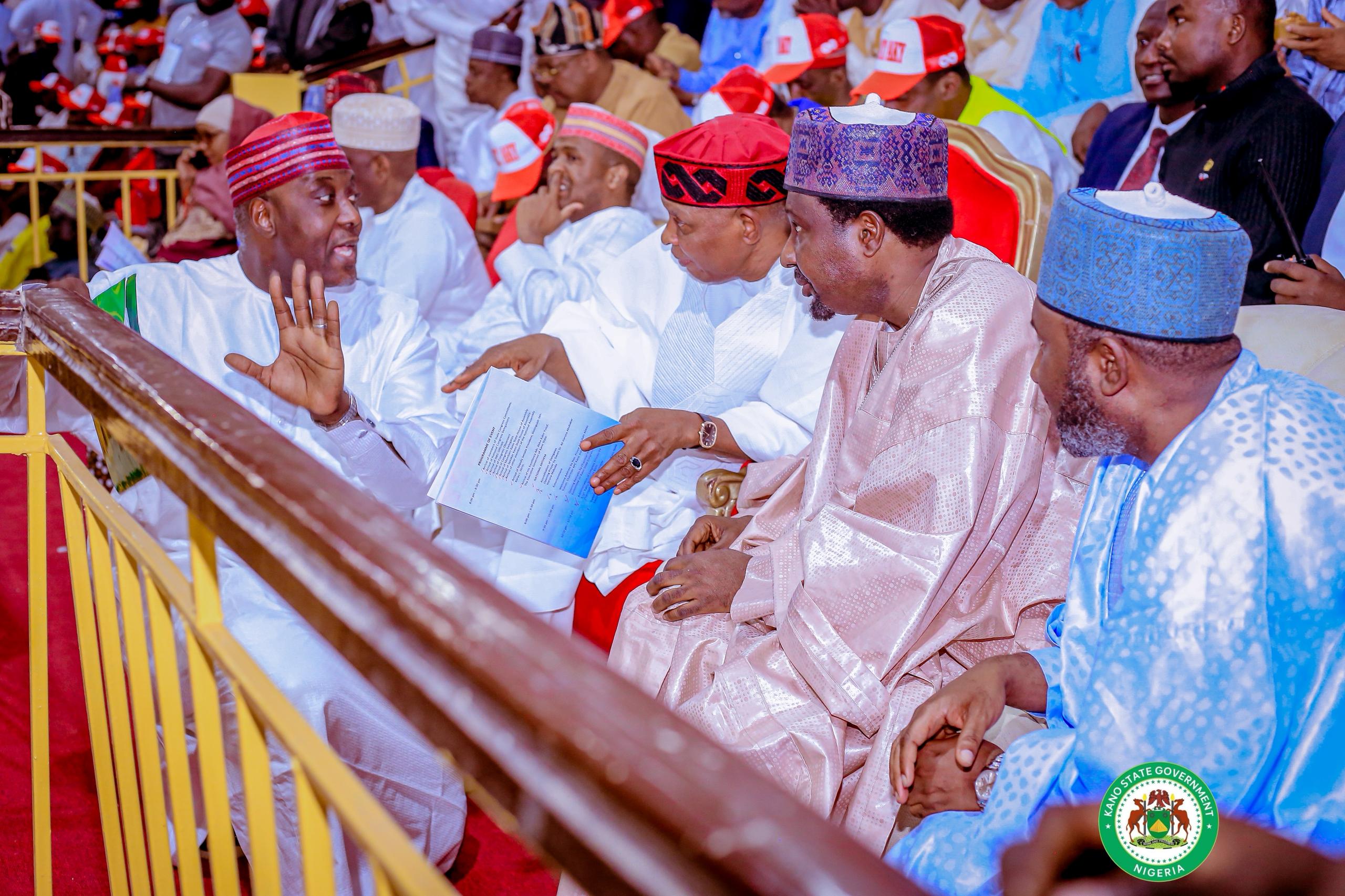
The ancient city of Kano has always understood the language of politics, not merely as a contest for power, but as a careful art of balance, patience and reconciliation. On Wednesday, at the expansive Sani Abacha Indoor Sports Hall, that art was on full display as the All Progressives Congress in Kano State held a peaceful and well coordinated State Congress that produced a new leadership for the party.
The emergence of Alhaji Umar Haruna Doguwa as Chairman of the APC in Kano State was not just the announcement of a name. It was the affirmation of order. It was the quiet triumph of consensus over conflict. It was a demonstration that politics in Kano can still be conducted with dignity and discipline.
From the forty four Local Government Areas, 2,420 delegates gathered and, through a voice vote, affirmed Doguwa and other members of the state executive committee. The exercise, conducted by officials from the APC National Headquarters in Abuja and supervised by the Independent National Electoral Commission, unfolded without rancour. There were no scenes of chaos. No division tearing at the fabric of the party. Instead, what Kano witnessed was unity, deliberate, visible and reassuring.
To give the congress even greater credibility, it was conducted under the watchful eyes of the Kano State Resident Electoral Commissioner, Abdu Zango, alongside other distinguished personalities and security operatives who ensured order throughout the exercise. Their presence reinforced transparency and public confidence in the process. Not a single whisper of inducement tainted the atmosphere. No money exchanged hands. What prevailed instead was a shared vision and a collective commitment to the Kano First slogan, a reminder that beyond individual ambitions lies a higher responsibility to the state and its people.
At the heart of that calm atmosphere stood Abba Kabir Yusuf, a leader whose approach continues to show that strength in politics does not always roar. Sometimes, it listens. Sometimes, it reconciles. Sometimes, it simply allows democratic processes to unfold without interference.
Governor Yusuf’s presence at the congress was symbolic and instructive. In a political climate where tensions can easily rise, his calm disposition reflected maturity and restraint. His message was clear. Kano must move forward, and progress is built on cooperation, not confrontation. By congratulating the new executives and urging them to justify the confidence reposed in them, he positioned himself as a statesman invested in stability and long term growth.
The peaceful conduct of the congress signals something deeper. It speaks to the possibility of a new political culture in the state, one where stakeholders choose dialogue over discord. The unity displayed by party leaders, elders and grassroots delegates is a thing of pride. Kano, with its long history of political vibrancy, has once again shown that it can manage its internal affairs without descending into unnecessary crisis.
Special commendation must go to the Deputy President of the Senate, Barau I. Jibrin, whose presence lent national weight and reassurance to the gathering. Senator Barau has remained a key political figure whose influence extends beyond legislative chambers. His attendance was more than ceremonial. It signalled solidarity and strengthened the bridge between Kano and the national political space.
Equally deserving of recognition is the Chairman of the House Committee on Appropriation, Honourable Abba Abubakar Bichi. At a time when fiscal planning shapes the destiny of states and constituencies, his strategic role at the National Assembly carries enormous importance. His participation in the congress reflects commitment to party cohesion and grassroots engagement.
No reflection on the APC in Kano would be complete without acknowledging the enduring influence of former Governor and former National Chairman of the party, Abdullahi Umar Ganduje. His years at the helm of the state and later at the national level helped consolidate party structures and deepen its reach. The appreciation expressed by the immediate past Chairman, Prince Abdullahi Abbas, was a reminder that political leadership is a relay. Each steward builds upon foundations laid by others.
The election of Salisu Maje Ahmed Gwangwazo as Deputy Chairman, Prof. Yusuf Mohammed Bichi as Secretary, Fatima Dala as Woman Leader, and other key officials further reflects inclusiveness and collective responsibility. Leadership is sustained not by one voice, but by a chorus of committed individuals working toward a shared goal.
What stands out most from the congress is not simply the list of names elected. It is the atmosphere that produced them. In many places, party congresses are battlegrounds. In Kano, this one became a gathering of affirmation. That is no small achievement. It sends a powerful message that internal democracy, when guided by sincerity, can strengthen rather than fracture a political platform.
As Alhaji Umar Haruna Doguwa assumes leadership of the APC in the state and pledges to work with stakeholders toward victory in 2027, the tone has already been set. The road ahead will demand strategy, patience and grassroots mobilisation. But the foundation laid at the congress, unity, order and shared purpose, provides a strong starting point.
If this spirit is sustained, then the gathering at the Sani Abacha Indoor Sports Hall will be remembered as more than an internal party exercise. It will be remembered as a defining chapter, proof that when leaders choose peace over provocation and vision over vanity, a state rediscovers its strength. And in that rediscovery lies a greater promise, that Kano is steadily finding its rhythm again, firmly on the path to regaining its rightful glory in the scheme of national politics.
Lamara Garba Azare, a public analyst, writes from Kano