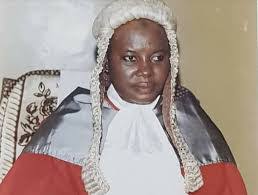
What began as a routine sitting in the long-running Mambilla Power Project trial on Tuesday quickly turned into high-stakes drama, as the prosecution’s principal witness fumbled under cross-examination, triggering laughter in court and raising fresh legal and political questions about one of Nigeria’s most controversial infrastructure projects.
Court proceedings, scheduled for 11 a.m., only began at 12:20 p.m. When the matter was called at 12:30 p.m., both the prosecution team and witness Mr. Umar Babangida (PW3) of the EFCC were absent. The case was stood down and resumed at 1:30 p.m., setting the stage for a tense showdown.
The defence, led by Mr. Adeola Adedipe, SAN, quickly challenged the foundation of the EFCC’s case. At the heart of the dispute is the 2003 award of the Mambilla Hydroelectric Power Project contract. The EFCC alleges the contract was awarded without Federal Executive Council (FEC) approval and contrary to directives from then-President Olusegun Obasanjo.
Under cross-examination, PW3 admitted he recommended prosecution solely because the contract allegedly lacked FEC approval. Pressed to cite the specific law mandating this approval in 2003, the witness hesitated — sparking laughter across the courtroom. The presiding judge directed him to provide the legal reference at the next adjourned date.
The defence highlighted that the Infrastructure Concession Regulatory Commission (ICRC) Act, which mandates such approvals, was enacted only in 2005 — two years after the contract award. Further, PW3 acknowledged awareness of a 2008 legal opinion by then Attorney-General Michael Aondoaka affirming the contract was valid, and of a 2012 Federal Government settlement with Sunrise and its partners confirming the award was based on technical and financial competence.
Financially, the defence stressed that while the FEC had proposed 25 percent federal equity — exposing the government to $1.5 billion — the contract was awarded with just 10 percent equity, reducing exposure to $600 million. The defence framed this as a $900 million savings for the government.
Tuesday’s hearing exposed the tangled mix of law, politics, and infrastructure policy. Legal observers suggest the credibility of the EFCC’s case could now face sharper scrutiny, particularly if the prosecution cannot cite a binding law in force in 2003.
The Mambilla Project, spanning four presidents — Obasanjo, Yar’Adua, Jonathan, and Buhari — and over 18 years from 2000 to 2018, remains embroiled in arbitration for the past eight years. To date, no electricity has been generated, no funds committed by the Federal Government, yet significant sums have been spent on legal fees, leaving the country with unresolved power promises and mounting public frustration.
Tuesday’s courtroom laughter may well echo far beyond the walls of the court, symbolizing the frustrations, political wrangling, and legal uncertainties surrounding one of Nigeria’s most ambitious but stalled power projects.
Courtroom Drama as EFCC Witness Falters in Mambilla Trial