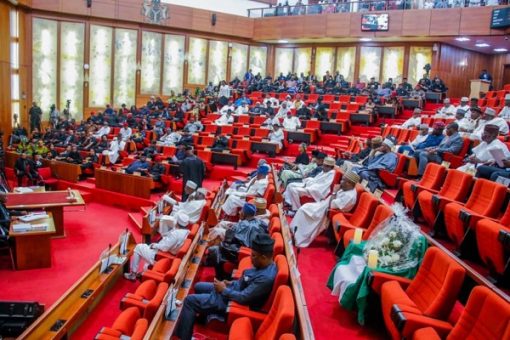
In a dramatic turnaround, the Nigerian Senate on Tuesday, February 10, 2026, rescinded its earlier rejection of electronic transmission of election results, amending Section 60(3) of the Electoral Act (Repeal and Enactment) Bill to allow presiding officers to transmit results electronically to the INEC Result Viewing Portal (IReV).
The amendment, moved by Chief Whip Senator Mohammed Tahir Monguno (Borno North) and seconded by Senate Minority Leader Abba Moro (PDP), came after intense public scrutiny over last week’s rejection of real-time reporting. The Senate’s decision is widely interpreted as a response to growing pressure from civil society, political stakeholders, and citizens demanding greater transparency in electoral processes.
Under the new law, results must be transmitted electronically after signing and stamping official forms, countersigned by polling agents where present. Yet, the provision includes a critical caveat: if technical or network failures occur, Form EC8A—the paper record—remains the primary source for collation and declaration.
Analysts warn that this exception significantly dilutes the potential impact of electronic transmission. While the fallback is practical for areas with poor connectivity, it also renders real-time reporting non-mandatory, leaving gaps for delays, errors, or manipulation, particularly in rural or conflict-affected regions.
“Electronic transmission ensures speed, accuracy, and accountability,” Monguno said. “This balances innovation with operational realities on the ground.”
Yet observers note that reliance on paper forms risks undermining the transparency the amendment seeks to achieve.
The Senate session itself was turbulent. Earlier, a motion to rescind Clause 60(3) sparked a heated exchange, with Senator Enyinnaya Abaribe (Abia South) warning against overturning prior decisions without individual votes. The motion was ultimately withdrawn, paving the way for the amendment.
In tandem, the Senate expanded its conference committee on the Electoral Bill Amendment 2026 to 12 members, aligning with the House of Representatives to fast-track reconciliation and transmission of the bill to the President for assent within February. Senate President Godswill Akpabio emphasized urgency, signaling lawmakers’ awareness of public expectations and constitutional timelines.
Constitutional experts describe the amendment as symbolically important but caution that success will depend on electoral officer training, network reliability, and vigilant monitoring by INEC.
“The amendment is a compromise between innovation and operational pragmatism,” said a senior Abuja-based analyst. “But the caveat introduces ambiguity that could be exploited, especially in rural or low-connectivity areas.”
The episode highlights the tensions in Nigeria’s democracy: the drive to modernize elections collides with infrastructural and political realities. While the Senate signals a willingness to embrace technological innovation, the fallback to paper forms underscores persistent challenges in achieving fully transparent, real-time elections.
As the expanded conference committee negotiates with the House, political watchers will be keenly observing whether the final law achieves a true balance between electronic efficiency and procedural safeguards, or if the caveat leaves the door open for continued delays and disputes.
Senate Approves E-Transmission with Caveat That May Block Real-Time Upload