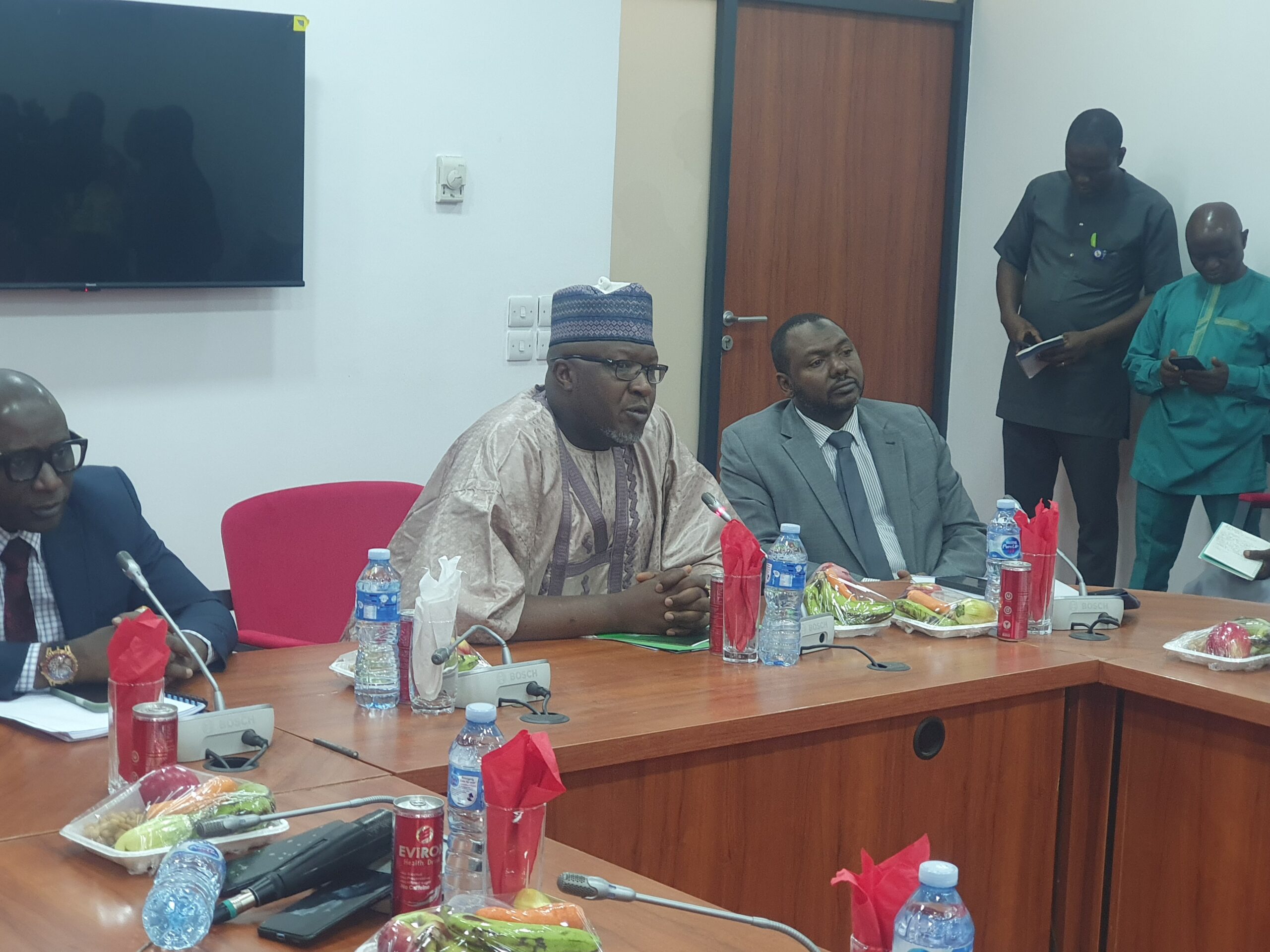
Nigeria’s push to industrialize, create jobs, and break its dependence on oil revenue took centre stage on Monday as the Senate Committee on Trade, Investment, and Industry engaged the Minister of State for Industry, Trade, and Investment, Jumoke Oduwole, over the country’s 2026 budget and economic direction.
The interactive session focused on capital spending, investment strategy, and policy reforms designed to unlock growth and expand employment opportunities across key sectors of the economy.
Lawmakers noted that the 2026 budget is largely a rollover of the 2025 appropriation, following delays in releasing last year’s capital component. While recurrent expenditure continues to fund salaries and routine operations, senators expressed concern that limited capital allocations could weaken the government’s ability to stimulate productivity and growth.
Minister Oduwole acknowledged the constraints but insisted that the Ministry has remained proactive, using innovation and private-sector collaboration to sustain momentum.
“Our work is fundamentally about creating opportunities for Nigerians, especially the youth,” she said. “Industrial development, renewable energy, infrastructure, and the auto sector are critical engines for jobs and long-term economic growth.”
A major highlight of the briefing was Nigeria’s entry into local electric vehicle (EV) manufacturing through a partnership with a Korean firm. The Minister said the project is expected to create about 2,000 jobs, boost local content in the automotive industry, and position Nigeria within the global clean-energy value chain.
She explained that the EV project reflects a broader strategy to focus on high-impact sectors such as manufacturing, construction, and technology—industries capable of absorbing labour at scale while driving skills development and innovation.
Beyond industrial production, Oduwole outlined the Ministry’s role as an enabler of investment. She said the Ministry works to retain domestic capital, attract foreign investors, and resolve regulatory bottlenecks that discourage business growth.
One of the standout achievements cited was the commercial economic partnership agreement with the United Arab Emirates, which now allows more than 7,000 Nigerian products to enter the UAE market duty-free. According to the Minister, the agreement opens Nigerian businesses to a major global trading hub and strengthens the country’s export profile.
Nigeria’s engagement under the African Continental Free Trade Area (AfCFTA) was also highlighted as a key driver of diversification. The Minister disclosed that non-oil exports to African markets have grown by 14 percent, while total non-oil exports have surpassed ₦6 billion—the highest level recorded so far.
“This is evidence that diversification is gaining traction,” she said, noting that export-led growth remains central to the government’s economic reform agenda.
The Senate Committee also examined the Ministry’s projected Internally Generated Revenue (IGR) of ₦2.55 billion for 2026. Some lawmakers questioned the projection, arguing that it appeared modest given that revenue targets for 2024 and 2025 were exceeded.
In response, Oduwole clarified that the Ministry is not designed to be a revenue-maximising institution. “We are a service and enabling ministry,” she said. “Our role is to support MSMEs, facilitate investment, and grow industries—not to place additional financial pressure on businesses. To deliver capital projects that create jobs, we depend on budgetary support.”
Discussions also covered Public-Private Partnerships (PPPs) and the Ministry’s approach to capital project delivery. The Minister noted that private-sector engagement has become central to implementing projects amid tight fiscal conditions, citing the Ministry’s first domestic investor summit as a platform that connected investors with market opportunities and policy support.
Another key reform highlighted was the National Single Window Project, a digital trade facilitation system scheduled to go live this quarter. The platform is expected to streamline customs processes, reduce trade costs, and make Nigerian businesses more competitive globally—especially small and medium-scale enterprises.
Senators commended the Ministry’s focus on industrialization and employment, stressing that sustained collaboration between the legislature and the executive is vital to achieving meaningful economic transformation.
In closing, the Committee Chairman, Senator Sadiq Suleiman Umar, reaffirmed the Senate’s support for initiatives that drive industrial growth and job creation, expressing optimism that Nigeria’s current economic growth rate of 4.2 percent—the fastest in over a decade—can be sustained through investment, exports, and productive industries.
Minister Oduwole’s message was unmistakable: Nigeria’s economic future lies in factories, exports, innovation, and jobs. With targeted investments, effective partnerships, and consistent policy execution, she said, industrialization can become the backbone of national development and a pathway to prosperity for millions of Nigerians.
Industrialization, Job Creation Drive Nigeria’s Economic Reset — Minister