


By Sonnie Ekwowusi
For snubbing the Catholic bishops on July 28, the Tinubu administration is unlikely to return to power in 2027. No politician who has abused or ignored the Catholic bishops has emerged unscathed.
Many years ago, a well-known politician in Enugu (name withheld) was alleged to have oppressed the Catholic Church in Enugu and confiscated some of its land. When efforts to recover the land from the politician failed, the then Catholic Bishop of Enugu was said to have pronounced a curse on him.

It was further alleged that, from that moment, the politician’s life took a tragic turn. Not only was he unable to make any meaningful use of the land, but he also reportedly suffered prolonged illness until his death.
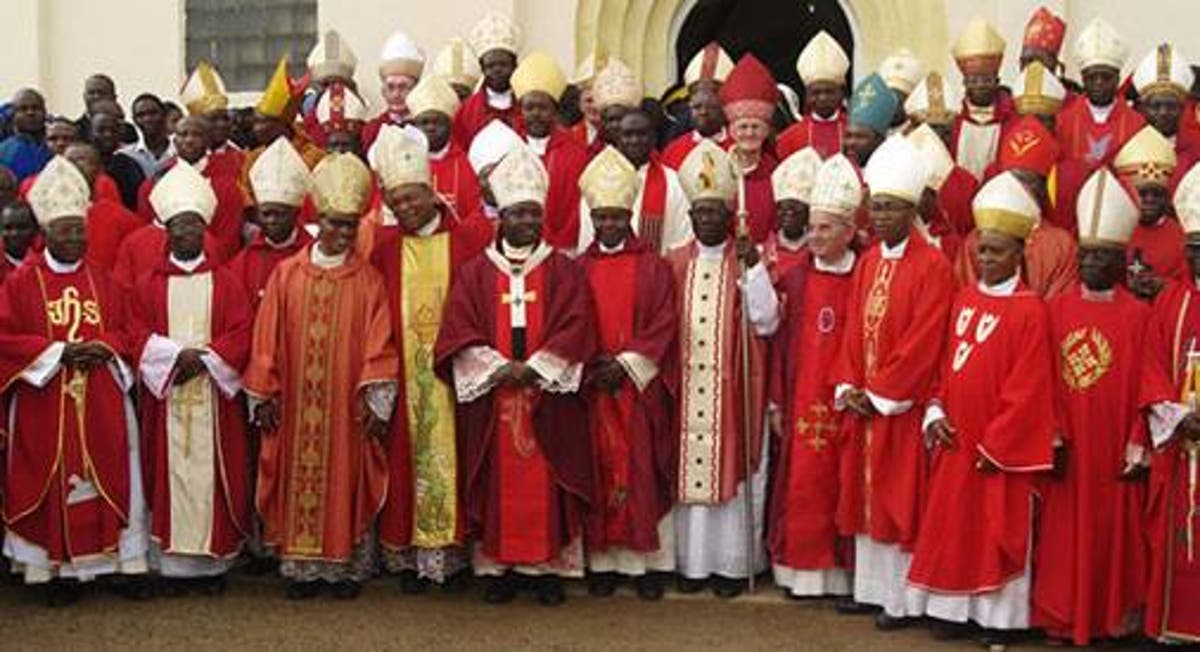
In the case of President Tinubu, the Catholic bishops, who are deeply sympathetic to the suffering of Nigerians, recently visited President Bola Tinubu to express their concern about the grave economic hardship, hunger and widespread suffering in the country. The bishops observed that many sycophants surrounded the President, giving him a rosy picture of the country’s condition when the reality was quite different. They therefore visited him to present the true state of the nation.
According to John Cardinal Onaiyekan, the Catholic bishops were not, by any stretch of the imagination, engaging in partisan politics, which their vocation does not permit them to do. Impelled by their moral obligation to speak on behalf of suffering Nigerians, they simply went to Aso Rock to inform the President that Nigeria was bleeding and that many Nigerians were dying from frustration and hunger.
According to Cardinal Onaiyekan:
“We are not politicians seeking anybody’s office. Our responsibility is not only to preach the Gospel but also to speak to the realities confronting our people. We deliberately presented the true situation in the country rather than offering a flattering picture.”
Instead of humbly thanking the Catholic bishops for their gracious pastoral concern, President Tinubu appeared unhappy that they had told him the truth. He insisted that the Nigerian economy was growing and that Nigerians were becoming more prosperous. Paradoxically, the President also advised Nigerians afflicted by hunger to seek refuge in churches.
Two days later, Presidential aides Temitope Ajayi and Daniel Bwala claimed that Cardinal Onaiyekan’s statement was coloured more by politics than by spirituality. They also lambasted Cardinal Onaiyekan and the Catholic Bishops’ Conference of Nigeria (CBCN) for disclosing the outcome of their discussion with President Tinubu. Why should the CBCN not disclose the outcome of the meeting, especially when the President appeared displeased with them for telling him that his administration was performing poorly
In case President Tinubu, Temitope Ajayi and Daniel Bwala do not know, although the Catholic bishops do not engage in partisan politics or direct the Catholic faithful to vote for any particular political party or candidate, they have a solemn responsibility, in the light of Christian teaching and the natural moral law, to pass moral judgment on the actions or omissions of governments whenever such conduct is contrary to the moral law, violates the dignity of the human person, or threatens the common good.
In exercising this responsibility, the bishops are not promoting any political party or ideology. Rather, they are fulfilling their moral duty to defend justice, uphold human dignity, and safeguard the welfare of society.
This is consistent with the example of Jesus Christ. His earthly ministry was concerned not only with the spiritual welfare of the people but also with their physical, social and material well-being. He fed the hungry, healed the sick, showed compassion to the poor and the marginalised, comforted the afflicted, and even raised the dead. His ministry demonstrated that concern for the whole person—body and soul—is an essential aspect of authentic Christian witness.
Following this example, the Catholic Church cannot remain silent when government policies or actions inflict suffering, undermine justice, or erode the dignity of the human person.
The Catholic Church is not merely a religious institution; it is one of the most respected moral voices in many countries. When its bishops speak collectively on issues of governance, corruption, poverty, insecurity, justice and human dignity, they command the attention of millions of citizens, including many who are not Catholics.
Political leaders who ignore the voice of the Catholic bishops often do so at considerable political risk.
A notable example is the Philippines, where the Catholic Church has long played a decisive role in public life. During the administration of Rodrigo Duterte, relations between the government and the Catholic hierarchy became increasingly strained. Duterte repeatedly attacked Catholic bishops with harsh rhetoric, while the bishops remained outspoken critics of his anti-drug campaign and other government policies. Although Duterte completed his constitutionally limited single six-year term and therefore could not contest another presidential election, his preferred successor, Bongbong Marcos, ultimately charted his own political course rather than continuing Duterte’s confrontational relationship with the Church.
Nigeria’s political and constitutional circumstances are, of course, different from those of the Philippines. Nevertheless, the lesson remains relevant: governments ignore influential moral institutions at their own political risk.
The Catholic Bishops’ Conference of Nigeria (CBCN) has consistently spoken out on matters affecting the nation, including insecurity, economic hardship, corruption, electoral integrity and the welfare of ordinary Nigerians. Such interventions resonate beyond the Catholic faithful because they address issues of national concern.
You will recall that St. Pope John Paul II visited Nigeria during General Sani Abacha’s reign of terror. As the Pope boarded the aircraft to return to Rome, he turned and appealed to Abacha, who had come to the airport to bid him farewell, to chart a new course for Nigeria, including the release of political prisoners.
Of course, Abacha did not heed the appeal. The tragic events that later befell him, culminating in his death, have since become part of Nigeria’s political history.
How can the Tinubu administration continue to pretend that the Nigerian economy is doing well? Who do these people think they are? Do they think Nigerians are fools? Why do they insist that the economy is doing well when the lived reality tells a different story?
Since Buhari and Tinubu came to power, the country has become increasingly associated with despair. In 2018, Nigeria was ranked among the countries with the highest suicide rates. In June of that year, it was reported that 79 Nigerians died by suicide between April 8, 2017, and May 12, 2018. The World Health Organization reports that thousands of Nigerians have died by suicide in recent years.
In 2018, the African Development Bank revealed that the World Poverty Clock had named Nigeria the poverty capital of the world. That same year, Nigeria was ranked among the countries worst affected by malaria. The Global Hunger Index ranked Nigeria 103rd out of 119 countries, while the World Bank placed Nigeria among the seven worst-performing countries on its Human Capital Index.
Today, many Nigerians are committing suicide. Nigeria has become a suicidal country. Why should suicide not increase when life has become increasingly unbearable? Why should people not lose hope when human life has become so cheap? To worsen matters, our cultural, family and religious values are steadily eroding. It is for this reason that even a pastor, who ought to counsel people contemplating suicide, reportedly took his own life over accommodation problems. Similarly, a student reportedly died by suicide after receiving a disappointing JAMB result.
The prices of goods in the Nigerian market have skyrocketed beyond belief. The other day, I went to a supermarket to buy shaving powder. Do you know how much ordinary shaving powder now sells for? ₦30,000.
I was shocked and refused to buy it. ₦30,000 is the monthly salary of many low-income Nigerian workers. How could I possibly spend that amount on ordinary shaving powder?
Meanwhile, hunger continues to ravage Nigerian families. Many employers can hardly pay their workers’ salaries. Just take a careful look around you. What do you see? Hunger, misery, poverty, anguish, despondency and hopelessness. Nigerians have been stripped of their disposable income amid skyrocketing food prices.
The most tragic reality is the persistently high cost of foodstuffs in Nigeria. When was the last time you visited the market to buy basic items such as garri, rice, tomatoes, yam, egusi, pepper, eggs and other household staples? A paint measure (or mudu, depending on the market) of garri now sells for between ₦1,500 and ₦2,000, while premium Ijebu garri can cost as much as ₦3,500. A 50kg bag of locally produced rice sells for about ₦82,000, while imported brands range from ₦100,000 to ₦112,000. A medium-sized tuber of yam costs between ₦2,500 and ₦4,000.
A crate of eggs sells for around ₦5,500 to ₦6,500, depending on size and location. Fresh pepper costs about ₦3,000 per kilogram, while tomatoes average between ₦800 and ₦1,000 per kilogram, although prices fluctuate seasonally. A kilogram of egusi generally sells for between ₦3,500 and ₦5,000, depending on the market. A sachet of “pure water” now commonly sells for between ₦20 and ₦50, depending on the location. Meat and fish have become luxury items for many families. Nigerian farmers, meanwhile, continue to suffer. Many have lost their farmlands to insecurity, while others watch helplessly as their crops are destroyed by open grazing, further worsening food shortages and driving up food prices.
If the Tinubu administration continues to treat the bishops’ concerns with indifference or hostility, it risks alienating not only Catholics but also many Nigerians who see the Church as a credible advocate for justice, accountability and good governance. Paradoxically in 2023, President Tinubu enlisted the support of some fake bishops, priests and pastors, who gathered to sing his praises.
Now, genuine Catholic bishops are approaching him with sincere concerns, yet he appears unwilling to listen. In politics, dismissing respected moral voices rarely strengthens a government’s standing.
If the Tinubu administration ignores the Catholic Church, it will do so at its own peril. Whether that will determine the outcome of the 2027 election remains to be seen. History, however, suggests that political leaders ignore such voices at considerable political risk.
CONCLUDED
