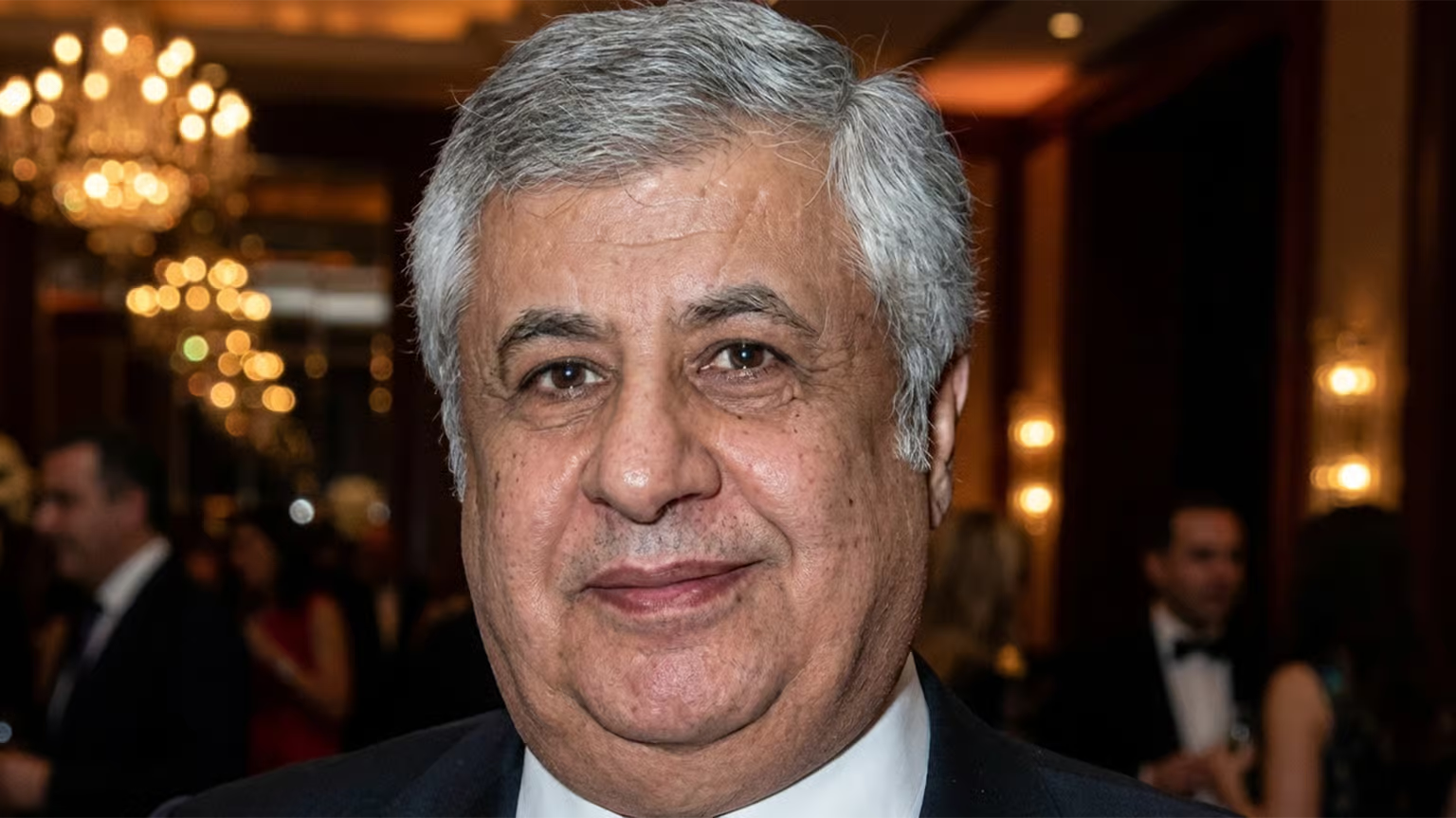
The conferment of the Grand Commander of the Order of the Niger (GCON) on businessman Gilbert Chagoury has reignited public discussion about the standards of Nigeria’s national honours and the message they send about governance and accountability.
Timi Frank, former Deputy National Publicity Secretary of the APC, described the award as a “dark moment” for the country, arguing that it risks normalising corruption and conflicts of interest at the highest levels of government.
In a statement on Monday, Frank cited Chagoury’s past legal entanglements, including a 2000 Swiss court conviction for laundering funds linked to the late General Sani Abacha, and subsequent fines and repayments to the Nigerian government. He questioned how someone with such a record could receive one of Nigeria’s highest honours.
Frank also raised concerns about the business ties between Chagoury and President Bola Ahmed Tinubu, particularly Chagoury’s involvement in major infrastructure projects such as the Lagos–Calabar Coastal Highway.
He argued that the award, combined with these connections, fuels public suspicion of potential conflicts of interest and undermines trust in governance institutions.
Frank noted that Nigeria’s current National Security Adviser, Nuhu Ribadu, once headed the EFCC during investigations linked to Chagoury and the Abacha era.
“The optics of rewarding an individual with a controversial record risk sending the wrong message about the rule of law and fairness,” he said.
Beyond domestic concerns, Frank cautioned international partners, particularly the United States, against appearing to endorse governance practices that could be perceived as rewarding impunity. He warned that such perceptions could affect Nigeria’s global credibility and investor confidence.
At the heart of Frank’s critique is a call for clarity and accountability: what specific contributions justify the award, and how do they compare to the achievements of other Nigerians? “National honours should celebrate integrity, sacrifice, and service—not wealth or influence,” he said.
The controversy has reignited public debate over the purpose of state recognition in Nigeria. Observers note that the episode may shape future expectations of transparency and ethical standards in awarding national honours, as Nigerians weigh the symbolic power of such awards against the broader demands of justice, fairness, and public trust.
As of now, the Presidency has not provided a detailed public explanation for Chagoury’s award, leaving questions of governance, integrity, and civic accountability unresolved.
GCON Award to Chagoury Sparks Debate Over Integrity, Governance in Nigeria