
By Dr. Ezrel Tabiowo
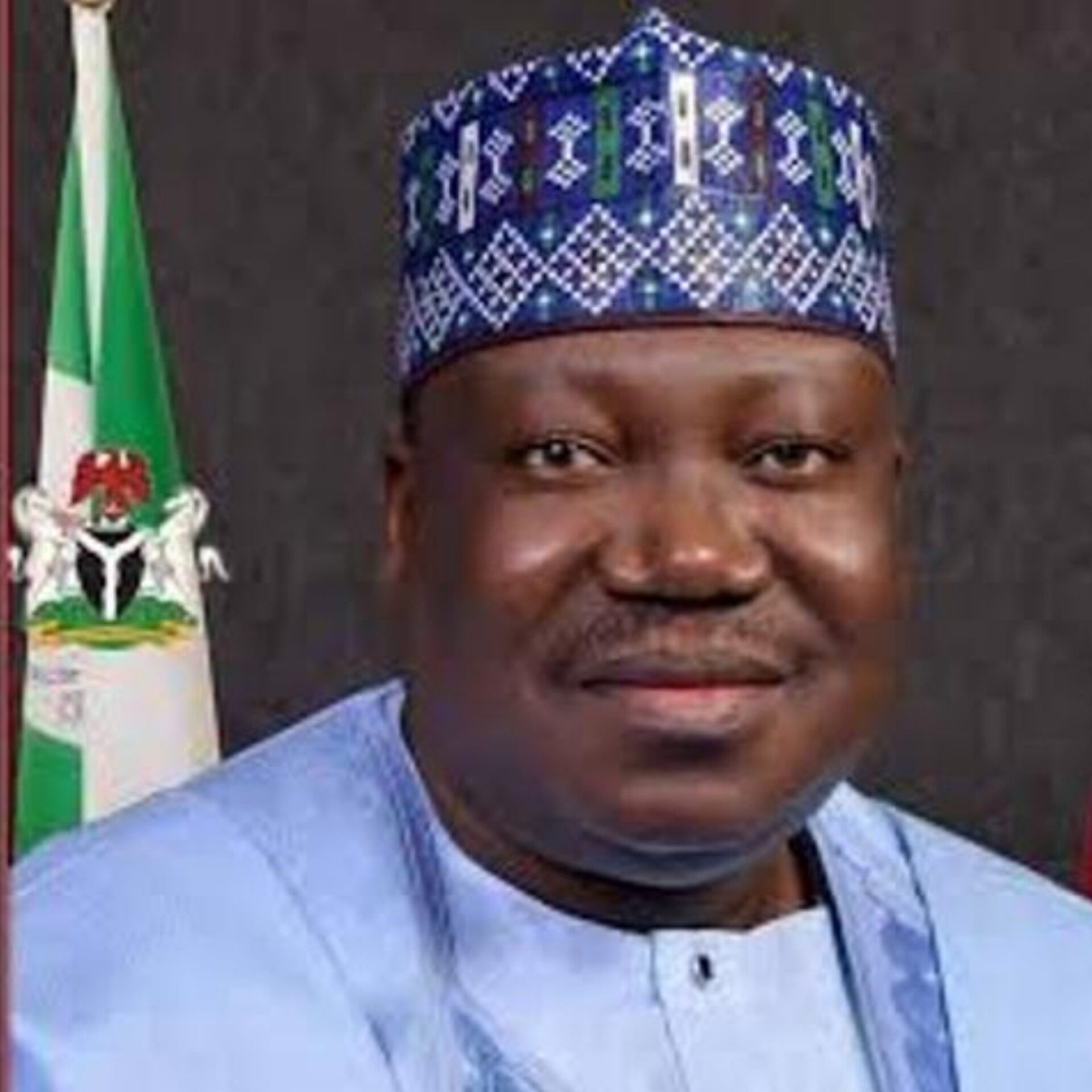
In the grand, often turbulent theatre of Nigerian politics, where careers are made and unmade with the capriciousness of a Harmattan wind, one is reminded of the Bard’s observation that “all the world’s a stage, and all the men and women merely players.” Upon this formidable stage, the ascent of a singular figure from granular particularities of a constituency to the rarefied zenith of legislative authority demands a chronicler’s eye. The narrative of Senator Ahmad Ibrahim Lawan is a masterclass in strategic patience, and an intricate ballet performed upon the shifting stages of the National Assembly from 1999 to the present day. His journey from the Green Chambers to the pinnacle of the Red, and his enduring presence as a defining force in our federal legislature, offers a lens through which to examine the anatomy of power within Nigeria’s public realm.
His entry into the Fourth Republic’s political order was as a Member of the House of Representatives in 1999, representing the Bade/Jakusko federal constituency of Yobe State. This was an era of democratic nascency, a time of foundation-laying. In those early years, Lawan cultivated the visage of a diligent, studious legislator. He was no firebrand orator dominating the plenary with thunderous rhetoric; rather, his power was accretive. His chairmanship of the House Committees on Education and Agriculture showcased a predilection for structured, systemic engagement with governance; a harbinger of his later methodological approach to legislative leadership. Here, in the lower chamber, he learned the first cardinal rule of parliamentary survival: that true influence often flows not from the volume of one’s voice, but from the depth of one’s institutional knowledge and the breadth of one’s alliances.

The transition to the Senate in 2007 marked a critical elevation. Representing Yobe North, he stepped onto a platform where regional and national interests collided with greater force. The Senate, with its collegiate atmosphere, rewards longevity and consistency. Lawan embodied both. He served, with notable focus, as Chairman of the Senate Committee on Public Accounts, and, subsequently, as Senate Leader, both roles that demand a certain forensic temperament and fearlessness in confronting executive profligacy. It was here that he honed a reputation for probity, seeking, in the words of philosopher John Locke, to make the “government of laws, and not of men,” a tangible ideal. Lawan developed a detailed grasp of the nation’s fiscal labyrinth, endearing him to the technocratic class and burnishing his credentials as a serious, purposeful parliamentarian.
Even so, the true crucible of his meteoric rise was the presidency of the Senate, an office he assumed in 2019 after a legendary pursuit. This was the culmination of a calculated, almost tectonic, shifting of loyalties and the construction of a formidable political machinery within the All Progressives Congress (APC). His campaign for the office revealed a different facet of Ahmad Lawan: the relentless political operator, a consensus-builder with a spine of steel. The infamous “next level” slogan of the APC found its purest legislative expression in his determined, and ultimately successful, quest.
His tenure as President of the Senate (2019-2023) was defining. He championed, with dogged determination, the doctrine of “harmony” between the executive and legislature. This became a philosophy that attracted both fervent admiration and scathing criticism. In this, he managed the perennial tension described by Lord Acton, that “power tends to corrupt,” by attempting to institutionalize its exercise within the framework of party and national agenda, believing that strong, predictable institutions were the surest check against arbitrary authority. To his advocates, he was the stabilising force who broke the cycle of adversarial brinkmanship that had often gridlocked governance, from ensuring the passage of critical budgets and key legislative instruments with unprecedented timeliness. To his detractors, this harmony veered uncomfortably close to subservience, diminishing the Senate’s constitutional role as a robust check on executive power. Lawan, however, operated from a stark political calculus: that in a developing democracy facing existential security and economic threats, a collaborative model, however imperfect, was preferable to a permanently antagonistic one. His mastery was in managing this delicate equilibrium, knowing precisely when to stand firm and when to facilitate.
What is most instructive about Lawan’s chronicle, extending his influence beyond the presidency of the Senate into 2026, is his evolution into the archetype of the institutional man. In a political culture often skewed towards charismatic, populist individualism, Lawan’s power derives from his becoming synonymous with the institution of the Senate itself. He understands its rules, its traditions, its unwritten codes, and its bureaucratic pulse better than perhaps any of his contemporaries. He is a parliamentarian’s parliamentarian, demonstrating that while “some are born great, some achieve greatness, and some have greatness thrust upon them,” his was a greatness achieved through the meticulous and willful assembly of influence. His continued relevance, even after stepping down from the apex office, speaks to a power from his school of thought that is embedded rather than merely bestowed.
The chronicle of Senator Ahmad Lawan, therefore, is a proof of the potency of procedural legitimacy and strategic endurance. His rise was not meteoric in the sense of a sudden, blazing flash, but rather like the deliberate, inevitable ascent of a celestial body following a calculated orbit. He moved from the specific duty of a constituency representative, through the scrutiny of public accounts, to the ultimate role of setting the legislative agenda for a nation. His story elucidates a fundamental truth of Nigeria’s Fourth Republic: that in the complex ecosystem of power, the quiet mastery of the institution itself can be the most potent political instrument of all. He has shown that in the public realm, the pen that drafts the act, and the gavel that orders the debate, can, in steady hands, wield authority as enduring as any derived from the transient clamour of the political square.
Thus, as we mark the occasion of his sixty-seventh revolution around the sun, we celebrate the accretion of Senator Lawan’s accomplishments, which, stand now as a venerable oak in the forest of our democracy, his branches having shaped the very climate of the National Assembly. In the spirit of Shakespeare’s Julius Caesar, we might say of his journey, “Why, man, he doth bestride the narrow world like a Colossus,” not merely in physical stature, but in the enduring shadow of his legislative footprint.
We acknowledge Senator Lawan’s career that has become inseparable from the architecture of our federal legislature itself. May the years ahead grant him continued wisdom as an elder statesman, and may his chronicle, still being written, remain a definitive volume in the library of Nigeria’s political history. Happy Birthday, Mr. President of the Ninth Senate.
Tabiowo is the Media Adviser to Senator Ahmad Lawan, and writes from Abuja.