


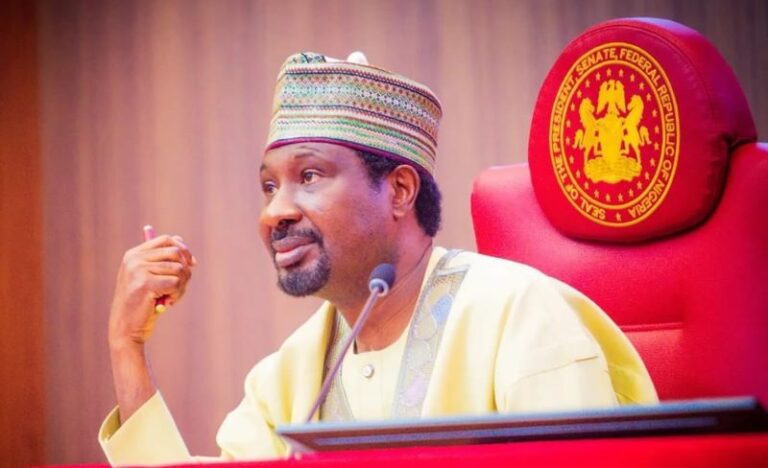
Deputy Senate President Barau Jibrin has said the proposed constitutional framework for state police includes safeguards that would allow the President to assume control of any state police formation if it is abused by a governor.
Barau, who also chairs the Senate Committee on Constitution Review, disclosed this during Hannu Da Yawa, a live Hausa programme on Radio Nigeria Kaduna, explaining that the proposed amendment was carefully designed to balance the benefits of decentralised policing with measures to prevent political misuse.
According to him, the Senate’s constitutional amendment bill provides for a dual policing system in which the Nigeria Police Force and state police services would operate side by side, while giving the Federal Government powers to intervene whenever a state police outfit is used to intimidate citizens or threaten lives and property.

He described President Bola Tinubu’s push for state police as a strategic response to Nigeria’s persistent security challenges, noting that the proposal followed extensive consultations involving the presidency, National Assembly, Inspector-General of Police, retired security officers, governors, civil society organisations and other stakeholders.
Barau said public hearings conducted across the six geopolitical zones and the Federal Capital Territory also shaped the safeguards built into the legislation.
“While many Nigerians support state police, there are concerns it could be abused for political or ethnic purposes. That is why constitutional checks have been included,” he said.
The deputy senate president explained that if any governor misuses a state police force, the President would have constitutional authority to direct the Nigeria Police Force to take over its operations.
He added that state police officers, being recruited from their local communities, would possess better knowledge of the terrain and criminal networks, making them more effective in tackling banditry, kidnapping and other internal security threats.
According to him, the Nigeria Police Force would continue to handle national security issues such as terrorism and cybercrime, while state police would focus on maintaining law and order within their respective states.
Barau also revealed that state police commandants would be appointed through a transparent process and protected from undue political interference, while funding and operational frameworks would be further developed as the constitutional amendment progresses.
He expressed optimism that state Houses of Assembly would approve the amendment, stressing that the initiative is aimed at strengthening Nigeria’s security architecture while preventing abuse of power.
