Rivers State is quietly sliding back into a familiar political fault line, one defined not by party ideologies but by a struggle over succession, loyalty and the future of governance in Nigeria’s oil-producing heartland.
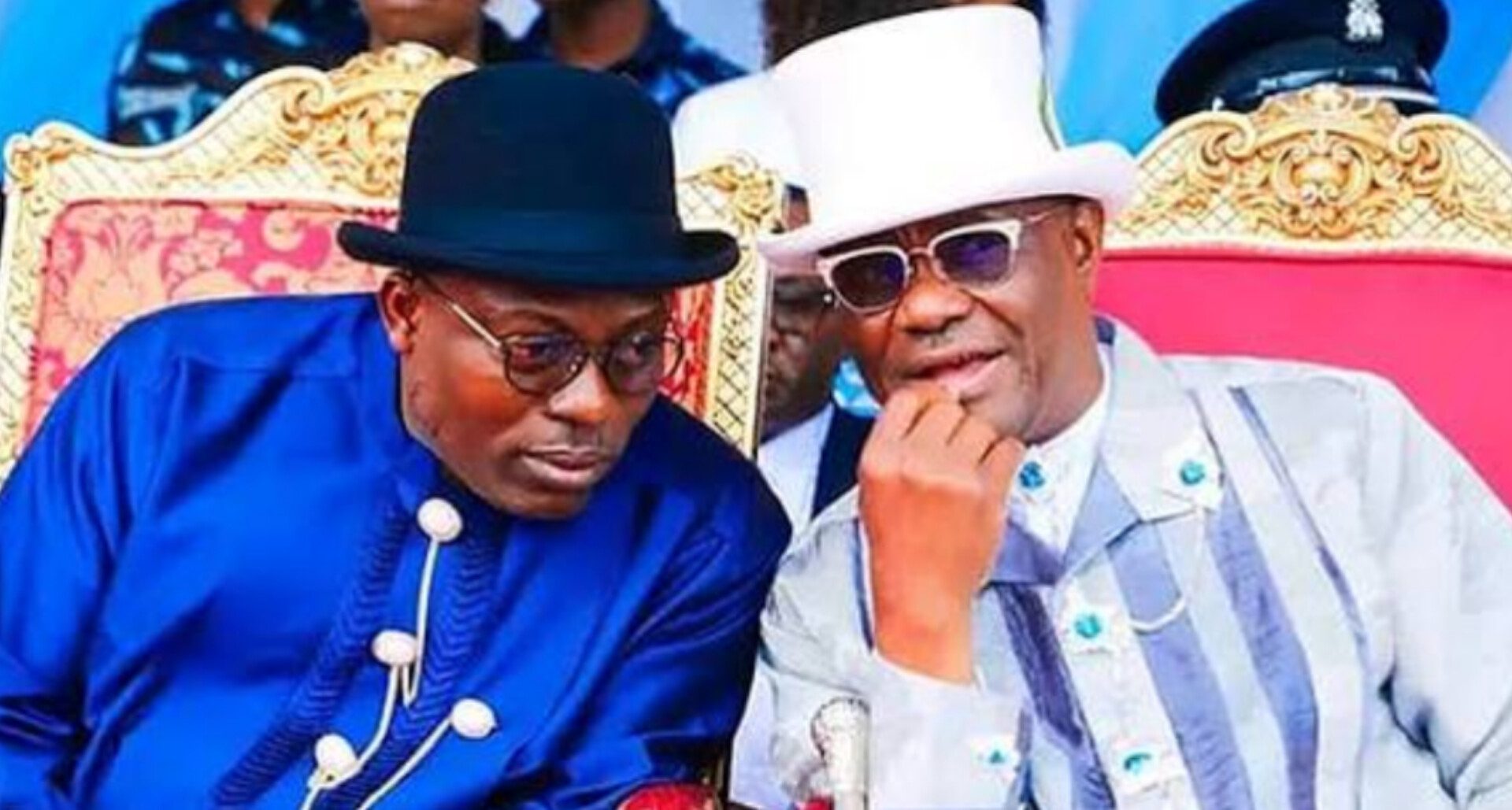
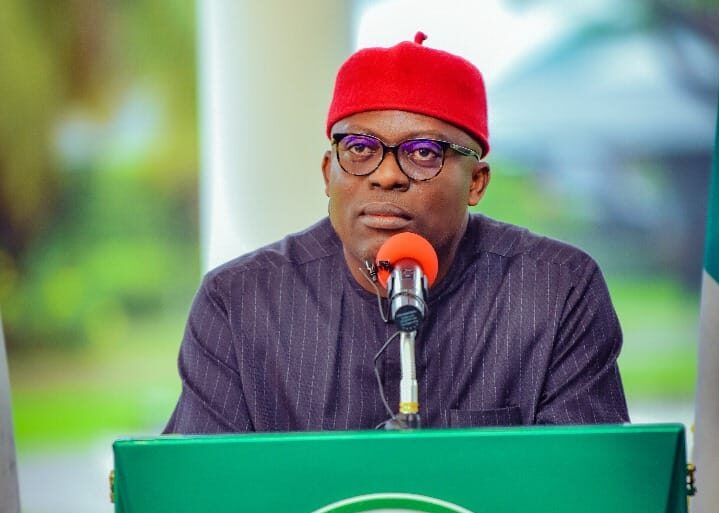
At the centre of the storm are two men once bound by political trust: former governor Nyesom Wike and his successor, Governor Siminalayi Fubara. As 2027 approaches, their rivalry has re-emerged—not as open confrontation, but as a calculated contest over who truly holds power in Rivers State.
What began as a seamless handover of power in 2023 has morphed into a battle over political ownership. For Wike, Rivers State represents the backbone of his enduring relevance in national politics. For Fubara, the state is the platform upon which he must establish independent authority or risk being reduced to a caretaker governor.
This tension has little to do with party platforms. Instead, it reflects a deeper question in Nigerian politics: when does a political godfather release control, and when does a protégé stop seeking permission?
The warning signs became impossible to ignore when Wike embarked on a series of “thank-you” visits to Rivers communities in late 2025. Officially framed as gratitude tours, the visits carried unmistakable political weight.
His statements—“power is not for dash” and the promise to “correct the mistakes of 2023”—were interpreted as a declaration that the succession experiment had gone off script. By rallying loyalists and reaffirming his grassroots network, Wike sent a message that his influence remains deeply entrenched.
President Bola Tinubu’s intervention in September 2025 temporarily cooled tensions, but the peace deal proved fragile. Insiders say unresolved disagreements over political structures and control of the State Assembly quietly reopened the rift.
While Fubara adopted a restrained public posture, developments in Abuja began to shift the equation. His defection to the APC and recognition by national party leaders subtly elevated his standing, reinforcing the belief that federal power may no longer be neutral in the Rivers equation.
Wike’s declaration that his political career would be “buried” if Fubara secured a second term marked a turning point. It was no longer about reconciliation—it was about survival.
For Wike, allowing Fubara to consolidate power would signify the end of his dominance in Rivers politics. For Fubara, resisting control has become both a political necessity and a test of legitimacy.
The conflict has thus transformed into a broader referendum on godfatherism itself.
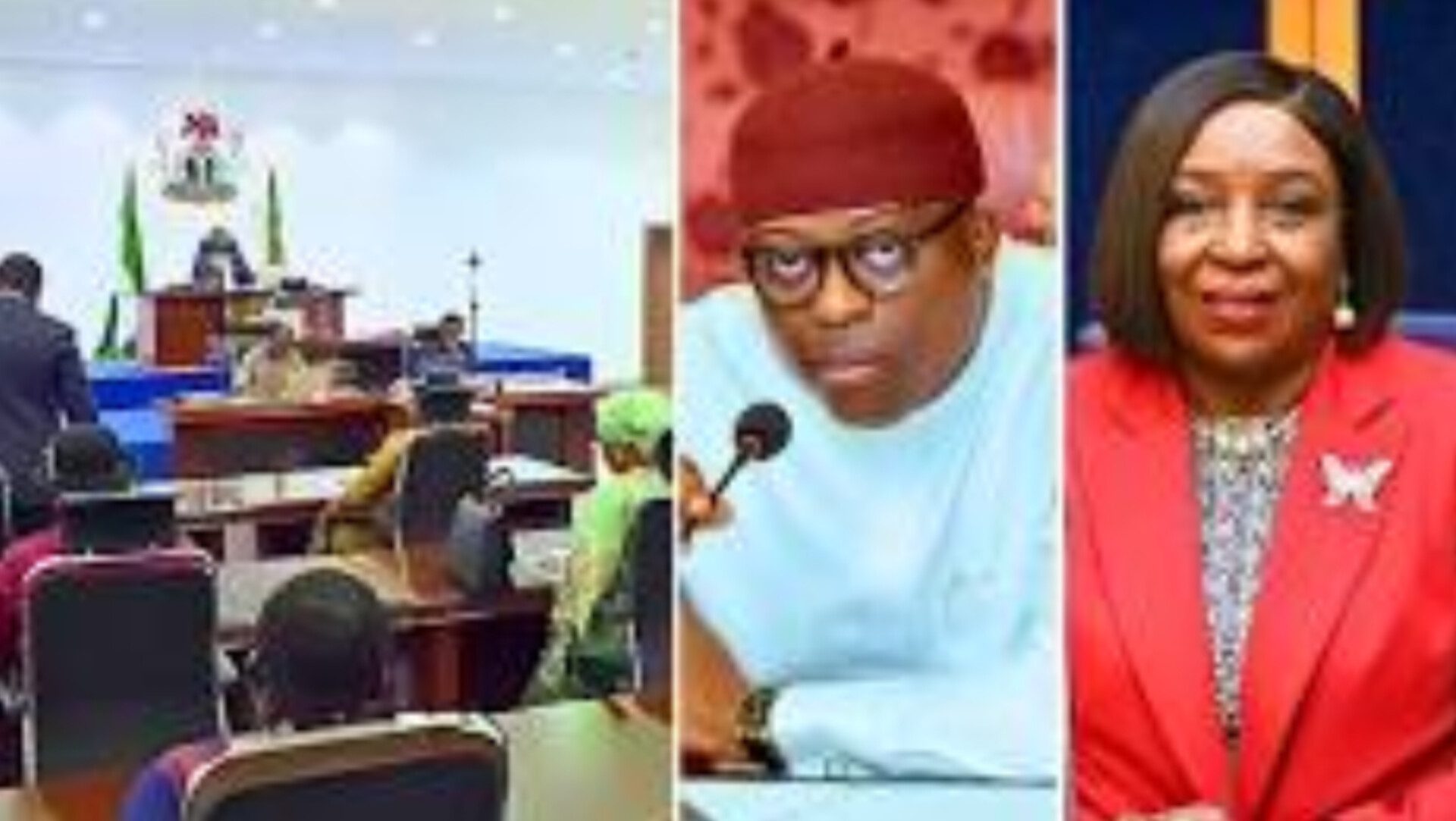
The renewed rivalry has revived memories of the 2023 political crisis that paralysed governance, scared investors and culminated in the destruction of the State House of Assembly complex.
Observers warn that a repeat could be disastrous. Rivers, once a strong competitor to Lagos for investment, has already lost ground due to instability. Another prolonged crisis would further weaken its economic prospects.
Ultimately, the most decisive factor may lie outside Rivers State. President Tinubu’s evolving engagement with Fubara has expanded the presidency’s strategic options, unsettling established political arrangements.
Both camps now openly court Abuja, aligning themselves with the president’s agenda while battling each other locally. The contradiction is striking: loyalty at the centre, rivalry at home.
Lost in the political chess match is Rivers State itself. Budget disputes, stalled projects and legislative paralysis are early signs of governance fatigue. Civil society groups warn that prolonged instability could invite international attention and further damage the state’s reputation.
As Rivers State inches toward 2027, the contest between Wike and Fubara has become more than a personal feud. It is a defining test of whether political succession in Nigeria can evolve beyond control by former officeholders.
Who wins may matter less than what Rivers becomes in the process: a state trapped in recurring power struggles, or one that finally allows institutions—not individuals—to define authority.
Rivers at the Crossroads: How Wike, Fubara Cold War Is Redefining Power Ahead of 2027