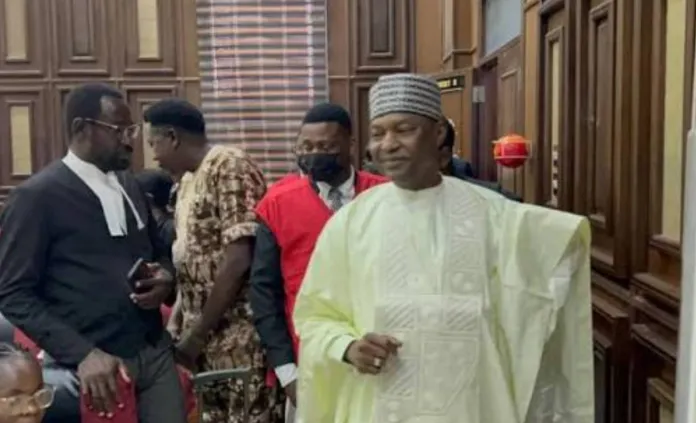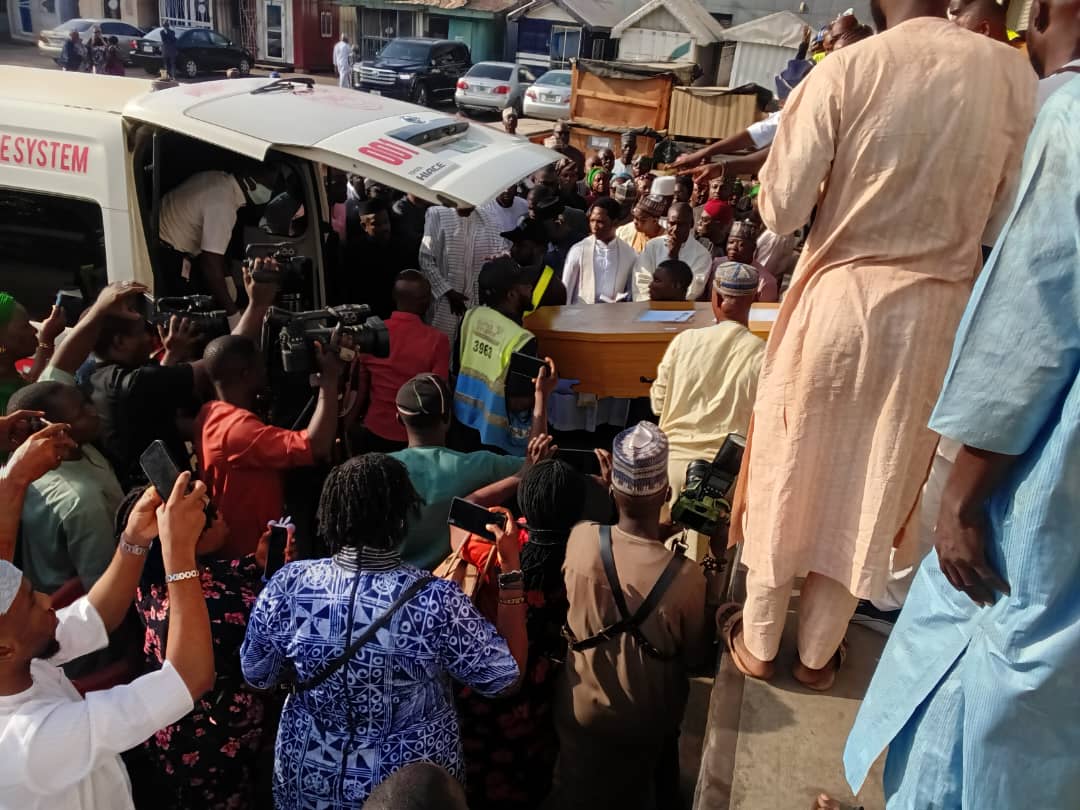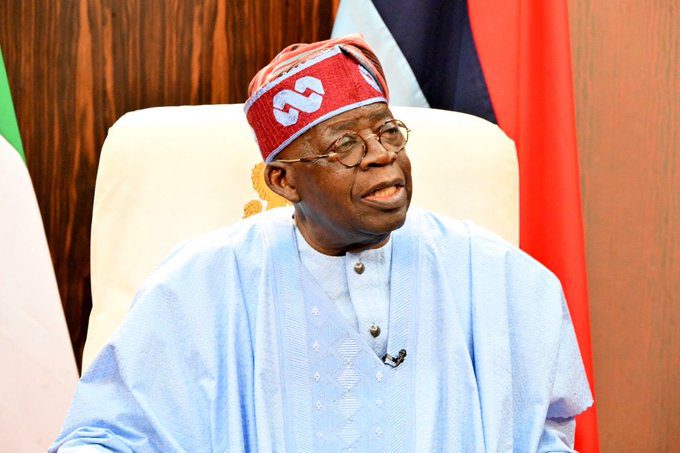
More than two decades after the fall of the Abacha regime, the shadow of Nigeria’s most infamous corruption era resurfaced dramatically in Abuja on Tuesday as a Federal High Court ordered the remand of former Attorney-General of the Federation, Abubakar Malami, SAN, alongside his wife and son, over alleged laundering of recovered Abacha funds.
Justice Emeka Nwite, sitting in Abuja, directed that Malami, his fourth wife Bashir Asabe, and his son Abubakar Abdulaziz Malami be held at the Kuje Correctional Centre, pending the hearing and determination of their bail applications.
The ruling followed arguments by defence counsel Joseph Daudu, SAN, and prosecution lawyer Ekele Iheneacho, SAN, with the court rejecting an oral bail request and siding with the Economic and Financial Crimes Commission (EFCC), which opposed the application.
The trio is facing a 16-count charge of money laundering, a case that places a former chief law officer of the federation at the centre of allegations involving the concealment and movement of billions of naira traced to illicit sources.
According to the EFCC, Malami and his family allegedly operated a coordinated scheme spanning several years, using corporate entities and bank accounts to disguise proceeds of unlawful activities, some of which allegedly occurred while Malami was serving as Nigeria’s Attorney-General and Minister of Justice.
The commission told the court that the alleged offences violated the Money Laundering (Prohibition) Acts of 2011 and 2022, stressing that the accused leveraged their access and influence to retain cash, secure loans, and acquire high-value properties across Abuja, Kano and other locations.
While all three defendants pleaded not guilty to the charges, the EFCC maintained that the scale and sophistication of the alleged transactions justified their continued detention.
Among the allegations detailed in court was the claim that Malami and his son used Metropolitan Auto Tech Limited to conceal over ₦1.01 billion in a Sterling Bank account, alongside another ₦600 million allegedly laundered through the same company between September 2020 and February 2021.
The commission further alleged that Malami retained ₦600 million as cash collateral for a ₦500 million loan granted to Rayhaan Hotels Ltd, despite allegedly knowing the funds were proceeds of crime.
Prosecutors argued that the alleged offences were not isolated acts but part of a sustained pattern involving cash hoarding, corporate fronts and strategic banking transactions designed to evade detection.
With the defendants now remanded, the case is expected to move into full trial, as the EFCC prepares to call witnesses including its own investigators, bank officials and financial experts.
Beyond the courtroom drama, the case has reopened uncomfortable questions about Nigeria’s handling of recovered Abacha loot—and whether safeguards meant to protect such funds were breached from within the highest levels of government.
As Malami awaits his bail hearing behind prison walls, the trial promises to test not just the fate of a former justice minister, but the credibility of Nigeria’s long-running fight against corruption.
Court sends Malami to Kuje as Abacha loot haunts power