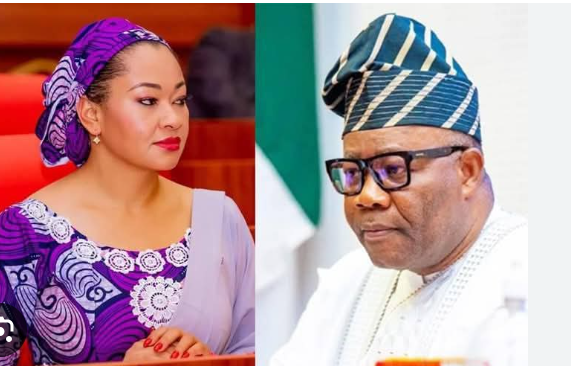
Senate President Godswill Akpabio has escalated the high-profile legal dispute surrounding the suspension of Senator Natasha Akpoti-Uduaghan, appealing to the Supreme Court after the Abuja Division of the Court of Appeal struck out the Federal Government’s brief of argument. The brief concerned the defamation aspects of the senator’s suspension but was deemed fundamentally defective, failing to comply with mandatory Court of Appeal Rules.
In its 28 November 2025 ruling, the appellate panel highlighted multiple procedural lapses: unauthorized font and line spacing, exceeding the statutory 35-page limit, and failure to seek leave to correct the defects. The Notice of Appeal itself was also found flawed. The court concluded that these were substantive violations affecting the competence of the appeal, resulting in the dismissal of the brief.
In response, Akpabio has criticised the ruling, insisting it was unlawful. In his appeal to the Supreme Court, he contends that the appellate court violated his constitutional right to fair hearing by denying him the chance to correct the defective brief or exceed the page limit. He is urging the apex court to nullify the appellate proceedings and allow him to refile his arguments in line with established rules.
Legal experts caution, however, that the right to fair hearing does not exempt litigants from procedural compliance, especially where rules are applied uniformly. Akpoti-Uduaghan’s legal team complied fully with the same regulations, weakening claims of unfair treatment.
Political Undertones Surface
Beyond the courtroom, Akpabio’s personal involvement has drawn scrutiny. Observers describe his active engagement as uncharacteristic for a presiding officer, suggesting that political considerations may be influencing the dispute. Sources within the legislature point to strained relations between Akpabio and Akpoti-Uduaghan, a first-term senator whose assertive stance has unsettled power dynamics in the chamber.
“This is no longer just a legal disagreement,” said a senior parliamentary source. “It has become a struggle over authority and control.” Analysts note that the Appeal Court setback stemmed from avoidable technical errors, prompting speculation that the Supreme Court appeal is partly aimed at political damage control.
Implications for Governance
Within ruling party circles, reports suggest pressure is mounting to curb the senator’s rising independence and public influence. Akpoti-Uduaghan, however, has maintained a measured stance, expressing confidence in the judiciary and emphasizing that due process must prevail. Her legal team described the Supreme Court appeal as a last-ditch effort to overturn a decision reached strictly in accordance with the law.
Civil society observers warn that attempts by political figures to influence judicial outcomes could undermine the independence of the judiciary and democratic governance. The dispute now serves as a broader test of the rule of law, separation of powers, and limits of authority within Nigeria’s democratic institutions.
A National Watchpoint
As the Supreme Court prepares to hear the appeal, the case has evolved beyond procedural technicalities into a national spotlight issue—one that juxtaposes legal principles against political maneuvering. The outcome will not only affect the parties involved but also signal the judiciary’s resilience in upholding procedure, fairness, and the rule of law in Nigeria’s complex political landscape.