


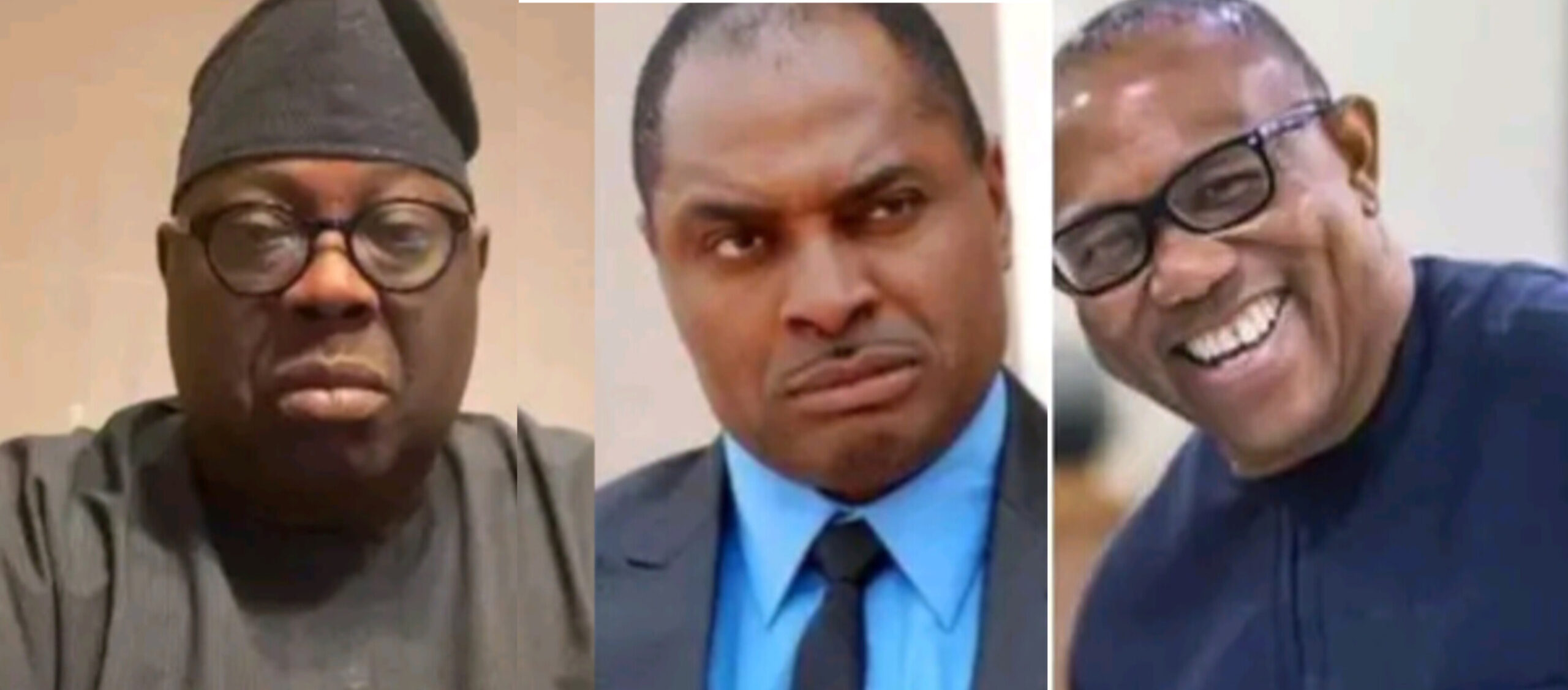
***Says Obi Was Glad He Left
A fierce war of words has erupted within Nigeria’s opposition camp after veteran journalist and politician, Dele Momodu, launched a blistering attack on former Labour Party presidential campaign spokesman, Kenneth Okonkwo, describing him as a political burden whose exit from Peter Obi’s circle was a welcome development.
Momodu’s explosive remarks have added a fresh layer of intrigue to the ongoing realignments and power struggles ahead of the 2027 general election.
The Ovation Magazine publisher accused Okonkwo of overestimating his political relevance, insisting that his celebrity status as a Nollywood actor created an exaggerated impression of electoral influence.
According to Momodu, many political actors mistook public recognition for political strength, a misconception he said followed Okonkwo throughout his involvement in opposition politics.
In one of his strongest criticisms yet, Momodu claimed that Obi himself appeared relieved when Okonkwo parted ways with the former Labour Party presidential campaign.
“I told my principal that Kenneth was a political liability,” Momodu said, arguing that the actor-turned-politician often generated more controversy than political value.
The latest outburst follows Okonkwo’s criticism of former Vice President Atiku Abubakar over reports that former Rivers State Governor Rotimi Amaechi could emerge as his running mate in a possible 2027 presidential ticket.
Okonkwo had reportedly objected to the arrangement, arguing that pairing two politicians from the South-South would further weaken the chances of the South-East producing Nigeria’s president and undermine the principle of regional inclusion.
His comments immediately stirred debate within opposition circles, where consultations over coalition-building, power-sharing and candidate selection have intensified.
Momodu, however, appeared unmoved by Okonkwo’s concerns, dismissing the significance of his position and questioning the political weight he brings to any alliance.
The public exchange highlights growing tensions among opposition leaders as preparations for the next presidential contest gather momentum. While efforts to forge a united front against the ruling party continue, disagreements over strategy, leadership and regional interests are increasingly spilling into the open.
With prominent opposition figures now openly challenging one another, the latest confrontation underscores the difficult task of building a cohesive coalition capable of mounting a serious challenge in 2027.
