

***Dismisses Atiku VP Rumours
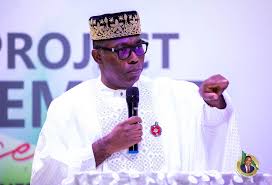
Social Democratic Party (SDP) presidential candidate, Adewole Adebayo, has delivered one of his most forceful political assessments yet, dismissing speculation linking him to a 2027 joint ticket with former Vice President Atiku Abubakar while unleashing a blistering critique of President Bola Ahmed Tinubu’s administration.
Speaking on Nigeria Unfiltered on Symphony TV, Adebayo said the question of a political alliance with Atiku Abubakar was secondary to what he described as Nigeria’s deeper crisis of governance, insisting that the real issue is not political positioning but national direction.
While acknowledging Atiku Abubakar’s democratic credentials and recalling their political history, Adebayo carefully distanced himself from any emerging coalition talk, even as he reflected on past ideological alignments that once brought them into the same political orbit decades ago.
But the conversation quickly shifted from political memory to an unrestrained indictment of the current administration.
Adebayo said he measured President Tinubu’s government against three benchmarks: constitutional responsibility, campaign promises, and comparative governance outcomes. On all three counts, he said, the verdict was damning.
“The Constitution is clear on what government exists to do—security and welfare of the people,” he argued, insisting that by that standard, the administration has fallen short of its core mandate.
He went further, declaring that the government has struggled not only to meet national expectations but even its own campaign pledges, particularly on power supply, economic stability, and governance reforms.
According to him, promises made during the election campaign have become the clearest measure of underperformance, especially in the power sector where expectations were high and outcomes, he said, remain unchanged.
Adebayo also took aim at the worsening security situation, suggesting that large parts of the country have become inaccessible even to the nation’s leadership—a claim that underscored the depth of his criticism.
He argued that the administration’s flagship reforms, including subsidy removal and new borrowing strategies, have failed to translate into tangible relief for citizens or measurable economic stability.
But it was his central indictment that defined the interview.
“President Tinubu was not destined to fail,” he said. “He chose failure.”
Adebayo said Nigeria’s structural challenges were well known before the 2023 elections, arguing that leadership, not circumstance, is now the defining factor shaping outcomes.
He accused the presidency of treating governance as symbolism rather than execution, insisting that the office requires discipline, preparation, and institutional respect rather than political prestige.
Despite his sharp critique, Adebayo drew a distinction between the current administration and the Nigerian state itself, warning against conflating leadership failure with national collapse.
“The failure of Tinubu is not the failure of Nigeria,” he said.
He called for a systemic reset anchored on electoral credibility and institutional independence, urging that key democratic bodies—including INEC, security agencies, and anti-corruption institutions—must be shielded from political interference if governance is to improve.
Adebayo also criticized government defenders, accusing them of distorting reality in their public messaging and speaking more to power than to citizens.
“They are talking to an audience of one,” he said, describing official narratives as disconnected from the lived realities of Nigerians.
Looking ahead to 2027, he argued that meaningful change will not emerge from elite negotiations but from voter mobilisation and civic participation.
“If Nigerians organize themselves and go to the polls, we can have a better future,” he said.
He closed with a pointed political forecast that underscored the tone of his intervention:
“If Nigerians organize ourselves and defeat him handsomely at the ballot, President Tinubu himself may be relieved.”