

The Human Rights Writers Association of Nigeria (HURIWA) has accused the Federal Government of applying double standards in its handling of non-state security groups, raising fresh questions over what it describes as unequal treatment of separatist-linked formations across the country.
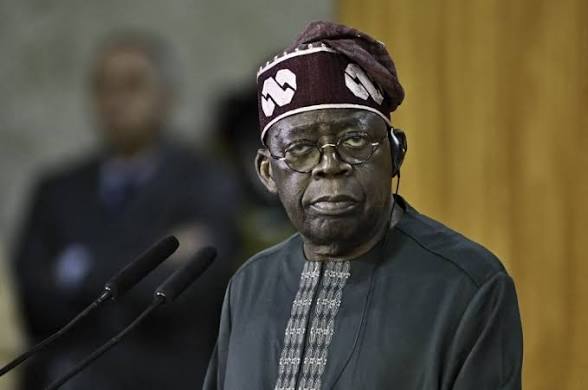
In a strongly worded statement issued on Saturday, the rights advocacy group challenged President Bola Ahmed Tinubu’s administration to explain reports suggesting that certain regional security outfits may have received official backing while security agencies continue aggressive operations against groups linked to the Indigenous People of Biafra (IPOB).
The group’s concerns were triggered by recent public comments attributed to Yoruba Nation agitator Sunday Adeyemo, popularly known as Sunday Igboho, who reportedly claimed that his proposed security outfit had received federal approval.
HURIWA said the claim, if true, raises troubling questions about the Federal Government’s security policy and the principle of equality before the law.
The organization noted that successive administrations, including the current APC-led government, have maintained military operations against alleged IPOB-linked vigilante formations in the South-East, resulting in arrests, proscription measures and the continued detention of IPOB leader, Nnamdi Kanu.
Against that backdrop, HURIWA argued that reports of official tolerance or approval of similar formations elsewhere create the impression of selective enforcement.
“We are compelled to ask whether Nigeria is now operating a system of selective justice and selective security approval,” the group said.
The association questioned the legal basis for any approval granted to privately organized security networks outside the framework of constitutionally recognized security agencies.
According to HURIWA, the issue goes beyond politics and touches on the credibility of state institutions charged with enforcing the law impartially.
The group warned that perceived inconsistencies in the treatment of different ethnic or regional actors could deepen mistrust among Nigeria’s diverse populations and weaken public confidence in the country’s democratic institutions.
HURIWA also renewed concerns over the continued incarceration of Nnamdi Kanu, arguing that the Federal Government must demonstrate that all citizens are treated equally regardless of ethnicity, region or political affiliation.
The rights group maintained that Nigeria’s Constitution does not provide for arbitrary licensing of private armies or ethnic militias and insisted that any security arrangement operating outside established legal frameworks must be subjected to the same standards nationwide.
As part of its demands, HURIWA called on President Tinubu and relevant federal authorities to clarify whether any private security outfit has received official approval outside the statutory framework governing security operations.
The organization also demanded explanations on the legal basis for such approval, the criteria used in determining which groups are acceptable, and the status of all non-state armed formations operating across the federation.
The statement comes amid growing national conversations about community policing, regional security initiatives and the role of local vigilante groups in addressing rising insecurity across different parts of the country.
While acknowledging the severe security challenges confronting Nigeria, HURIWA warned that inconsistent policies could prove counterproductive and fuel allegations of bias.
The group urged the President to address the matter directly in the interest of transparency, national cohesion and the rule of law.
According to HURIWA, security policy must remain consistent and should never be perceived as favouring one region or group over another.
The organization insisted that all Nigerians must remain equal before the law and that any deviation from that principle risks undermining national unity at a time when the country requires greater cohesion to confront its security challenges.
