
***Ooni, Jonathan, Lawan extol NILDS DG’s reform record
***Institute under Suleiman reviewed 1,300 bills, trained 700 stakeholders
Former Chairman of the Independent National Electoral Commission (INEC), Professor Attahiru Jega, has raised concern over what he described as Nigeria’s deepening leadership deficit, insisting that the nation’s progress depends on leaders who govern with integrity, empathy, and a sense of public duty.
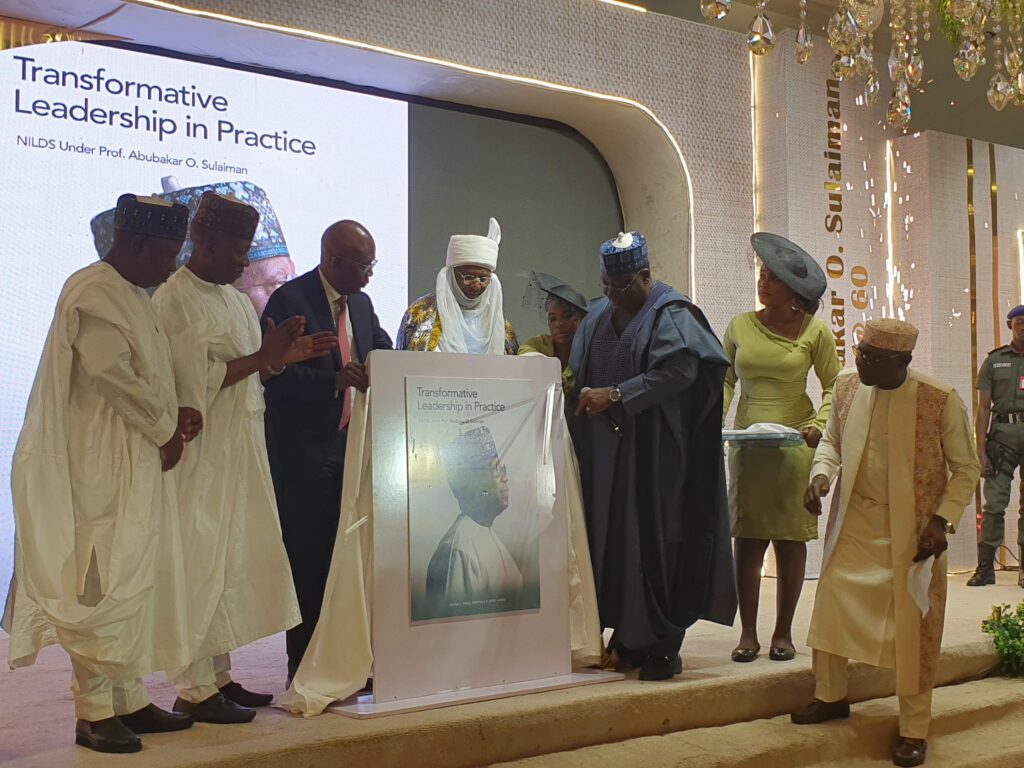
He made the remark at the public presentation of a book titled Transformative Leadership in Practice: NILDS under Professor Abubakar Suleiman, held in Abuja, where he praised the Director-General of the National Institute for Legislative and Democratic Studies (NILDS) for demonstrating what is possible when leadership is anchored on vision and values.
“This book provides empirical evidence that transformative leadership is not theoretical — it works,” Jega declared.
“Professor Suleiman’s work at NILDS shows that when vision meets courage, even a public institution can evolve into a centre of excellence.”
Under Suleiman’s six-year leadership, NILDS has grown into one of the country’s most productive public institutions — expanding its staff strength by over 60%, analysing more than 1,300 bills, conducting over 700 training programmes, and completing its long-delayed permanent headquarters project.
For Jega, these milestones are a testament to what focused leadership can achieve, in contrast to the inertia that has defined much of Nigeria’s public administration.
“We cannot continue to lament the weakness of our institutions while rewarding mediocrity and political patronage,” he cautioned.
“Leadership must be guided by service, not self-interest.”
Representing former President Goodluck Jonathan, former Attorney-General Muhammed Bello Adoke (SAN) described Suleiman as an institution builder whose reformist touch was evident even during his brief tenure at the National Planning Commission.
“Although his appointment came toward the end of our administration, Professor Suleiman’s impact was immediate,” Adoke said.
“He brought reform, efficiency, and accountability — values our public institutions urgently need today.”
The Ooni of Ife, Oba Adeyeye Ogunwusi, offered a moral perspective, observing that Nigeria’s challenge lies not in intellect but in integrity.
“He is a man of simplicity, empathy, and discipline — a professor in leadership as much as in politics,” the monarch noted.
“Nigeria’s renewal depends on leaders who embody those same values.”
Former Senate President Ahmad Lawan, who chaired the NILDS Governing Council, said Suleiman’s reforms gave the Institute a new identity as a knowledge and training hub for democratic governance.
“We created new departments such as the Institute for Legislative Security Analysis and the Democracy Lab,” Lawan recalled.
“His tenure redefined NILDS as a hub of professionalism, innovation, and service.”
Representing Vice President Kashim Shettima, the Special Adviser on Job Creation said Suleiman’s legacy lies in his belief that institutions must outlive individuals.
“His brand of leadership shows how mentorship and institutional resilience can power sustainable development,” the adviser said.
What began as a 60th birthday tribute soon evolved into a national conversation on governance renewal, with Jega urging political leaders and policymakers to replicate the NILDS model — where performance is driven by purpose rather than politics.
“Nigeria’s transformation will not come from slogans or policies alone,” Jega concluded.
“It will come from leaders who, like Professor Suleiman, turn institutions into instruments of service rather than symbols of power.”
Ooni, Jonathan, Lawan extol NILDS DG’s reform record
Institute under Suleiman reviewed 1,300 bills, trained 700 stakeholders
Former Chairman of the Independent National Electoral Commission (INEC), Professor Attahiru Jega, has raised concern over what he described as Nigeria’s deepening leadership deficit, insisting that the nation’s progress depends on leaders who govern with integrity, empathy, and a sense of public duty.
He made the remark at the public presentation of a book titled Transformative Leadership in Practice: NILDS under Professor Abubakar Suleiman, held in Abuja, where he praised the Director-General of the National Institute for Legislative and Democratic Studies (NILDS) for demonstrating what is possible when leadership is anchored on vision and values.
“This book provides empirical evidence that transformative leadership is not theoretical — it works,” Jega declared.
“Professor Suleiman’s work at NILDS shows that when vision meets courage, even a public institution can evolve into a centre of excellence.”
Under Suleiman’s six-year leadership, NILDS has grown into one of the country’s most productive public institutions — expanding its staff strength by over 60%, analysing more than 1,300 bills, conducting over 700 training programmes, and completing its long-delayed permanent headquarters project.
For Jega, these milestones are a testament to what focused leadership can achieve, in contrast to the inertia that has defined much of Nigeria’s public administration.
“We cannot continue to lament the weakness of our institutions while rewarding mediocrity and political patronage,” he cautioned.
“Leadership must be guided by service, not self-interest.”
Representing former President Goodluck Jonathan, former Attorney-General Muhammed Bello Adoke (SAN) described Suleiman as an institution builder whose reformist touch was evident even during his brief tenure at the National Planning Commission.
“Although his appointment came toward the end of our administration, Professor Suleiman’s impact was immediate,” Adoke said.
“He brought reform, efficiency, and accountability — values our public institutions urgently need today.”
The Ooni of Ife, Oba Adeyeye Ogunwusi, offered a moral perspective, observing that Nigeria’s challenge lies not in intellect but in integrity.
“He is a man of simplicity, empathy, and discipline — a professor in leadership as much as in politics,” the monarch noted.
“Nigeria’s renewal depends on leaders who embody those same values.”
Former Senate President Ahmad Lawan, who chaired the NILDS Governing Council, said Suleiman’s reforms gave the Institute a new identity as a knowledge and training hub for democratic governance.
“We created new departments such as the Institute for Legislative Security Analysis and the Democracy Lab,” Lawan recalled.
“His tenure redefined NILDS as a hub of professionalism, innovation, and service.”
Representing Vice President Kashim Shettima, the Special Adviser on Job Creation said Suleiman’s legacy lies in his belief that institutions must outlive individuals.
“His brand of leadership shows how mentorship and institutional resilience can power sustainable development,” the adviser said.
What began as a 60th birthday tribute soon evolved into a national conversation on governance renewal, with Jega urging political leaders and policymakers to replicate the NILDS model — where performance is driven by purpose rather than politics.
“Nigeria’s transformation will not come from slogans or policies alone,” Jega concluded.
“It will come from leaders who, like Professor Suleiman, turn institutions into instruments of service rather than symbols of power.”