


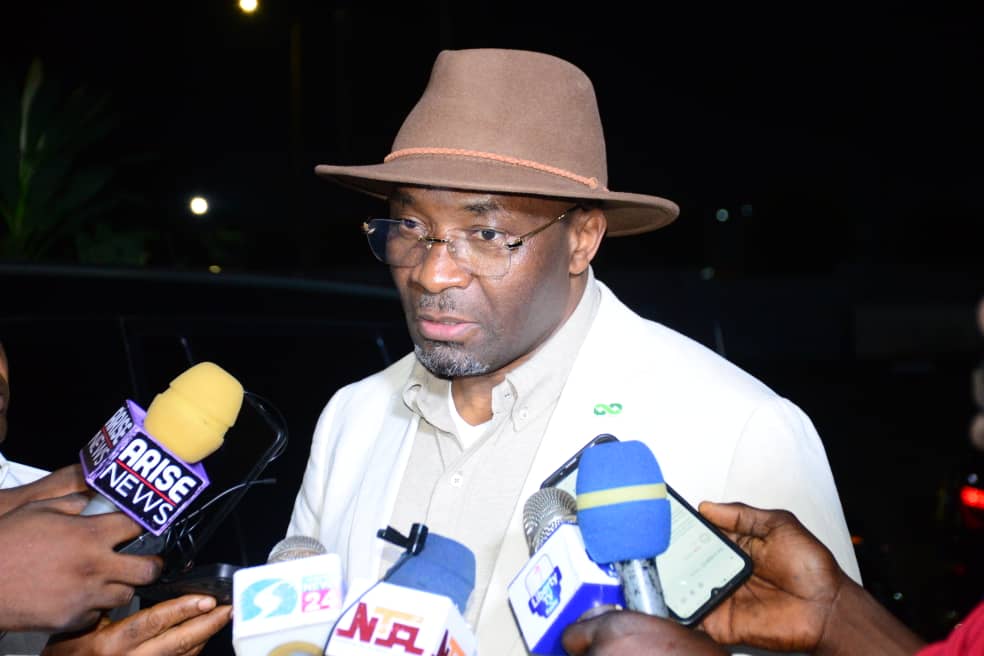
Returning from high-level global engagements in Geneva and the United States, Deputy Speaker of the House of Representatives, Rt. Hon. Benjamin Okezie Kalu, says Nigeria can no longer postpone a decision on state police if it hopes to curb worsening insecurity.
Speaking in Abuja on Sunday after representing Nigeria at the 55th WTO-IPU Public Forum, Kalu argued that the country’s centralized policing system is “inadequate and far behind global standards.” He revealed plans for a national public hearing on the pending State Police Bill, insisting that decentralizing law enforcement is essential for faster response times and safer communities.
“We must choose the greater good over the fear of misuse,” he said. “Everyone in Nigeria may not be a politician, but everyone needs security of lives and property.”

Kalu’s comments follow a week of international diplomacy. In Geneva, he joined eight countries steering discussions on digital trade, calling for a legislative tracking tool to measure progress worldwide and ensure Afrocentric issues feature prominently at the WTO Ministerial Conference in Yaoundé next year. Earlier, at Harvard Kennedy School, he briefed Nigerian students on national reforms and legislative priorities.
Back home, Kalu reaffirmed support for President Bola Ahmed Tinubu’s economic reforms, including the removal of fuel subsidy, which he described as “painful but necessary” to reset the economy for long-term growth.
“We needed a leader with courage to take bold steps,” Kalu said, praising Nigerians for their resilience. “The dynamics have changed, and the reforms are positioning us for sustainable prosperity.”
He urged state governments to accelerate diversification and job creation while calling on citizens to stay engaged:
“This is the time for everybody’s hands to be on deck. It may not be cozy now, but it is leading us where we must go.”
Beyond security and the economy, Kalu pressed for women’s inclusion in politics through reserved parliamentary seats, calling it an economic necessity rather than mere representation. He also renewed his push for diaspora voting, while emphasizing the need to strengthen Nigeria’s local electoral systems first.
The Deputy Speaker highlighted his use of legislative diplomacy in resolving disputes between the Federal Capital Territory and local contractors, averting protests and ensuring payments. He pledged to keep mediating on FCT waste management challenges and other pressing issues.
Despite his international commitments, Kalu underscored his focus on Nigeria’s progress:
“My WTO program was still on, but duty called—and Nigeria comes first before the globe.”
With the state police debate now set for a national audience, Kalu’s return signals a renewed legislative drive to align security, governance, and economic reform with the aspirations of everyday Nigerians.
