

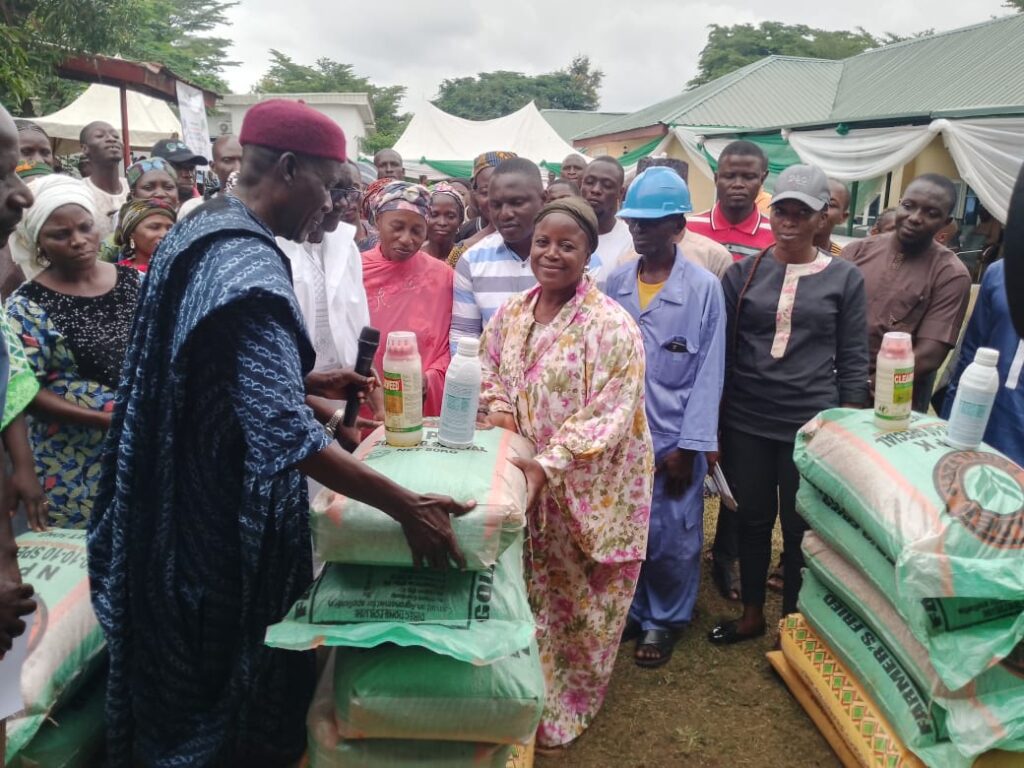

By Abel Daniel, Lafia
The Federal Government, in partnership with the International Fund for Agricultural Development’s Value Chain Development Programme (FGN/IFAD-VCDP), has moved to institutionalize the Gender Action Learning System (GALS) as a state policy in Nasarawa.
The initiative aims to promote gender balance, strengthen rural livelihoods, and enhance food security through agriculture.
The proposal, which emerged during a policy dialogue on mainstreaming gender in agricultural development in Lafia, was supported by key stakeholders, who said a formal policy would remove systemic barriers to gender equity at both local and state levels.


Dr. Fatima Aliyu, National Programme Coordinator of FGN/IFAD-VCDP—represented by Mrs. Vera Onyeaka-Onyilo, Knowledge Management and Communication Advisor—said GALS had already proven effective in fostering harmony, joint decision-making, and economic well-being in rural households.
“GALS is a community-based methodology that encourages men and women to share household responsibilities, improve agribusiness participation, and reduce gender-based violence,” Aliyu said. “We are seeking a policy to institutionalize GALS in Nasarawa State so that it will go beyond the communities to ministries, departments, and agencies.”
She noted that while GALS is currently being implemented at community level in Nasarawa and other states, legislative backing was crucial to ensure sustainability beyond VCDP’s exit in 2026.
In his keynote address, Alhaji Umar Tanko-Tunga, Nasarawa Commissioner for Agriculture, assured stakeholders of the government’s readiness to adopt the system.
“As a government open to progress, we will not allow this programme to waste away. We want Nasarawa State to fully participate and adopt this methodology,” Tanko-Tunga said, commending the impact already recorded among rural farmers.
Similarly, Dr. Eunice Adgidzi, State Programme Coordinator of VCDP, highlighted GALS’ transformative effects on rural communities.
“The methodology has improved social inclusion, reduced household conflicts, and boosted rural incomes,” Adgidzi explained. “It allows both literate and non-literate farmers to use simple tools and symbols to plan, negotiate roles, and take collective decisions on household and farm matters. We have seen husbands and wives resolve conflicts, support each other, and improve their nutrition and livelihoods.”
Adgidzi revealed that the programme currently **operates in five local government areas—Lafia, Doma, Wamba, Nasarawa, and Karu—**with plans to scale up to other LGAs.
A powerful testimony came from 45-year-old Yusuf Maraf and his wife Madinatu from Doma LGA, who shared how GALS ended decades of domestic strife.
“We endured all kinds of domestic violence since 1998,” Madinatu said. “My husband took several decisions without my opinion, and that created crises. But since we started this training, we now see each other as partners. That change has improved our livelihoods and positively impacted our children.”
The call for a state-backed GALS policy underscores growing recognition of gender equality as a key driver of food security, rural development, and community peace in Nasarawa State.