


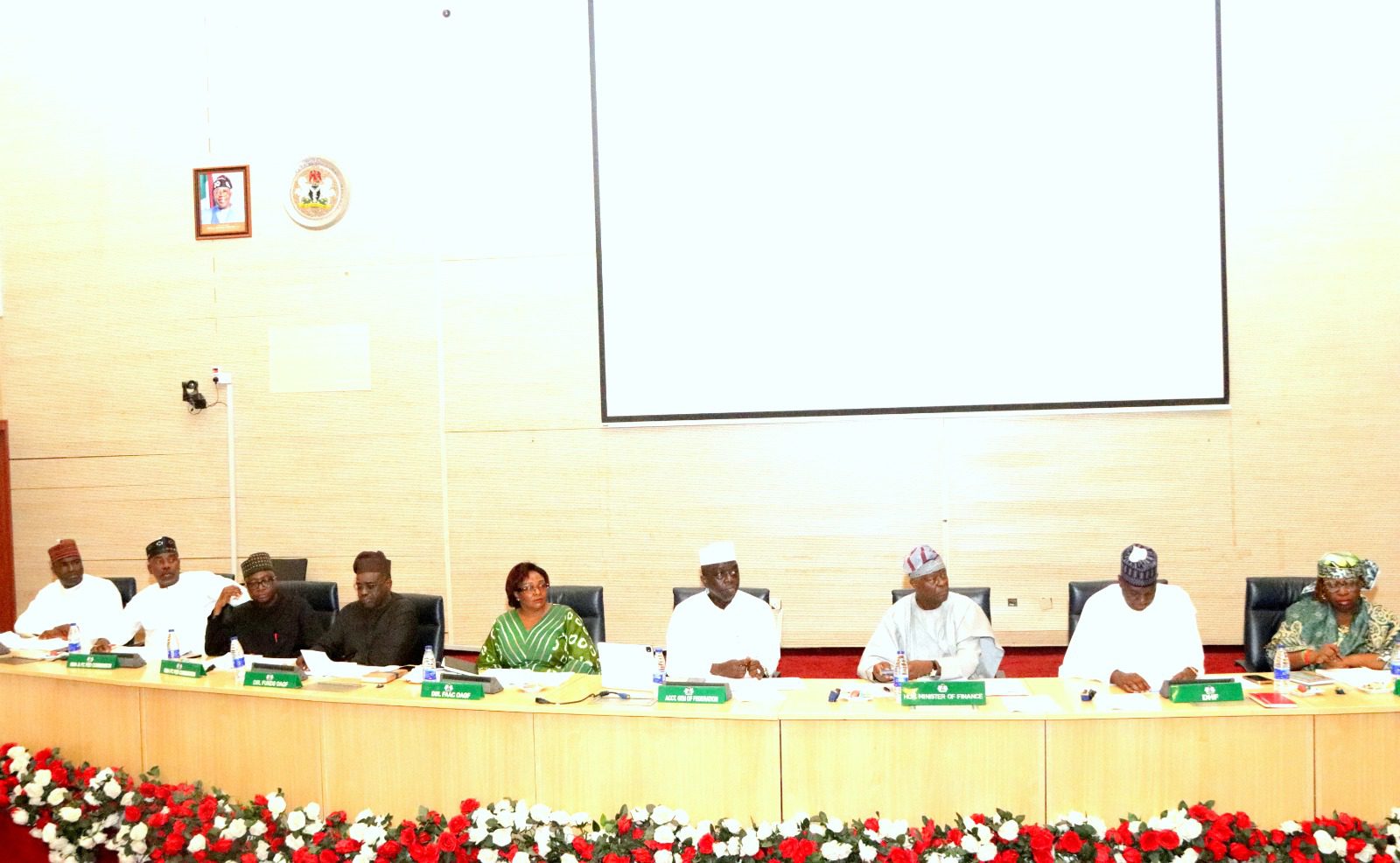
The Federal Government’s ongoing fiscal and economic reforms are beginning to reflect in the nation’s revenue profile as the Federation Account Allocation Committee (FAAC) on Thursday shared a robust ₦2.001 trillion to the three tiers of government for July 2025.
This marks one of the highest monthly disbursements in recent times, coming from a gross revenue inflow of ₦3.836 trillion, a development the Minister of Finance and Coordinating Minister of the Economy, Mr. Wale Edun, described as evidence of “improving fiscal discipline and stronger revenue generation.”
From the distributable pool, the Federal Government received ₦735.081 billion, States got ₦660.349 billion, while Local Government Councils shared ₦485.039 billion. Oil-producing states also received ₦120.359 billion as 13% derivation.

Beyond the main allocations, over ₦1.683 trillion was channeled into transfers, interventions, and refunds — a reflection of the government’s effort to sustain fiscal stability while meeting obligations.
According to FAAC’s communiqué, the revenue surge was largely powered by increases in Petroleum Profit Tax, Excise Duty, Oil and Gas Royalties, and the Electronic Money Transfer Levy (EMTL). VAT and Import Duty also grew marginally, though Company Income Tax (CIT) and CET Levies declined.
VAT collections alone stood at ₦687.94 billion, higher than June’s ₦678.165 billion. Of this, ₦640.61 billion was shared: FG (₦96.092b), States (₦320.305b), and LGs (₦224.214b).
Addressing the meeting, Edun said the improved revenue performance validates the reform agenda of the Bola Tinubu administration, stressing that prudent management of public funds remains a top priority.
“What we are witnessing is the result of reforms beginning to take hold. The task now is to ensure that resources are efficiently utilized to improve citizens’ welfare and sustain growth momentum,” he stated.
The ₦2.001 trillion shared in July represents not just routine allocation but also a signal of gradual fiscal recovery amid Nigeria’s push for economic stabilization. Analysts say the trend, if sustained, could strengthen state and local government capacity to meet pressing obligations, particularly in infrastructure, salaries, and social services.
