

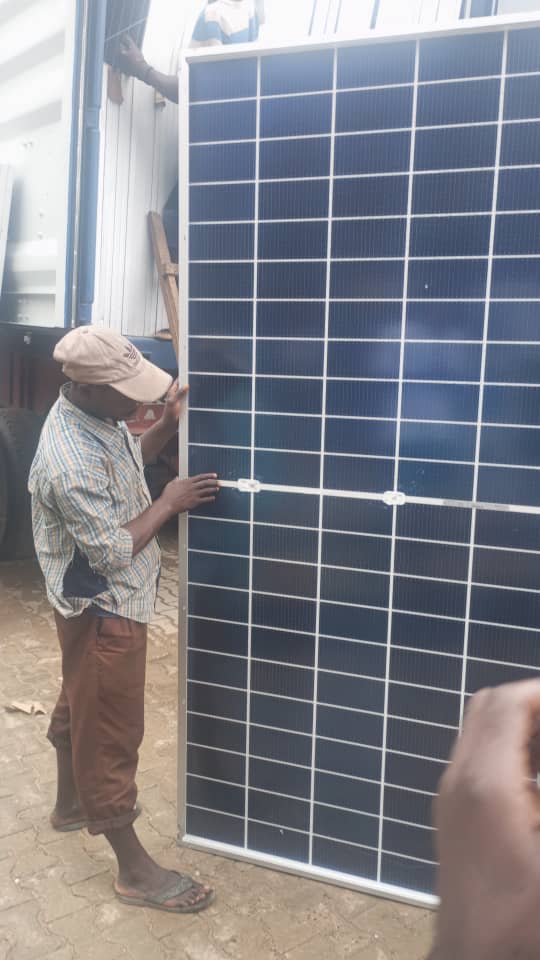

The International Criminal Police Organization (Interpol) has launched a full-scale investigation into the importation of damaged solar panels worth over N3.3 billion from China into Nigeria, in what is emerging as one of the most disturbing cases of alleged international fraud and product deception.
According to sources within the Nigeria Police Force, a high-level team of Interpol detectives is preparing to travel to China to work with local law enforcement in tracing and interrogating officials of the Chinese company Hebei-Kewang Import and Export Trading Co. Ltd, the firm accused of shipping the defective goods.
The panels were allegedly ordered by Mr. Amuchi Obi, a Nigerian trader based at Alaba International Market in Lagos, who acted on behalf of over 50 fellow traders who pooled funds to procure solar panels for resale and installation.
But upon arrival in Nigeria, the nine cargo containers of panels were discovered to be damaged, obsolete, and unusable, sparking outrage among the investors and forcing Obi into hiding.
Amid threats and accusations of complicity from his business associates, Mr. Obi reportedly engaged legal counsel and petitioned the Inspector-General of Police, seeking protection and restitution. In the petition, filed by his lawyer B.O. Alaka (Esq), Obi insisted he was also a victim of deceit.
“Our client paid in multiple tranches to designated bank accounts in Hong Kong and Singapore based on agreed specifications confirmed by two representatives of Hebei-Kewang—Anne Wang and Karen Li,” the petition reads.
“However, not only were wrong and outdated panels delivered, many arrived in a state not fit for use or resale—thus destroying his credibility and livelihood.”
According to the legal complaint, despite repeated efforts to resolve the issue amicably, the Chinese firm only agreed to ship five containers of the correct product as compensation—a promise they allegedly failed to honour.
With tensions rising and investors demanding accountability, Obi turned to Interpol for international intervention.
When contacted, the Commissioner of Police in charge of Interpol, Lagos, CP Bode Ojajuni, confirmed the case, stating:
“Yes, we are investigating such a case and our men will be going to China to discuss with our Chinese counterparts. That’s all I can say for now.”
The case has raised serious concerns about import controls, quality assurance, and the vulnerability of Nigerian traders in transnational deals—especially in the solar energy market where demand is rising amid national power shortages.
Security experts warn that without stronger regulatory oversight and product verification protocols, more Nigerian businesses could fall victim to similar fraudulent schemes.
Attempts to reach the accused company through contact details provided by the complainant were unsuccessful, as all calls went unanswered.
Interpol’s visit to China is expected to focus on verifying the claims, interrogating officials of Hebei-Kewang, and exploring possible charges of commercial fraud, breach of contract, and conspiracy to defraud under international trade laws.
For the dozens of traders now facing massive losses, hopes rest on the success of the investigation—and whether Nigerian authorities can secure justice in a deal gone dangerously wrong.