

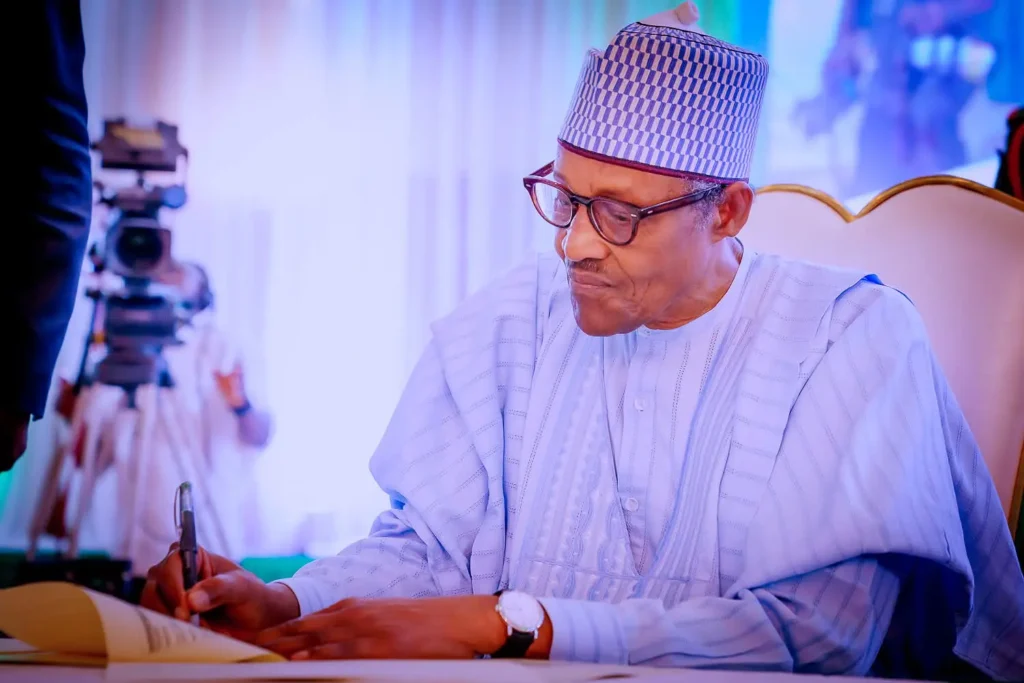

Former President of Nigeria, Muhammadu Buhari, has died at the age of 82 while receiving medical treatment in London, his spokesperson confirmed on Sunday.
According to Garba Shehu, Buhari passed away at approximately 4:30 p.m. (London time) after a prolonged illness. The announcement was also echoed by his former aide, Bashir Ahmad, who shared a message on behalf of the family:
“The family of the former president has announced the passing on of the former president, Muhammadu Buhari, GCFR, this afternoon in a clinic in London. May Allah accept him in Aljannatul Firdaus. Amin.”


Muhammadu Buhari served Nigeria twice — first as a military head of state between 1983 and 1985, and later as a democratically elected president from 2015 to 2023. In 2015, he made history as the first opposition candidate to defeat an incumbent president, securing re-election in 2019.
Widely recognized for his anti-corruption stance, Buhari’s administration was both lauded and criticized. His tenure was marked by rising insecurity, economic challenges, and controversies over repeated medical absences in the United Kingdom.
In response to the former president’s death, President Bola Tinubu has declared a national mourning period, directing that flags be flown at half-staff across the country. He also dispatched Vice President Kashim Shettima to London to coordinate the return of Buhari’s remains to Nigeria.
Buhari leaves behind a complex and divisive legacy. As a military ruler turned elected leader, he played a pivotal role in shaping Nigeria’s modern political identity. His leadership sparked debates around governance, civil rights, and health transparency — especially following years of speculation about his health.
Buhari’s passing marks the end of a significant era in Nigerian politics. Tributes from political leaders, citizens, and international figures have already begun pouring in, reflecting the lasting impact of a man who, despite controversy, remained a central figure in the nation’s history.