

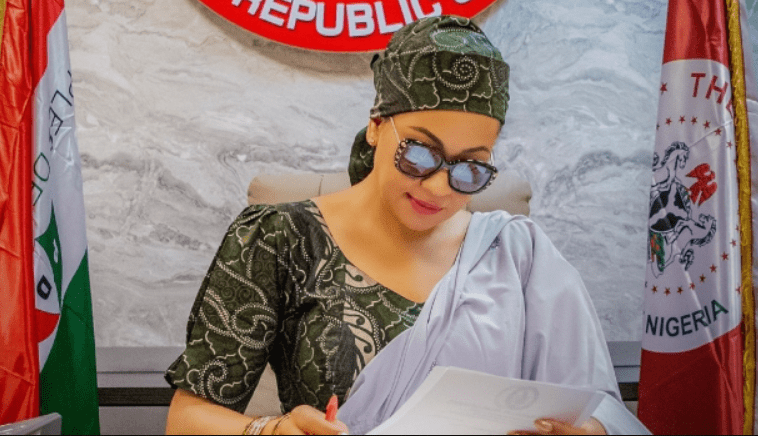

In a forceful intervention aimed at restoring legal accuracy, respected constitutional lawyer and legal scholar, Sylvester Udemezue, has debunked media claims that Senator Natasha Akpoti-Uduaghan was “convicted” for contempt of court—calling such reports legally flawed, misleading, and dangerous.
Speaking in a legal commentary released Saturday, Udemezue said it was imperative to set the record straight. “There has been no criminal conviction against Senator Natasha,” he stated. “What occurred falls within the realm of civil contempt, which under Nigerian law, does not amount to a criminal offence and carries no penal stigma.”
He explained that for a criminal conviction to occur, there must be formal charges, arraignment, and a trial conducted by the Attorney-General or a legally empowered prosecuting authority, followed by proof beyond reasonable doubt. None of these occurred in Natasha’s case, he stressed.
“There was no criminal charge, no trial, no formal conviction. Therefore, the term ‘conviction’—as used in criminal justice—simply does not apply here,” Udemezue clarified, citing precedents such as NWOSU v. INEC and LPDC v. Fawehinmi to bolster his argument.
The senator’s legal troubles stem from an April 2024 Facebook video in which she used sarcastic language while addressing Senate President Godswill Akpabio. Lawyers for Akpabio alleged the video breached an earlier court order and sought sanctions. However, Natasha’s defense team countered that the video was political satire, not contempt, and highlighted procedural defects—including the absence of statutory Form 48 and Form 49, mandatory for contempt proceedings under Nigerian law.
Udemezue expressed concern that even some legal professionals had wrongly described the court’s order as a “conviction.” This, he said, undermines the integrity of legal discourse and sows public confusion.
“If the court itself used the term ‘conviction’ in a civil context, that would be an error in terminology—one subject to review or appeal,” he noted. “But for lawyers to parrot that mistake in public is deeply troubling.”
While acknowledging that contempt of court is serious, Udemezue insisted it must be clearly distinguished between civil and criminal procedures. Citing Odogwu v. Odogwu, he reiterated that civil contempt is quasi-civil and judged on a balance of probabilities, unlike criminal contempt, which demands a higher standard of proof and results in punitive consequences.
His closing remarks were clear and pointed: “As things stand, there is no legal basis to assert that Senator Natasha Akpoti-Uduaghan was criminally convicted. If contrary evidence surfaces, I will revise my position. Until then, let us defend the truth, not distort it.”
Udemezue’s commentary has sparked renewed calls for precision and responsibility in legal reporting, especially when public figures are involved. In an age where misinformation spreads fast, his intervention stands as a powerful reminder that words matter—especially in the courtroom.