


By Muhammed Danjuma Ogwu, Lafia
As deadly clashes between farmers and herders continue to scar rural communities across Nigeria, Fulani leaders in Nasarawa State have issued a powerful call to action: revive the long-abandoned Nomadic schools to educate pastoralist children and break the cycle of violence.
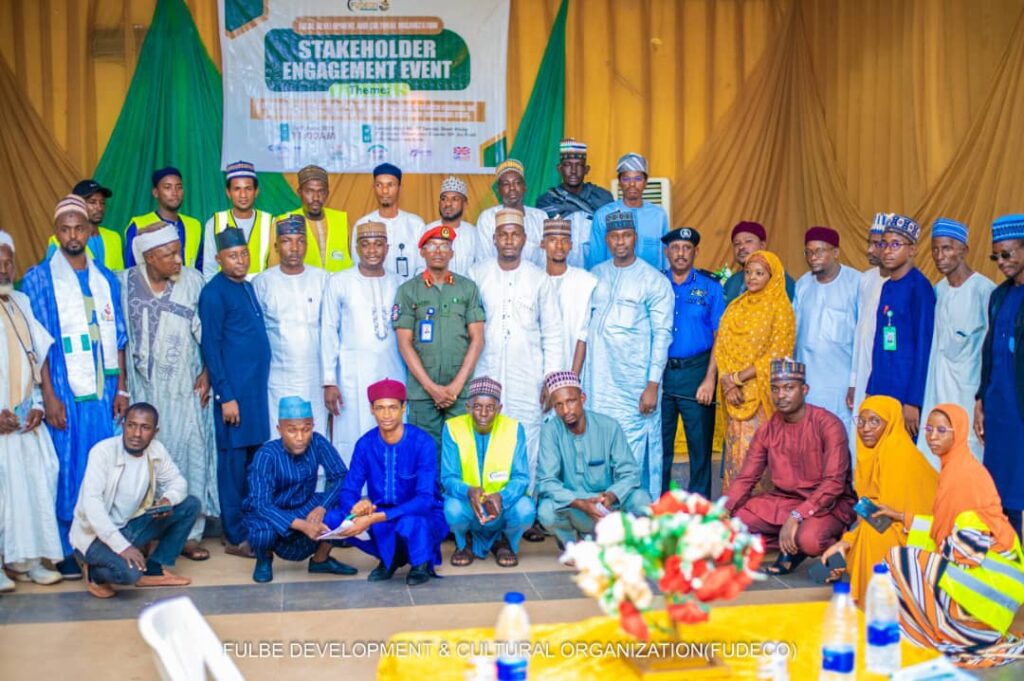
The call came Thursday during a high-level Stakeholders Engagement in Lafia, organized by the Fulbe Development and Cultural Organization (FUDECO) and centered on findings from a major research project on empowering pastoralist women.


Speaking for Fulani traditional rulers from all 13 local government areas of the state, FUDECO Chairman, Muhammad Habib Hussaini, warned that ignorance and marginalization were feeding the violence — and that only education, not force, could bring lasting peace.
“We see education as the true solution to this conflict. Reviving Nomadic schools will help our children grow with knowledge, not hatred. Most of the crises happening in our communities can be traced to ignorance,” Hussaini declared.
Nomadic education, once a vital bridge between pastoralist communities and formal learning, has collapsed in many parts of the country. The result, Hussaini said, is a generation growing up with no access to schools, locked out of national progress, and easily pulled into conflict.
“If pastoralist children are educated, they will know the dangers of violence. They’ll see a future beyond the cycle of clashes and reprisals,” he added.
The event also spotlighted an impactful empowerment programme that trained and supported over 250 pastoralist women across the state. Funded by the International Development Research Centre (IDRC) and SPARC, with backing from UKAID, the initiative offered vocational skills, start-up capital, and new economic opportunities.
“Your support has given many women in our communities the tools to survive and grow,” Hussaini told donors and stakeholders. “Now we want to reach more.”
Dr. Usman Ibrahim, Lead Researcher and Senior Lecturer at the Federal University of Lafia, said the project’s findings confirm that joblessness and exclusion are direct drivers of rural insecurity.
“Over 70 percent of these women never attended school. We found that when given skills and support, their confidence, income, and independence improved—and their vulnerability to crime decreased,” he said.
He called for urgent expansion of empowerment programmes, warning that pastoralist women are often left out of national development conversations despite bearing the brunt of conflict and poverty.
The event drew a diverse crowd: traditional rulers, security agencies, women and youth groups, and religious leaders—all aligned on one message: education and empowerment are non-negotiable if Nigeria wants peace.
As the nation grapples with deepening rural insecurity, the message from Lafia is clear: guns can silence, but only education can transform.