

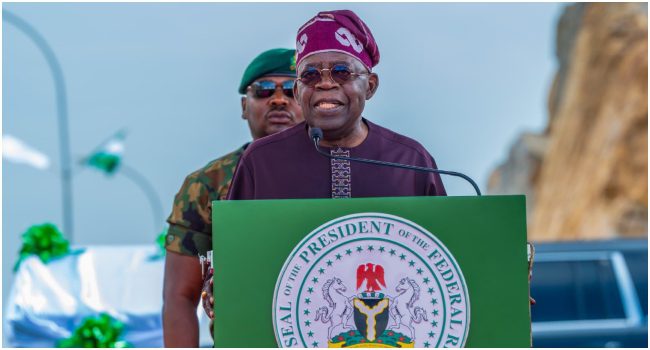

A new constitutional crisis may be brewing over President Bola Ahmed Tinubu’s move to appoint officials for the Rivers State Independent Electoral Commission (RSIEC), a decision civil rights advocates say could ignite a dangerous federal-state power struggle.
At the heart of the dispute is a letter from the Presidency requesting Senate confirmation for a Chairman and six commissioners to oversee local government elections in Rivers State. But that request has drawn sharp condemnation from the Centre for Reform and Public Advocacy (CRPA), which insists that the President is overstepping his bounds.
“This is not just about Rivers State,” said Kalu Agu Kalu Esq., CRPA’s Head of Legal Unit. “It’s about whether the federal government can ignore the Constitution and take over state responsibilities. If allowed, this sets a troubling precedent for centralized control of grassroots democracy.”

CRPA’s opposition is anchored on Sections 197, 198, and 201 of the 1999 Constitution, which assign the power to appoint RSIEC officials solely to state governors, Lsubject to confirmation by their respective state Houses of Assembly. The group insists that RSIEC is still lawfully constituted, and there is no legal vacancy to justify any presidential appointments.
Observers say the controversy highlights a deeper question facing Nigeria’s federal structure: who really governs at the local level? While the federal government argues for broader influence, civil society is pushing back, warning that undermining state electoral bodies weakens the foundation of Nigeria’s democracy.
CRPA has threatened legal action against the Senate if it proceeds with confirming the nominees. The group described the move as unconstitutional, illegal, and “a threat to the principles of federalism.”
Beyond the legal arguments, the RSIEC face-off is being viewed by many as a test of the Tinubu administration’s respect for the rule of law — and of the Senate’s willingness to serve as a check on executive excesses.
“If the Senate bows to this pressure, it won’t just be Rivers today,” said one political analyst. “Every state’s independence could be on the chopping block tomorrow.”
The stage is set for what could become a landmark battle over constitutional boundaries — one with far-reaching consequences for the balance of power in Nigeria.