

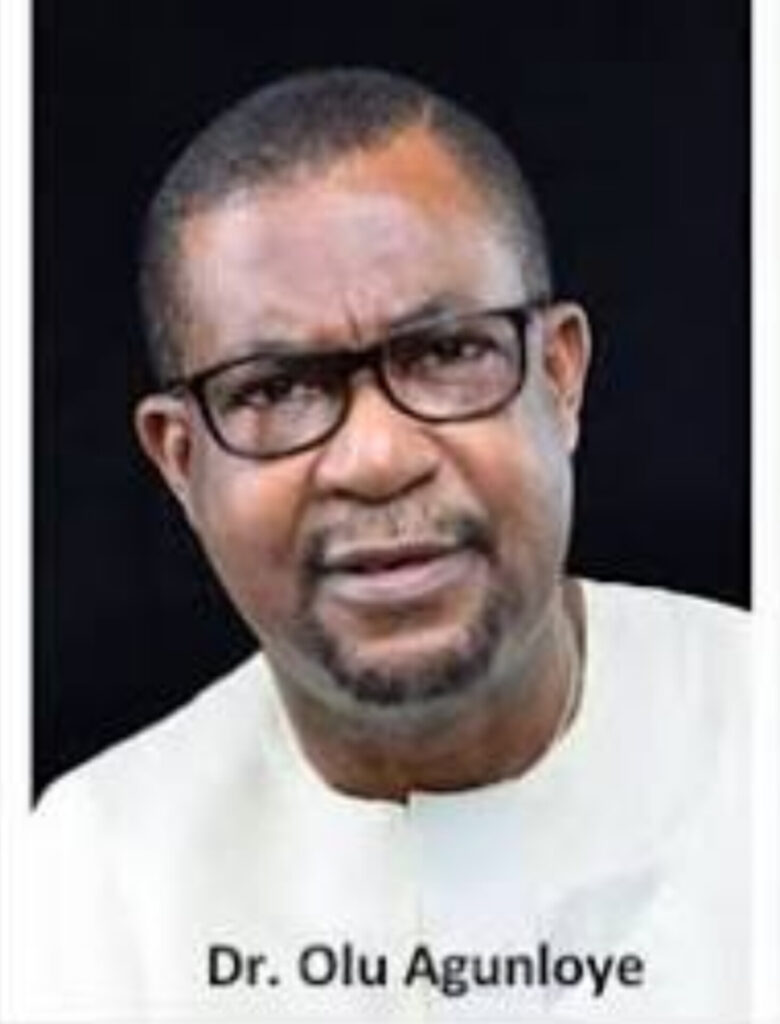

By Dr. Olu Agunloye. 7 February 2025
It is disturbing that the current Administration of President Bola Tinubu is considering or making or attempting to make cosmetic changes in the educational systems which is already in near comatose state? Nigerians have seen too many ephemera un-progressive changes in the educational sector, and now they are only yearning for value-added and well thought out developmental changes, not superficial or cosmetic changes.
In the 40s and 50s, children were not allowed to start the elementary school except they were “mature”, averagely, like from 12 years of age or older. This bogus age barrier shifted down gradually. For me, personally, as an omo tisa, I started school at the age of 8 years in the old Western Region of Nigeria. My sister, Modupe, even started at six years of age. The elementary school system then was changing from Class 1 to 7 to Pry I to VI. I started at Class 1 in 1954 and was promoted from Class 3 in 1956 to Pry III in 1957 and graduated elementary school in 1960. You could see how I lost one year because of the system change. After completing the elementary school, I entered the era of changing the 6-year secondary school system to a 5-year system with a 2-year Higher Secondary Certificate (HSC) school and three years to graduate at the university. I was lucky to start Form 1 in a secondary school that was already on the 5-year programme. Several other secondary schools were still on the 6-year programme for another six years to my knowledge.


On the national scene, the Pry-[Sec]-Tertiary system changed from 7-[6-2]-3, that is, 18 years to graduate to 6-[5-2]-3 or 6-[5]-4, that is, 16 years or 15 years to graduate starting from the elementary school. This system further changed for the next generation to 6-[3-3]-4, that is, 16 years to graduate at the university level, and now, the President Tinubu Administration is changing to a new system of 12-4 for the new generation in a way that appears not well-thought out.
Nigerian leaders in the past introduced the three-year Modern School subsystem after the elementary school and the HSC system, a two-year course after the 5- or 6-year secondary school system followed by a 3- or 4-year tertiary education at the University. All these pointed to the fact that our leaders were only striving to look for an appropriately well-suited educational system. Those changes were traumatic for pupils, and they disrupted the career paths of quite a number of young people. Couple of decades later and many presidencies after, Nigeria has yet not got it right.
Unfortunately, in 2025, the Tinubu Administration appears not yet able to get a firm grip on appropriate reforms in the educational sector. The new or proposed system still gets children to graduate in 16 years if they don’t quit. But, unlike the current system being replaced which lets you get out of the educational conveyor belt at three intermediate junctions, after Pry 6, or JSS3 or SS3, this new system is designed for only one exit, the Secondary School or the O’ Level exit for those who won’t complete at the tertiary level. The Tinubu government has not yet revealed the fundamental improvements, the benefits and the novel contents in the new 12-year basic education system that will make it better than the 6-3-3-4 system. We hope that the real advantages of the new system are not limited to the savings that the Government will make from conducting only one exit-examination instead of three.
Children are expected to get into formal learning process as early as four years of age and remain on the chain of educational processes until they can pick up a vocation and make contributions to own livelihood, the community and the nation. The irreducible minimum we expect in Nigeria is for generations of children and young people to get progressively better values, better ethics, and better learning environments from the educational system. For now, we await all these to unfold under the Administration of President Bola Tinubu.
Good News? As I was pondering on the yet to be revealed benefits of this new educational system announced by Government other than the arumoje savings from dodging exit examinations and certifications that are necessary and imperative, I came across a desirable denial from the Honourable Minister of Education saying, “The proposal seeks to migrate to 12 years of compulsory education while retaining the current 6-3-3 structure.”
Pray, why should Government advertise a proposal still in the works? Would they have had time for this if they had squarely faced the numerous challenges in the educational system that had been systematically degraded over the years. We wait.
Dr. Olu Agunloye,
… writing from Abuja, holds a bachelor’s degree and a doctorate degree in Physics from the University of Ibadan, as well as a Master’s degree in Applied Geophysics from the Massachusetts Institute of Technology (MIT) in Cambridge, USA. He was the Pioneer Corps Marshal of FRSC, former Special Adviser to Hon. Attorney General of the Federation, former Minister of Defence (Navy), former Minister of Power and Steel, and currently the National Secretary of the Social Democratic Party, SDP.