


**Nasarawa alleges links between disruptive youths and two former top officials, demands investigation
Political tension is brewing in Nasarawa State following the disruption of Vice-President Kashim Shettima’s visit to Lafia, with the state government calling on the Department of State Services (DSS) to investigate the incident and alleged political connections of those involved.
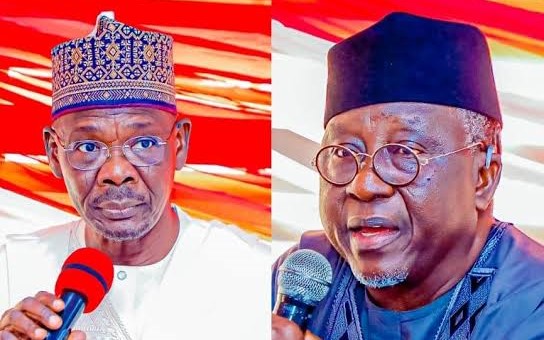
The government accused some youths of engaging in what it described as unruly conduct during Shettima’s visit on Wednesday, alleging that they had links to former Governor Tanko Al-Makura and former Inspector-General of Police, Muhammad Adamu.

Shettima was in the state as part of activities surrounding the All Progressives Congress (APC) presidential campaign ahead of the 2027 general election.
According to a statement by the Secretary to the State Government, Shuaibu Labaran, the Vice-President paid a courtesy visit to the Emir of Lafia, who also chairs the Nasarawa State Council of Chiefs.
Labaran said the visit was intended to demonstrate respect for traditional institutions but was allegedly disrupted by some youths.
The government described their conduct as an attempt to embarrass the administration and damage the image of the state.
It further alleged that the youths were suspected to have connections with Al-Makura and Adamu, although it did not provide evidence to substantiate the claims.
The state government wants the DSS to establish the identities of those involved, investigate the alleged political connections and determine whether the incident was deliberately orchestrated.
However, neither Al-Makura nor Adamu was reported to have responded to the allegations as of the time of the statement. There was also no public confirmation from the DSS regarding the request.
The incident has added a political dimension to Shettima’s visit, which took place against the backdrop of preparations for the 2027 general election.
The outcome of any investigation could help establish whether the disruption was an isolated incident or part of a wider political disagreement in the state.