

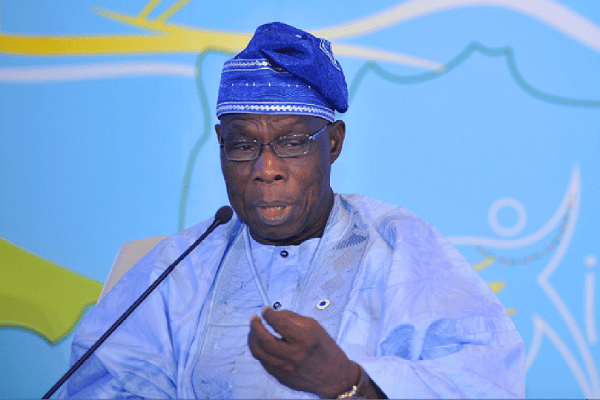

Former President Olusegun Obasanjo has blamed the sharp depreciation of the naira under President Bola Tinubu’s administration for worsening poverty and eroding Nigerians’ purchasing power.
Speaking on Wednesday at the 2026 Financial Times Africa Summit in London, Obasanjo criticised the scale of the currency’s decline, arguing that it had imposed a heavy economic burden on citizens.
He said the naira’s fall against the United States dollar had reduced Nigerians’ ability to afford goods and services, adding to the hardship faced by households already grappling with rising living costs.
“We do not live in isolation as a country. We interact with the rest of the world. And overnight, you devalue the currency by 300 per cent. The naira went from N500 to a dollar to N1,500 to a dollar,” Obasanjo said.
“What that meant was that every Nigerian is made poor by 300 per cent. That made Nigeria become the poverty capital of the world,” he added, questioning how the outcome could be considered beneficial to the country.
Obasanjo’s remarks have renewed scrutiny of the social costs of Tinubu’s economic reforms, particularly the removal of petrol subsidy and changes to the foreign exchange market.
Tinubu announced the removal of petrol subsidy in May 2023. The following month, his administration introduced foreign exchange reforms that allowed the naira to trade more freely and dismantled the previous multiple exchange-rate system.
The government introduced the measures to address market distortions, improve foreign exchange allocation and attract investment. However, the naira’s depreciation, higher fuel prices and rising transportation and import costs have put additional pressure on households and businesses.
For many Nigerians, the combined effect has been higher costs for food, transport and other essential goods, intensifying concerns about declining living standards.
Obasanjo’s criticism centres on whether the long-term benefits expected from the reforms can justify the immediate hardship experienced by citizens.
His claim that the currency’s depreciation made every Nigerian poorer by 300 per cent, however, is a broad political and economic assessment, not a direct measure of changes in individual incomes or poverty levels. Exchange-rate movements affect people differently, depending on their earnings, spending patterns, savings and exposure to imported goods.
The broader challenge for the Tinubu administration is to ensure that its economic policies translate into more stable prices, stronger purchasing power, increased employment and improved living conditions.
Obasanjo’s intervention has brought the human cost of the reforms back into focus, highlighting the debate over how Nigeria can pursue economic restructuring while protecting citizens from prolonged hardship.