


By Tunde Olusunle
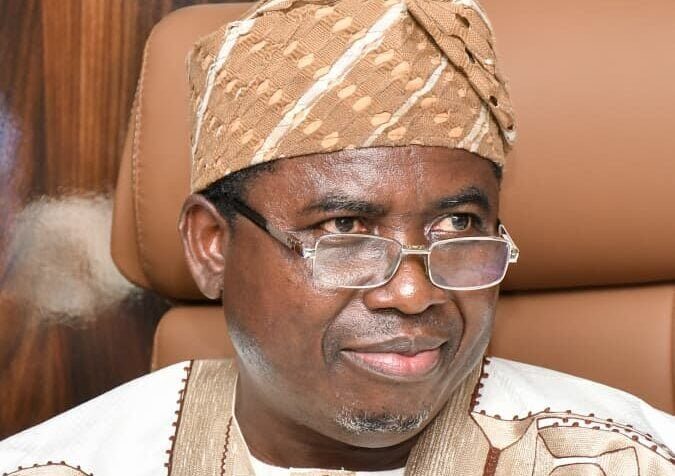
Come October 10, 2026, it will be exactly one year since Professor Joash Ojo Amupitan, SAN, assumed office as Chairman of the Independent National Electoral Commission (INEC). I recall I was in the office of a kinsman, out of my usual abode in Abuja, and we were both fixated on live national television, as Amupitan took questions from members of the Senate who screened him, even as we both relished the dextrous dance of “our own masquerade,” in a manner of speaking. One year is both a brief and an eternity in the life of a nation perpetually on edge about the integrity of its ballot. In that year, the country has watched, waited, and whispered. The question on the lips of political actors, civil society, and ordinary voters has been simple and relentless: can we just trust Amupitan?
From the moment his name was sent to the Senate, Amupitan walked into a storm he did not create but inherited. Allegations of partisanship preceded him. Commentators dug up unrelated old documents, old associations, and tried to stitch them into a narrative of bias. The charge was familiar in our politics: that no one appointed by an incumbent president could possibly preside over an electoral umpire with clean hands. The suspicion deepened when the opposition, across several states, descended into protracted legal warfare, with factions and counter-factions claiming legitimacy. In the public square, insinuations flew that the referee was complicit in unsettling the game.


Then came the matter of data. Lere Adeyinka, spokesperson to the Minister of the Federal Capital Territory, Nyesom Wike, made public statements referencing access to INEC data. The optics were poor. In a country where data is power and power is contested, any suggestion that the electoral register, the BVAS backend, or voter information could be casually handled outside the Commission’s firewall is enough to trigger alarm. Amupitan’s INEC moved swiftly to clarify protocols, to restate that data governance remains within the Commission, and to invite forensic audit where necessary. But in politics, clarification rarely travels as fast as accusation.
Most recently, a group in Kogi State raised another red flag. They alleged that INEC was creating additional polling wards in Kogi West and Kogi Central while ignoring Kogi East. The claim spread quickly because in Kogi, every administrative act is read through the lens of zone, and every zone reads omission as exclusion. Yet the facts, when laid bare, tell a different story. The new wards in Kogi West and Central were not arbitrary. They followed a delimitation exercise tied to population growth, voter density, and accessibility challenges documented over the last two electoral cycles.
Areas with sprawling settlements, long distances to existing polling units, and documented voter suppression due to distance were prioritized, in line with INEC’s guidelines on equitable access. Kogi East was not left out. The Commission’s records show that the review for that zone is at a different phase of verification, awaiting the conclusion of stakeholder consultations that were delayed by communal concerns. To suggest therefore that there was a deliberate skew is to mistake sequencing for discrimination. INEC under Amupitan has, by every available metric, tried to apply the same yardstick across the three senatorial zones, even if the timing has not been perfectly symmetrical.
And yet, despite the noise, despite the minefield, Professor Amupitan has kept his eyes on the larger work: reform. He understands, perhaps more than most, that trust is not conferred by title. It is earned in the doing. In the last twelve months, INEC has pushed a legislative agenda that seeks to criminalize vote buying, not just as an afterthought but as a distinct electoral offense with clear penalties and enforcement mechanisms. The Commission has also proposed sanctions for violent political rhetoric, recognizing that the language of politics has become a weapon, and that democracy cannot breathe in an atmosphere of intimidation.
Beyond these, there has been quiet but steady investment in the backend: tighter audit trails for the IReV portal, expanded training for presiding officers, and a renewed commitment to early deployment of materials. Most recently, the Commission unveiled a “real-time readiness tracker” linked directly to the Election Monitoring and Support Centre dashboard, designed to give headquarters and RECs live visibility into material distribution and state-level preparedness ahead of the January 16 and February 6, 2027 general elections. As Professor Amupitan put it at a national workshop in Lagos, the goal is to replace “reactive panic with proactive management.”
The proof, as it must be in elections, is in the results delivered. Under Amupitan’s watch, INEC conducted the governorship elections in Anambra, Ekiti, and Osun states. Each of those polls was, by broad consensus, credible. The margins were clear, the processes were observed, and the losers, however reluctantly, conceded. The council elections in the Federal Capital Territory also proceeded without the chaos that once defined them. These were not perfect elections. No election anywhere is. But they were acceptable, and in our context, acceptability is the first cousin of legitimacy.
Now, attention turns to Saturday, September 19, 2026, when by-elections will hold in a number of states. These off-cycle contests are often the most volatile. They are smaller in scale but larger in symbolism. They test the readiness of the Commission, the discipline of parties, and the patience of voters. Amupitan has said, publicly and privately, that these by-elections will be a template. That the same technology, the same transparency, and the same insistence on due process that marked the governorship polls will be replicated.
It is here that scepticism creeps back in. The hard truth of Nigerian politics is this: no INEC Chairman appointed by a sitting president escapes the shadow of that appointment. The President is widely regarded, rightly or wrongly, as desperate, some say even neurotic, about securing a second term. In that environment, every decision by the Commission is scanned for motive. Every delay is read as design. Every declaration is weighed for influence. The burden on Amupitan is therefore heavier than the burden on the office itself. He must not only be neutral. He must be seen to be neutral, and he must be seen to be seen to be neutral.
So can we trust him? First, consider Osun. In the last governorship election, the full weight of the ruling party was brought to bear. The President of the Senate, Senator Godswill Akpabio, and the National Chairman of the All Progressives Congress, Professor Nentawe Yilwatda, led a delegation of 16 APC governors to the state. The message was not subtle. The resources were not hidden. In any other season, that show of force would have translated into a predetermined outcome. But INEC, under Amupitan, declared a result that reflected the will expressed at the polling units. It was not the result the visitors wanted. It was the result the voters gave. That single act did more for the Commission’s credibility than a hundred press releases. It demonstrated that even under pressure, the institution could hold.
Second, Amupitan has shown a willingness to be transparent about the Commission’s limitations. He has not pretended that technology is magic. He has admitted glitches, owned them, and instituted reviews. That posture matters, because trust grows where accountability lives. A chairman who hides behind jargon will not survive this climate. One who explains, who corrects, who invites scrutiny, earns a measure of public patience. Third, his background matters. As a Senior Advocate of Nigeria (SAN) and an academic, Amupitan comes with a reputation for precision and for a certain legal conservatism. That temperament is useful in an institution that must navigate the law at every turn. The courtroom, more than the campaign ground, has become the final arena for electoral contests. A chairman who understands evidence, procedure, and precedent is less likely to lead the Commission into avoidable legal pitfalls.
Fourth, the reforms on the table are not cosmetic. Criminalizing vote buying strikes at the heart of our transactional politics. Sanctioning violent rhetoric addresses the culture of fear that has shrunk participation. These are not popular with the political class, which is precisely why they matter. An INEC chairman interested only in pleasing his appointor would not pick fights he cannot win in the National Assembly. Finally, there is the matter of institutional memory. Amupitan has surrounded himself with career officers who understand the mechanics of elections. He has not politicized the bureaucracy. In a system where personnel is policy, that restraint is significant.
None of this is to say that the doubts have vanished. They have not. Democracy is a permanent interrogation, and INEC must live under that interrogation. The September 19, 2026 by-elections will be another test. So will the next off-cycle polls, and ultimately, the general elections. Each cycle will ask the same question in a new voice: can we trust this process? Perhaps the better question is: what must we do to make trust possible? Trust is not a gift we give to one man. It is a compact we build as a people. It requires political parties to field credible candidates and to accept outcomes. It requires security agencies to protect voters, not politicians. It requires the media to report accurately, and citizens to resist the lure of money and intimidation at the polling unit.
Professor Amupitan cannot deliver democracy alone. But he can, and is committed to, delivering an election that is free enough, fair enough, and transparent enough to be believed. Thus far, he has demonstrated resolve to achieve this. The last one year suggests he understands the weight of that responsibility. He has weathered controversies without being consumed by them. He has delivered polls that, while imperfect by no fault of his or his agency’s, have been broadly accepted. He has stared down pressure and, in Osun, allowed the votes to count.
Can we just trust Amupitan? Trust is too large a word to be answered once and for all. It is answered daily, in memos signed, in deployments made, in results declared. On the evidence of the last twelve months, the answer leans toward yes — not because we are naïve, but because the alternative, a permanent posture of cynicism, leaves us with no democracy at all. As October 10, 2026 approaches, and as September 19 draws even nearer, Nigerians will be watching. So will history. The Chairman of INEC knows this. He’s cognisant of the fact that the ballot, once desecrated, is very difficult to redeem.
Tunde Olusunle, PhD, Fellow, Association of Nigerian Authors (FANA), teaches Creative Writing at the University of Abuja